Sharing Your Child’s Age And Level
अपने बच्चे की उम्र और स्तर बताना
Emma says that her daughter is six years old and can swim a little. Grace helps her choose the right level.
एम्मा बताती है कि उसकी बेटी छह साल की है और थोड़ा तैर सकती है। ग्रेस सही स्तर चुनने में उसकी मदद करती है।
संवाद8
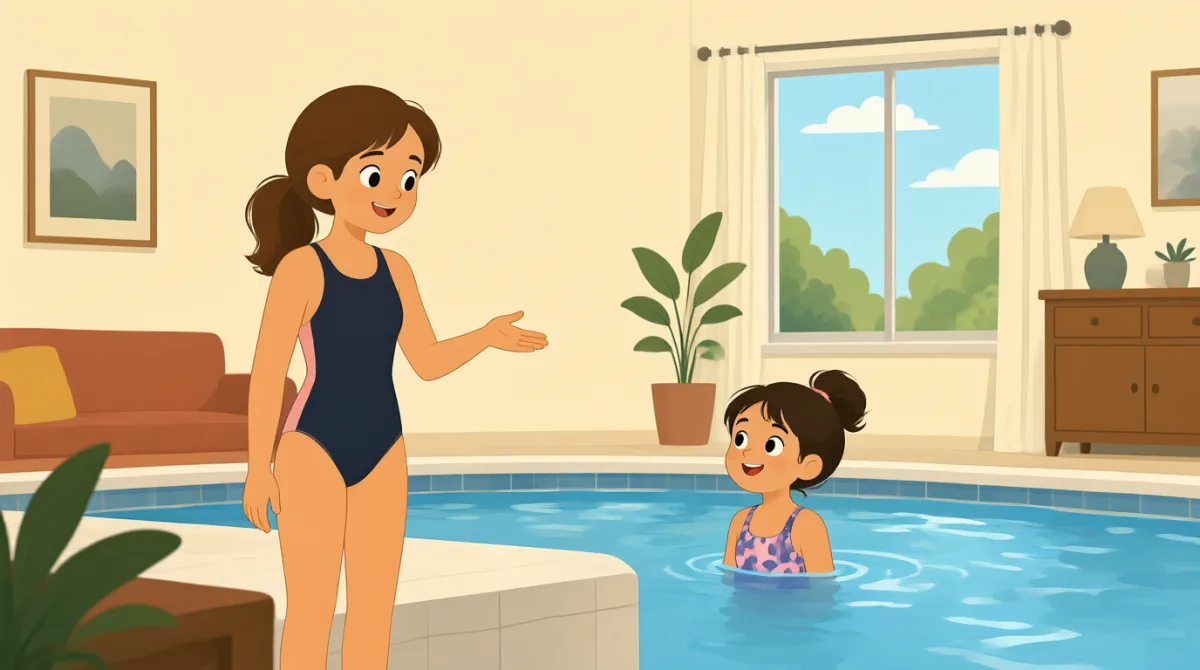

My daughter is six years old. She can swim a little, but she's still learning.
मेरी बेटी छह साल की है। वह थोड़ा तैर सकती है, लेकिन अभी सीख रही है।

Thanks for telling me. Has she taken swimming lessons before?
बताने के लिए धन्यवाद। क्या उसने पहले तैराकी की कक्षाएँ ली हैं?
No, she hasn't. She can float, but she isn't very confident in the water.
नहीं, उसने नहीं ली हैं। वह पानी पर तैर सकती है, लेकिन पानी में उसे ज़्यादा आत्मविश्वास नहीं है।
I understand. We have a beginner class for children who are still building confidence.
समझ गई। हमारे पास उन बच्चों के लिए शुरुआती कक्षा है जो अभी पानी में आत्मविश्वास हासिल कर रहे हैं।
Would that class be right for her, even though she can swim a little?
क्या वह कक्षा उसके लिए सही रहेगी, भले ही वह थोड़ा तैर सकती है?
Yes. The teacher can check her skills and help her move up when she's ready.
हाँ। शिक्षक उसकी क्षमताएँ जाँच सकते हैं और तैयार होने पर उसे अगले स्तर पर जाने में मदद कर सकते हैं।
That sounds good. Does she need to be able to put her face in the water?
यह अच्छा रहेगा। क्या उसे पानी में अपना चेहरा डालना आना ज़रूरी है?
No, that's okay. The class will help her practice that safely, one step at a time.
नहीं, कोई बात नहीं। कक्षा में वह सुरक्षित तरीके से, धीरे-धीरे इसका अभ्यास कर पाएगी।
शब्दावली8
- six years oldछह साल का/की
This tells someone a child's age. You can use “My child is [age] years old” to share your child's age.
इससे आप किसी को बच्चे की उम्र बताते हैं। अपने बच्चे की उम्र बताने के लिए आप “My child is [age] years old” कह सकते हैं।
- swim a littleथोड़ा तैरना
This means someone has some swimming ability, but is not very skilled yet. Use it to describe a beginner's level.
इसका मतलब है कि किसी को तैरना थोड़ा-बहुत आता है, लेकिन वह अभी इसमें बहुत कुशल नहीं है। शुरुआती स्तर बताने के लिए इस वाक्यांश का इस्तेमाल करें।
- taken swimming lessonsतैराकी की कक्षाएँ ली होना
This means someone has had swimming classes before. You can ask, “Have you taken [type of] lessons before?”
इसका मतलब है कि किसी ने पहले तैराकी की कक्षाएँ ली हैं। आप पूछ सकते हैं, “Have you taken [type of] lessons before?”
- floatपानी पर तैरना
To float is to stay on the surface of the water without sinking. You can use this word to describe a basic swimming skill.
पानी पर तैरने का मतलब है बिना डूबे पानी की सतह पर बने रहना। तैराकी के शुरुआती कौशल के बारे में बताने के लिए यह शब्द इस्तेमाल करें।
- confident in the waterपानी में आत्मविश्वास महसूस करना
This means feeling comfortable and sure while in the water. Use it to describe how comfortable someone feels swimming.
इसका मतलब है पानी में सहज और निश्चिंत महसूस करना। तैरते समय कोई कितना सहज महसूस करता है, यह बताने के लिए इस वाक्यांश का इस्तेमाल करें।
- beginner classशुरुआती कक्षा
A beginner class is for people who are just starting to learn a skill. You can ask if there is a beginner class for your child.
शुरुआती कक्षा उन लोगों के लिए होती है जो किसी कौशल को सीखना अभी शुरू कर रहे हैं। आप पूछ सकते हैं कि क्या आपके बच्चे के लिए कोई शुरुआती कक्षा है।
- move upअगले स्तर पर जाना
Here, “move up” means to go to a class at a higher level. You can use it when someone is ready for a more advanced class.
यहाँ “move up” का मतलब है ऊँचे स्तर की कक्षा में जाना। जब कोई अधिक उन्नत कक्षा के लिए तैयार हो, तब आप इसका इस्तेमाल कर सकते हैं।
- one step at a timeधीरे-धीरे, एक-एक कदम करके
This means doing something slowly, in small stages. Use it to describe a safe and gradual way to learn.
इसका मतलब है कोई काम धीरे-धीरे, छोटे चरणों में करना। सीखने के सुरक्षित और क्रमिक तरीके के बारे में बताने के लिए इसका इस्तेमाल करें।
मुख्य वाक्य8
- 1
My daughter is six years old.
मेरी बेटी छह साल की है।
This is a simple way to give your child's age. You can replace “daughter” with “son” or “child” and change the age.
अपने बच्चे की उम्र बताने का यह एक आसान तरीका है। आप “daughter” की जगह “son” या “child” कह सकते हैं और उम्र बदल सकते हैं।
- 2
She can swim a little, but she's still learning.
वह थोड़ा तैर सकती है, लेकिन अभी सीख रही है।
This describes someone's current ability and shows that they are not finished learning. Use “can [activity] a little, but [person] is still learning” for other skills.
इससे किसी की मौजूदा क्षमता बताने के साथ यह भी पता चलता है कि उसने सीखना पूरा नहीं किया है। दूसरे कौशलों के बारे में बताने के लिए “can [activity] a little, but [person] is still learning” का इस्तेमाल करें।
- 3
Has she taken swimming lessons before?
क्या उसने पहले तैराकी की कक्षाएँ ली हैं?
This is a polite question about someone's past experience. Replace “swimming lessons” with another class or activity to ask about different experience.
किसी के पिछले अनुभव के बारे में पूछने का यह एक विनम्र तरीका है। अलग-अलग अनुभवों के बारे में पूछने के लिए “swimming lessons” की जगह किसी दूसरी कक्षा या गतिविधि का नाम रखें।
- 4
She can float, but she isn't very confident in the water.
वह पानी पर तैर सकती है, लेकिन पानी में उसे ज़्यादा आत्मविश्वास नहीं है।
This shares what a learner can do and what still feels difficult. You can use “can [skill], but isn't very confident with [activity]” to explain a learner's needs.
इससे पता चलता है कि सीखने वाला क्या कर सकता है और किस चीज़ में उसे अभी मुश्किल होती है। सीखने वाले की ज़रूरतें बताने के लिए “can [skill], but isn't very confident with [activity]” का इस्तेमाल करें।
- 5
We have a beginner class for children who are still building confidence.
हमारे पास उन बच्चों के लिए शुरुआती कक्षा है जो अभी आत्मविश्वास हासिल कर रहे हैं।
This offers a suitable class and explains who it is for. You can change “beginner class” and “children” to describe other lessons and learners.
इस वाक्य में एक उपयुक्त कक्षा का सुझाव दिया गया है और बताया गया है कि वह किन लोगों के लिए है। दूसरी कक्षाओं और सीखने वालों के बारे में बताने के लिए “beginner class” और “children” को बदल सकते हैं।
- 6
Would that class be right for her, even though she can swim a little?
क्या वह कक्षा उसके लिए सही रहेगी, भले ही वह थोड़ा तैर सकती है?
This is a polite way to check whether a class is suitable despite a learner's existing ability. You can replace “that class” and “she” to ask about another person or option.
सीखने वाले को पहले से कोई क्षमता होने के बावजूद यह पूछने का विनम्र तरीका है कि कोई कक्षा उसके लिए सही है या नहीं। किसी दूसरे व्यक्ति या विकल्प के बारे में पूछने के लिए “that class” और “she” को बदल सकते हैं।
- 7
The teacher can check her skills and help her move up when she's ready.
शिक्षक उसकी क्षमताएँ जाँच सकते हैं और तैयार होने पर उसे अगले स्तर पर जाने में मदद कर सकते हैं।
This explains how a teacher can assess a learner and guide them to a higher level. Use “when [person] is ready” to show that a change will happen at the right time.
इससे बताया जाता है कि शिक्षक किसी सीखने वाले का आकलन कैसे कर सकते हैं और उसे ऊँचे स्तर तक पहुँचने में मदद दे सकते हैं। यह दिखाने के लिए “when [person] is ready” का इस्तेमाल करें कि बदलाव सही समय पर होगा।
- 8
The class will help her practice that safely, one step at a time.
कक्षा में वह सुरक्षित तरीके से, धीरे-धीरे इसका अभ्यास कर पाएगी।
This explains that a class will help someone learn a skill gradually and safely. Replace “that” with the skill the learner wants to practice.
इससे बताया जाता है कि कक्षा में किसी को कोई कौशल धीरे-धीरे और सुरक्षित रूप से सीखने में मदद मिलेगी। सीखने वाला जिस कौशल का अभ्यास करना चाहता है, उसके लिए “that” की जगह उसका नाम रखें।