Talking To The Coach
After the lesson, Emma talks with Mia about her daughter’s progress. Mia gives simple advice for practicing safely.
Dialogue8
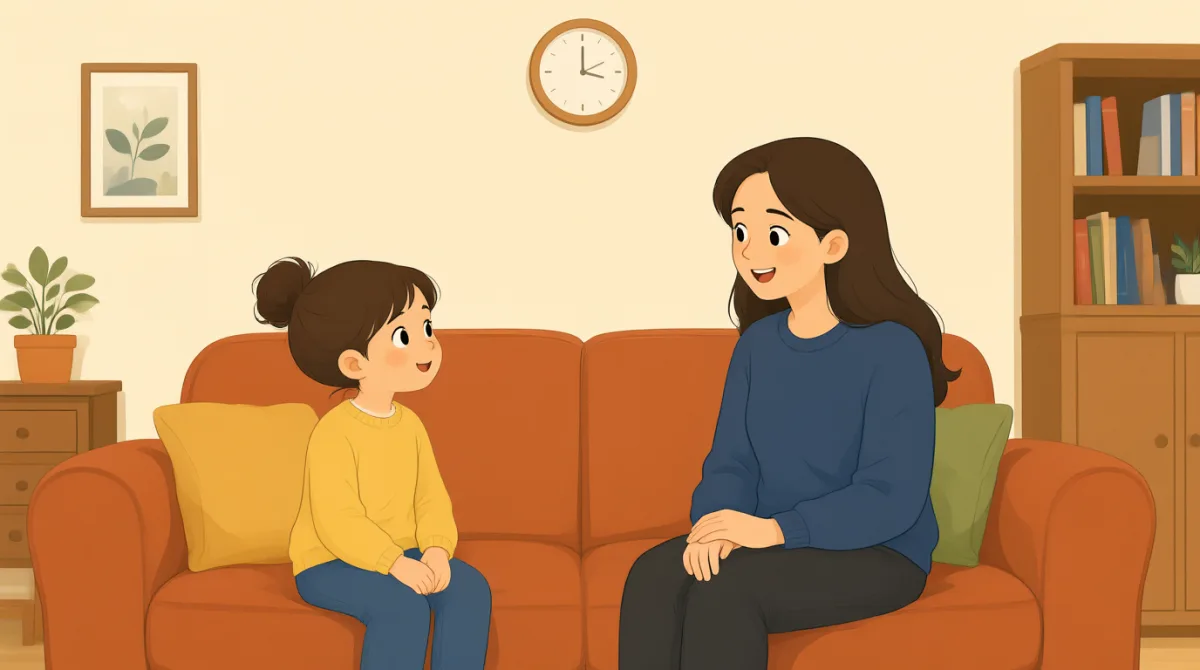

How did my daughter do in her lesson today?

She did well. She put her face in the water and kicked across the pool.
That’s great! She was nervous before class. Did she feel more comfortable?
Yes, she relaxed after a few minutes. She listened carefully and tried everything.
What can we practice at home before her next lesson?
You can practice blowing bubbles in a bowl of water. Always stay right beside her.
Should we practice in a pool too, or wait until next week?
A pool is fine, but keep her in shallow water and watch her closely.
Vocabulary8
- did well
This means someone performed successfully. You can use it to describe how a person did in a lesson or activity.
- put her face in the water
This means she lowered her face into the water. It describes a beginner swimming skill.
- kicked across the pool
This means she moved through the pool by kicking her legs. You can use “kicked across” to describe moving through water this way.
- feel more comfortable
This means to feel less nervous or more relaxed. You can ask someone if they felt more comfortable after trying something new.
- practice at home
This means to do an activity at home to get better at it. You can use this phrase to ask what someone can work on between lessons.
- stay right beside her
This means to remain very close to her. In this conversation, it is advice for keeping a child safe near water.
- shallow water
This means water that is not deep. It is useful when talking about a safer place for a beginner to practice.
- watch her closely
This means to pay careful attention to her. You can use it when someone needs to keep an eye on a child or another person.
Key Sentences6
- 1
How did my daughter do in her lesson today?
This is a natural way to ask how someone performed in a lesson. You can replace “my daughter” with another person or “her lesson” with another activity.
- 2
She did well.
This is a simple, positive way to describe someone’s performance. You can use it to give a quick update after a class or activity.
- 3
Did she feel more comfortable?
Use this question to ask if someone became less nervous. You can change “she” to another person, such as “you” or “he.”
- 4
What can we practice at home before her next lesson?
This is a useful question when asking for ideas to help someone improve between lessons. Change “at home” or “her next lesson” to fit your situation.
- 5
Always stay right beside her.
This gives a clear safety instruction. You can replace “her” with the person you need to stay close to.
- 6
A pool is fine, but keep her in shallow water and watch her closely.
This sentence gives permission and adds important safety advice. You can use “X is fine, but…” to allow something while explaining a condition.