Sharing Your Child’s Age And Level
아이의 나이와 수영 실력 말하기
Emma says that her daughter is six years old and can swim a little. Grace helps her choose the right level.
에마는 딸이 여섯 살이고 수영을 조금 할 줄 안다고 말해요. 그레이스는 딸에게 맞는 수업 수준을 고르는 걸 도와줘요.
대화8
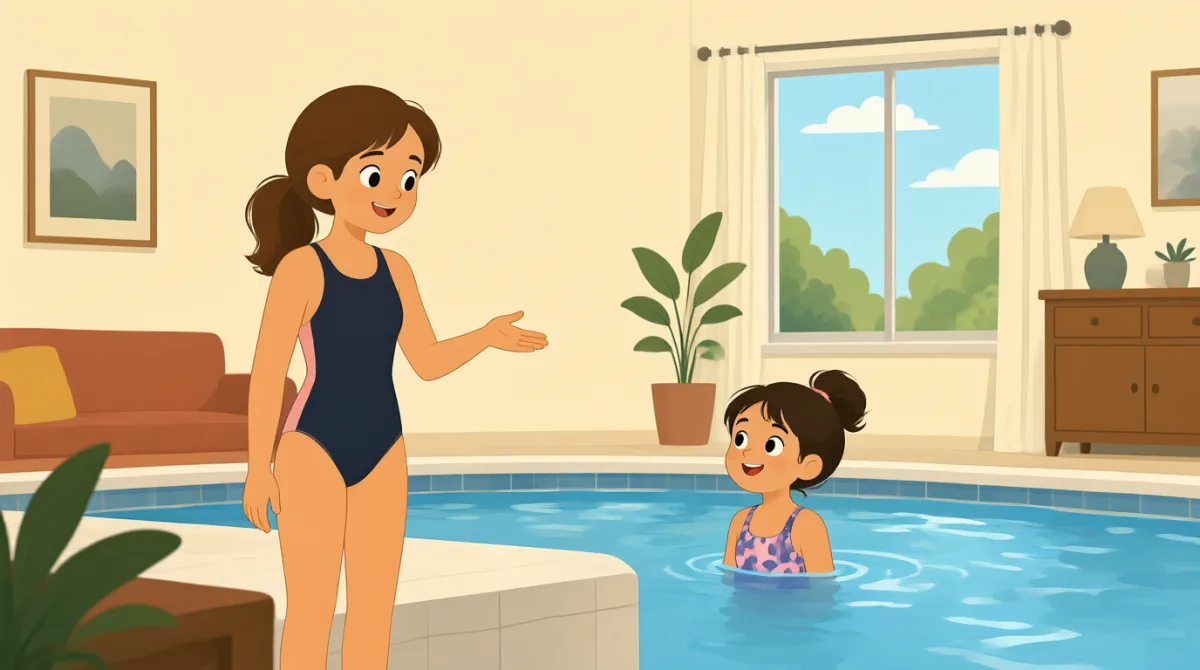

My daughter is six years old. She can swim a little, but she's still learning.
제 딸은 여섯 살이에요. 수영을 조금 할 줄 알지만, 아직 배우는 중이에요.

Thanks for telling me. Has she taken swimming lessons before?
말씀해 주셔서 감사합니다. 전에 수영 강습을 받은 적이 있나요?
No, she hasn't. She can float, but she isn't very confident in the water.
아니요, 없어요. 물에 뜰 수는 있지만, 물속에서 아직 자신감이 별로 없어요.
I understand. We have a beginner class for children who are still building confidence.
알겠습니다. 아직 자신감을 키우는 중인 아이들을 위한 초급반이 있어요.
Would that class be right for her, even though she can swim a little?
수영을 조금 할 줄 알아도 그 수업이 아이에게 맞을까요?
Yes. The teacher can check her skills and help her move up when she's ready.
네. 선생님이 아이의 실력을 확인하고, 준비가 되면 더 높은 단계로 올라가도록 도와줄 수 있어요.
That sounds good. Does she need to be able to put her face in the water?
좋네요. 물에 얼굴을 담글 수 있어야 하나요?
No, that's okay. The class will help her practice that safely, one step at a time.
아니요, 괜찮아요. 수업에서 안전하게 한 단계씩 연습하도록 도와줄 거예요.
어휘8
- six years old여섯 살
This tells someone a child's age. You can use “My child is [age] years old” to share your child's age.
아이의 나이를 말할 때 쓰는 표현이에요. 아이의 나이를 말할 때 “My child is [age] years old”라고 할 수 있어요.
- swim a little수영을 조금 하다
This means someone has some swimming ability, but is not very skilled yet. Use it to describe a beginner's level.
수영을 어느 정도 할 줄 알지만 아직 능숙하지는 않다는 뜻이에요. 초보자의 실력을 설명할 때 쓰면 좋아요.
- taken swimming lessons수영 강습을 받은 적이 있다
This means someone has had swimming classes before. You can ask, “Have you taken [type of] lessons before?”
전에 수영 수업을 들은 적이 있다는 뜻이에요. “Have you taken [type of] lessons before?”라고 물어볼 수 있어요.
- float물에 뜨다
To float is to stay on the surface of the water without sinking. You can use this word to describe a basic swimming skill.
가라앉지 않고 물 표면에 떠 있는 것을 말해요. 기본적인 수영 실력을 설명할 때 쓸 수 있어요.
- confident in the water물속에서 자신감이 있다
This means feeling comfortable and sure while in the water. Use it to describe how comfortable someone feels swimming.
물속에서 편안하고 자신 있게 느끼는 것을 말해요. 수영할 때 얼마나 편안하게 느끼는지 설명할 때 쓰면 좋아요.
- beginner class초급반
A beginner class is for people who are just starting to learn a skill. You can ask if there is a beginner class for your child.
초급반은 어떤 기술을 막 배우기 시작한 사람들을 위한 수업이에요. 아이를 위한 초급반이 있는지 물어볼 수 있어요.
- move up더 높은 단계로 올라가다
Here, “move up” means to go to a class at a higher level. You can use it when someone is ready for a more advanced class.
여기서 “move up”은 더 높은 수준의 반으로 옮겨 간다는 뜻이에요. 더 어려운 수업을 들을 준비가 되었을 때 쓸 수 있어요.
- one step at a time한 번에 한 단계씩
This means doing something slowly, in small stages. Use it to describe a safe and gradual way to learn.
천천히 작은 단계로 나누어 무언가를 한다는 뜻이에요. 안전하고 점진적으로 배우는 방식을 설명할 때 써요.
핵심 문장8
- 1
My daughter is six years old.
제 딸은 여섯 살이에요.
This is a simple way to give your child's age. You can replace “daughter” with “son” or “child” and change the age.
아이의 나이를 간단히 말하는 표현이에요. “daughter”를 “son”이나 “child”로 바꾸고 나이도 바꿔 말할 수 있어요.
- 2
She can swim a little, but she's still learning.
수영을 조금 할 줄 알지만, 아직 배우는 중이에요.
This describes someone's current ability and shows that they are not finished learning. Use “can [activity] a little, but [person] is still learning” for other skills.
현재 할 수 있는 것과 아직 배우고 있다는 점을 함께 말하는 표현이에요. 다른 기술에 대해서도 “can [activity] a little, but [person] is still learning”을 활용해 보세요.
- 3
Has she taken swimming lessons before?
전에 수영 강습을 받은 적이 있나요?
This is a polite question about someone's past experience. Replace “swimming lessons” with another class or activity to ask about different experience.
상대방의 과거 경험을 공손하게 묻는 표현이에요. 다른 경험을 물어보려면 “swimming lessons”를 다른 수업이나 활동으로 바꾸면 돼요.
- 4
She can float, but she isn't very confident in the water.
물에 뜰 수는 있지만, 물속에서 아직 자신감이 별로 없어요.
This shares what a learner can do and what still feels difficult. You can use “can [skill], but isn't very confident with [activity]” to explain a learner's needs.
배우는 사람이 할 수 있는 것과 아직 어려워하는 점을 함께 말해요. 학습자에게 필요한 점을 설명할 때 “can [skill], but isn't very confident with [activity]”를 쓸 수 있어요.
- 5
We have a beginner class for children who are still building confidence.
아직 자신감을 키우는 중인 아이들을 위한 초급반이 있어요.
This offers a suitable class and explains who it is for. You can change “beginner class” and “children” to describe other lessons and learners.
적합한 수업을 소개하고 어떤 사람을 위한 수업인지 설명하는 표현이에요. 다른 수업이나 학습자를 말하려면 “beginner class”와 “children”을 바꿔 보세요.
- 6
Would that class be right for her, even though she can swim a little?
수영을 조금 할 줄 알아도 그 수업이 아이에게 맞을까요?
This is a polite way to check whether a class is suitable despite a learner's existing ability. You can replace “that class” and “she” to ask about another person or option.
학습자가 이미 할 줄 아는 것이 있어도 수업이 적합한지 공손하게 확인하는 표현이에요. 다른 사람이나 선택지를 물어보려면 “that class”와 “she”를 바꾸면 돼요.
- 7
The teacher can check her skills and help her move up when she's ready.
선생님이 아이의 실력을 확인하고, 준비가 되면 더 높은 단계로 올라가도록 도와줄 수 있어요.
This explains how a teacher can assess a learner and guide them to a higher level. Use “when [person] is ready” to show that a change will happen at the right time.
선생님이 학습자의 실력을 평가하고 더 높은 단계로 이끌어 줄 수 있다고 설명해요. 적절한 시점에 변화가 있을 거라는 뜻을 나타낼 때 “when [person] is ready”를 쓰면 좋아요.
- 8
The class will help her practice that safely, one step at a time.
수업에서 안전하게 한 단계씩 연습하도록 도와줄 거예요.
This explains that a class will help someone learn a skill gradually and safely. Replace “that” with the skill the learner wants to practice.
수업을 통해 어떤 기술을 차근차근 안전하게 배울 수 있다고 설명하는 표현이에요. 학습자가 연습하려는 기술을 “that” 자리에 넣어 보세요.