Explaining Where It Hurts
Emma tells David which tooth hurts and when the pain started. David asks a few simple questions before checking her teeth.
Dialogue9
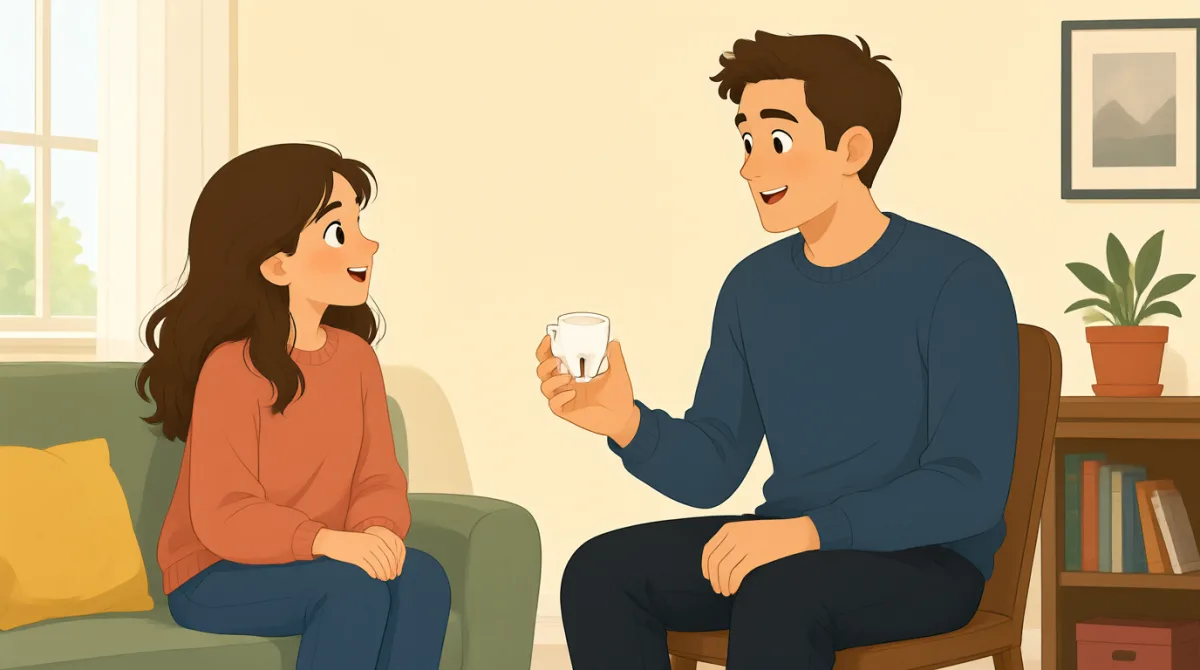

Hi, Emma. I’m Dr. Chen. What seems to be the problem?

One of my back teeth hurts. The pain started two days ago.
Does it hurt all the time, or only when you eat?
Mostly when I eat or drink something cold. It hurts a little now.
I see. Have you had this pain before?
No, this is the first time. I took some pain medicine yesterday.
Thanks for telling me. I’ll take a look at your teeth now.
Okay. Should I open my mouth wide?
Yes, please. Tell me if anything feels uncomfortable.
Vocabulary8
- What seems to be the problem?
This is a polite way to ask what is wrong. You can use it when someone needs help.
- back teeth
These are the teeth at the back of your mouth. You can use this phrase to explain which teeth hurt.
- two days ago
This means two days before today. Use it to say when something started or happened.
- all the time
This means continuously or very often. You can use it to describe how often you feel pain.
- something cold
This means any cold food or drink. You can use it to explain what causes pain or discomfort.
- pain medicine
This is medicine that helps reduce pain. You can use this phrase to explain what you took for a toothache.
- take a look
This means to examine or check something. A doctor or dentist may use this phrase before looking at your teeth.
- open my mouth wide
This means to open your mouth as much as you can. You can use this phrase when asking what to do at the dentist.
Key Sentences8
- 1
One of my back teeth hurts.
This is a simple way to say where you feel pain. You can replace “back teeth” with another body part or area.
- 2
The pain started two days ago.
Use this sentence to say when a problem began. Change “two days ago” to another time expression, such as “yesterday.”
- 3
Does it hurt all the time, or only when you eat?
This question asks how often the pain happens and what causes it. You can reuse the pattern to ask about other symptoms.
- 4
Mostly when I eat or drink something cold.
This explains when the pain usually happens. You can use “Mostly when…” to describe a common trigger or situation.
- 5
Have you had this pain before?
This is a useful question about a past experience. You can replace “this pain” with another problem or symptom.
- 6
I took some pain medicine yesterday.
This sentence explains what you did to help with pain. Use “I took…” to talk about medicine you used in the past.
- 7
I’ll take a look at your teeth now.
This is a reassuring way to say you are going to check something. You can replace “your teeth” with another thing you need to examine.
- 8
Tell me if anything feels uncomfortable.
This asks someone to speak up if something does not feel right. You can use it when helping someone or explaining what to expect during a checkup.