Booking an Appointment for a Toothache
Emma calls the dental office because one of her teeth hurts. Grace helps her find an appointment time.
Dialogue8
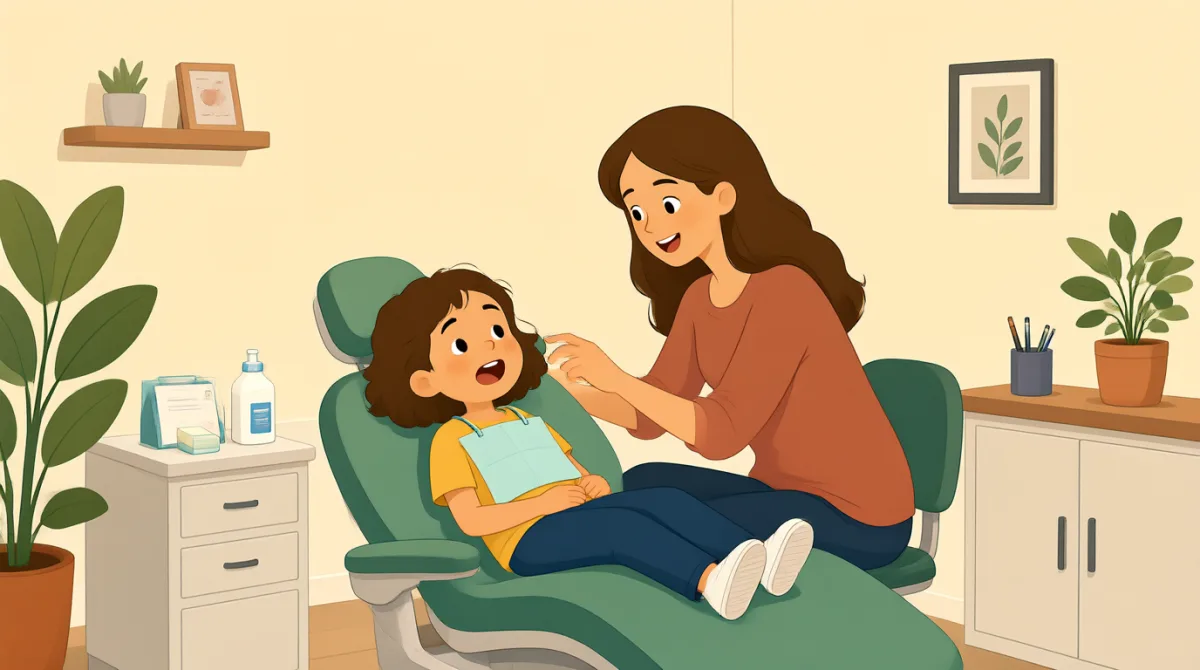

Hi, I’d like to make an appointment. One of my teeth has been hurting.

I’m sorry to hear that. When did the pain start?
It started yesterday. It hurts more when I eat something cold.
I see. We have an opening tomorrow at ten in the morning.
That works for me. How long will the appointment take?
About thirty minutes. Please arrive ten minutes early to fill out a form.
Okay. Do I need to bring anything with me?
Please bring your insurance card and a photo ID. We’ll see you tomorrow.
Vocabulary7
- make an appointment
To arrange a time to see someone, such as a dentist. Use this phrase when you call to book a visit.
- has been hurting
This means that something started hurting in the past and still hurts now. You can say this when describing ongoing pain.
- pain
Pain is an unpleasant feeling in your body. Use this word to describe what hurts.
- an opening
An opening is a time when someone is available for an appointment. You can ask if the office has an opening.
- works for me
This means that a suggested time is convenient for you. You can use it to accept a time or plan.
- fill out a form
To fill out a form means to write information on it. You may need to do this at a doctor's or dentist's office.
- photo ID
A photo ID is an identification card or document with your picture on it. An office may ask you to bring one.
Key Sentences8
- 1
I’d like to make an appointment.
This is a polite way to ask to book a visit. You can use it when calling a dentist, doctor, or other office.
- 2
One of my teeth has been hurting.
This sentence explains a health problem that started earlier and is still happening. You can replace “my teeth” with another body part or problem.
- 3
When did the pain start?
This is a useful question for finding out when a problem began. You can ask it about pain or other symptoms.
- 4
It hurts more when I eat something cold.
This explains what makes the pain worse. You can use “It hurts more when I…” to describe a trigger.
- 5
We have an opening tomorrow at ten in the morning.
This is a way to offer an available appointment time. You can change the day and time to fit the situation.
- 6
That works for me.
This is a simple way to accept a suggested time or plan. You can also say it when making arrangements with friends or coworkers.
- 7
Please arrive ten minutes early to fill out a form.
This politely tells someone when to arrive and what they need to do. You can replace the arrival time or task as needed.
- 8
Please bring your insurance card and a photo ID.
This politely tells someone what to bring to an appointment. You can use the same pattern to list other items.