Reading the Reviews Together
함께 심사 의견 읽기
The coauthors meet to read the reviewers’ comments on their manuscript. They sort the feedback into methodological concerns, requests for clarification, and minor revisions.
공동 저자들이 원고에 대한 심사 의견을 함께 읽기 위해 만납니다. 피드백을 방법론적 우려, 설명 요청, 사소한 수정으로 분류합니다.
대화12
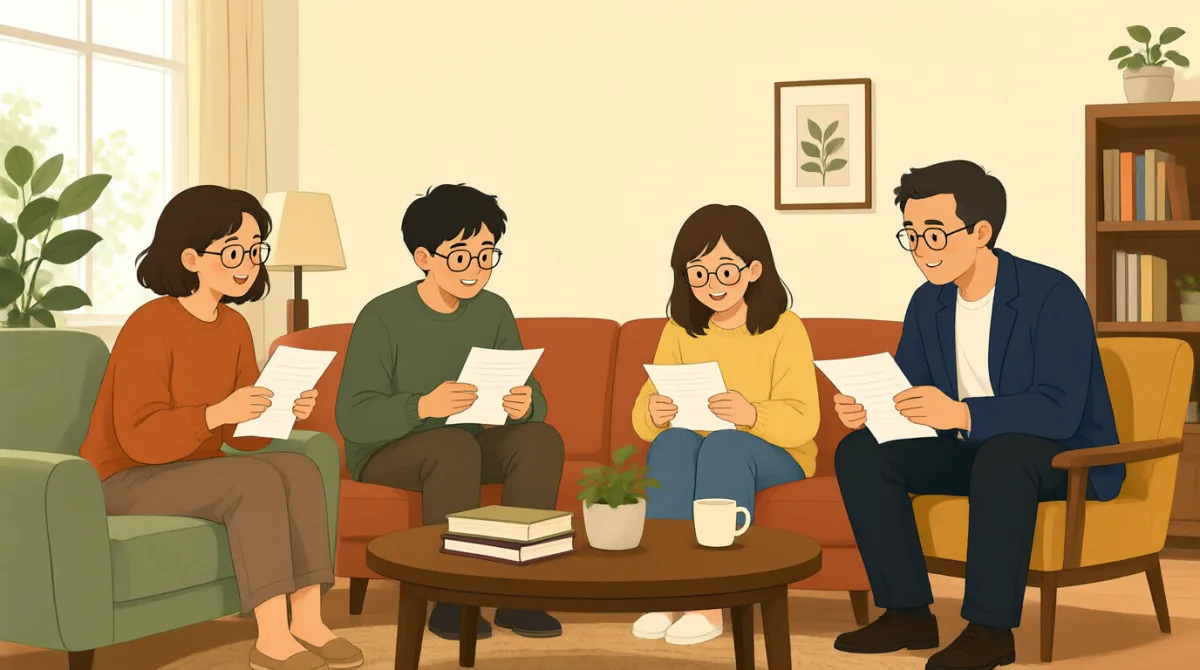

Thanks for making time to go through the reviews together. I’ve read them once, but I’d like us to separate the substantive concerns from the requests that are mainly about presentation.
심사 의견을 같이 살펴볼 시간 내줘서 고마워. 나도 한 번 읽어 봤는데, 핵심적인 우려와 주로 표현 방식에 관한 요청을 구분했으면 해.

Agreed. I made a spreadsheet with each comment, the section it refers to, and a column for our initial assessment. I haven’t drafted any replies yet; I figured we should agree on the substance first.
좋아. 각 의견과 관련된 원고의 절, 그리고 우리 첫 평가를 적을 칸을 넣어서 스프레드시트를 만들었어. 아직 답변은 작성하지 않았어. 우선 내용부터 의견을 맞추는 게 좋을 것 같았거든.

Good. Let’s avoid treating every criticism as equally serious. Some comments may require additional analysis, while others may simply reveal that our explanation wasn’t clear enough to a careful reader.
좋아. 모든 비판을 똑같이 심각한 문제로 취급하지는 말자. 어떤 의견은 추가 분석이 필요할 수도 있지만, 꼼꼼하게 읽는 사람에게 우리 설명이 충분히 명확하지 않았다는 뜻일 수도 있어.
The first reviewer questions how we defined the study population and whether our inclusion criteria could have excluded relevant cases. That sounds methodological, though we should check exactly what the reviewer is concerned about.
첫 번째 심사자는 연구 대상 집단을 어떻게 정의했는지, 그리고 선정 기준 때문에 관련 사례가 제외될 수 있었는지 묻고 있어. 방법론에 관한 지적 같긴 한데, 심사자가 정확히 뭘 우려하는지 확인해 봐야겠어.
I read that as a request to clarify the recruitment process, not necessarily an argument that the sample itself is invalid. The comment asks for more detail about when participants were screened and by whom.
나는 그 의견을 표본 자체가 타당하지 않다는 주장이라기보다는 모집 절차를 명확히 설명해 달라는 요청으로 읽었어. 참가자를 언제, 누가 선별했는지 더 자세히 써 달라는 거야.
That distinction matters. Let’s mark it as methodological, but note that the likely remedy is clarification unless the reviewer identifies a specific source of bias. We shouldn’t concede a flaw we haven’t established.
그 차이가 중요해. 방법론적 우려로 표시하되, 심사자가 구체적인 편향 요인을 지적하지 않는 한 해결책은 설명을 보충하는 것일 가능성이 크다고 메모해 두자. 확인되지 않은 문제를 인정할 필요는 없어.
There’s also a question about how we handled missing responses. We describe the procedure briefly in the methods section, but perhaps we never explain why that approach was appropriate for this dataset.
응답 누락을 어떻게 처리했는지에 대한 질문도 있어. 방법 절에 절차를 간략히 설명하긴 했는데, 그 방법이 이 데이터에 적절한 이유는 설명하지 않았을 수도 있어.
Right. I’d put that under clarification for now, with a note to verify the analysis details. If our rationale is sound, we can make it explicit; if not, we may need to revisit the method.
맞아. 일단은 설명 요청으로 분류하고 분석 세부 사항을 확인해야 한다고 적어 두자. 근거가 타당하면 분명하게 설명하면 되고, 그렇지 않으면 방법을 다시 검토해야 할 수도 있어.
The remaining comments seem more straightforward: define two abbreviations, add a citation for an established measure, and correct a table note. Those are minor revisions, but they still deserve precise attention.
나머지 의견은 좀 더 간단해 보여. 약어 두 개를 풀어 쓰고, 널리 쓰이는 측정 도구의 출처를 추가하고, 표 주석을 수정하라는 거야. 사소한 수정이긴 하지만 그래도 꼼꼼하게 살펴봐야 해.
Then our first pass gives us three categories: methodological concerns to examine, points needing clearer explanation, and minor revisions. Jack, could you check the missing-data procedure while I review the population criteria?
그럼 우선 세 가지로 나눌 수 있겠네. 검토가 필요한 방법론적 우려, 설명을 더 명확히 해야 하는 부분, 그리고 사소한 수정. 잭, 네가 결측 자료 처리 절차를 확인해 줄래? 나는 연구 대상 집단의 선정 기준을 살펴볼게.
Sure. I’ll compare the manuscript with our analysis notes so we don’t promise a change that contradicts what we actually did. Once we’ve checked the facts, we can decide how each point should be addressed.
좋아. 우리가 실제로 한 일과 어긋나는 변경을 약속하지 않도록 원고와 분석 기록을 대조해 볼게. 사실관계를 확인한 뒤에 각 의견에 어떻게 대응할지 정하면 되겠어.
Excellent. For now, let’s resist drafting defensive language. A careful classification gives us room to respond firmly where the evidence supports us and candidly where the manuscript needs improvement.
좋아. 우선 방어적인 표현부터 쓰려는 건 참자. 의견을 꼼꼼히 분류해 두면 근거가 있을 때는 단호하게, 원고를 개선해야 할 때는 솔직하게 답할 여지가 생겨.
어휘8
- substantive concerns핵심적인 우려
Important issues that affect the substance or validity of a study, rather than its wording or presentation. Use this phrase to distinguish major problems from minor editorial requests.
표현이나 구성 방식이 아니라 연구의 내용이나 타당성에 영향을 주는 중요한 문제예요. 사소한 편집 요청과 중요한 문제를 구분할 때 쓰는 표현이에요.
- initial assessment초기 평가
An early judgment about a comment or situation, made before a final decision. It is useful when organizing feedback that still needs investigation.
최종 결정을 내리기 전에 의견이나 상황을 먼저 판단한 결과예요. 추가로 확인할 내용이 있는 피드백을 정리할 때 유용해요.
- inclusion criteria선정 기준
The rules used to decide which people or cases are eligible for a study. Researchers can explain these criteria when reviewers ask how the study population was selected.
연구에 어떤 사람이나 사례를 포함할지 정하는 규칙이에요. 심사자가 연구 대상 집단의 선정 과정을 물으면 이 기준을 설명할 수 있어요.
- source of bias편향 요인
A factor that may systematically distort research findings. Use this phrase when considering whether a method or selection process could have affected the results.
연구 결과를 일정한 방향으로 왜곡할 수 있는 요인이에요. 방법이나 선정 과정이 결과에 영향을 미쳤는지 살펴볼 때 쓰는 표현이에요.
- missing responses누락된 응답
Answers or observations that were not provided or recorded. In research discussions, the phrase often refers to how incomplete data were handled.
제공되지 않았거나 기록되지 않은 답변이나 관측값이에요. 연구 관련 논의에서는 불완전한 데이터를 어떻게 처리했는지를 가리키는 경우가 많아요.
- make it explicit명확히 밝히다
To state something clearly and directly rather than leaving it implied. Researchers can use this phrase when a reviewer needs a clearer explanation of the rationale for a method.
어떤 내용을 암시만 하지 않고 분명하고 직접적으로 설명하는 거예요. 심사자가 방법의 근거를 더 명확하게 설명해 달라고 할 때 쓸 수 있어요.
- minor revisions사소한 수정
Small changes to a manuscript, such as defining abbreviations or correcting a table note. The phrase distinguishes these edits from changes to the study’s methods or conclusions.
약어를 풀어 쓰거나 표 주석을 고치는 것처럼 원고에 가하는 작은 변경이에요. 연구 방법이나 결론을 바꾸는 일과 구분할 때 쓰는 표현이에요.
- candidly솔직하게
In an open and honest way, without hiding a problem. It is useful when agreeing to acknowledge a genuine weakness in a manuscript.
문제를 숨기지 않고 솔직하게 드러내는 방식이에요. 원고의 실제 약점을 인정할 때 유용한 표현이에요.
핵심 문장7
- 1
I’ve read them once, but I’d like us to separate the substantive concerns from the requests that are mainly about presentation.
I’ve read them once, but I’d like us to separate the substantive concerns from the requests that are mainly about presentation.
This tactfully proposes a way to organize feedback by importance. Reuse the structure “I’d like us to separate X from Y” when distinguishing different kinds of issues.
피드백을 중요도에 따라 정리하자고 정중하게 제안하는 문장이에요. 서로 다른 종류의 문제를 구분할 때 “I’d like us to separate X from Y” 구조를 활용해 보세요.
- 2
Some comments may require additional analysis, while others may simply reveal that our explanation wasn’t clear enough to a careful reader.
Some comments may require additional analysis, while others may simply reveal that our explanation wasn’t clear enough to a careful reader.
This sentence avoids assuming that every criticism points to a research flaw. Use “while others may simply…” to contrast more serious issues with problems of clarity.
모든 비판이 연구의 결함을 가리킨다고 단정하지 않는 문장이에요. 더 심각한 문제와 설명의 명확성 문제를 대조할 때 “while others may simply…”를 활용해 보세요.
- 3
That distinction matters.
That distinction matters.
This concise sentence emphasizes that two interpretations should not be treated as equivalent. Use it to signal that a difference in meaning or category will affect the next decision.
두 가지 해석을 같은 것으로 취급해서는 안 된다는 점을 간결하게 강조하는 문장이에요. 의미나 범주의 차이가 다음 결정에 영향을 준다는 점을 알릴 때 쓰세요.
- 4
We shouldn’t concede a flaw we haven’t established.
We shouldn’t concede a flaw we haven’t established.
This is a measured way to resist admitting a problem before checking the evidence. It is useful in professional discussions where a response needs to be both fair and precise.
근거를 확인하기 전에 문제를 인정하지 않겠다는 뜻을 신중하게 전달하는 표현이에요. 공정하면서도 정확한 답변이 필요한 업무상 논의에 유용해요.
- 5
If our rationale is sound, we can make it explicit; if not, we may need to revisit the method.
If our rationale is sound, we can make it explicit; if not, we may need to revisit the method.
This sentence sets out two possible next steps depending on what the evidence shows. Reuse the “If X, …; if not, …” structure to describe a balanced decision process.
근거를 확인한 결과에 따라 두 가지로 나뉘는 다음 단계를 설명하는 문장이에요. 균형 잡힌 의사 결정 과정을 말할 때 “If X, …; if not, …” 구조를 활용해 보세요.
- 6
I’ll compare the manuscript with our analysis notes so we don’t promise a change that contradicts what we actually did.
I’ll compare the manuscript with our analysis notes so we don’t promise a change that contradicts what we actually did.
This explains a practical safeguard before replying to reviewers. Use “so we don’t…” to describe how an action will prevent a specific mistake.
심사자에게 답변하기 전에 실수를 막기 위한 실질적인 조치를 설명해요. 어떤 행동으로 특정 실수를 방지할 수 있는지 말할 때 “so we don’t…”를 활용해 보세요.
- 7
A careful classification gives us room to respond firmly where the evidence supports us and candidly where the manuscript needs improvement.
A careful classification gives us room to respond firmly where the evidence supports us and candidly where the manuscript needs improvement.
This summarizes how a well-organized response can be both confident and honest. The parallel structure “firmly where… and candidly where…” is useful for expressing a balanced approach.
잘 정리된 답변은 자신감과 솔직함을 모두 갖출 수 있다는 점을 요약해요. 균형 잡힌 태도를 표현할 때 “firmly where… and candidly where…”처럼 병렬 구조를 활용하면 좋아요.