The Move-Out Walkthrough
퇴거 점검
Emma and her landlord, David, walk through the apartment together. They discuss a few marks and repairs, and Emma asks David to note their observations on the inspection form.
에마와 집주인 데이비드가 함께 아파트를 둘러봅니다. 몇 군데의 자국과 수리할 곳에 대해 이야기하고, 에마는 점검표에 확인한 내용을 적어 달라고 합니다.
대화11
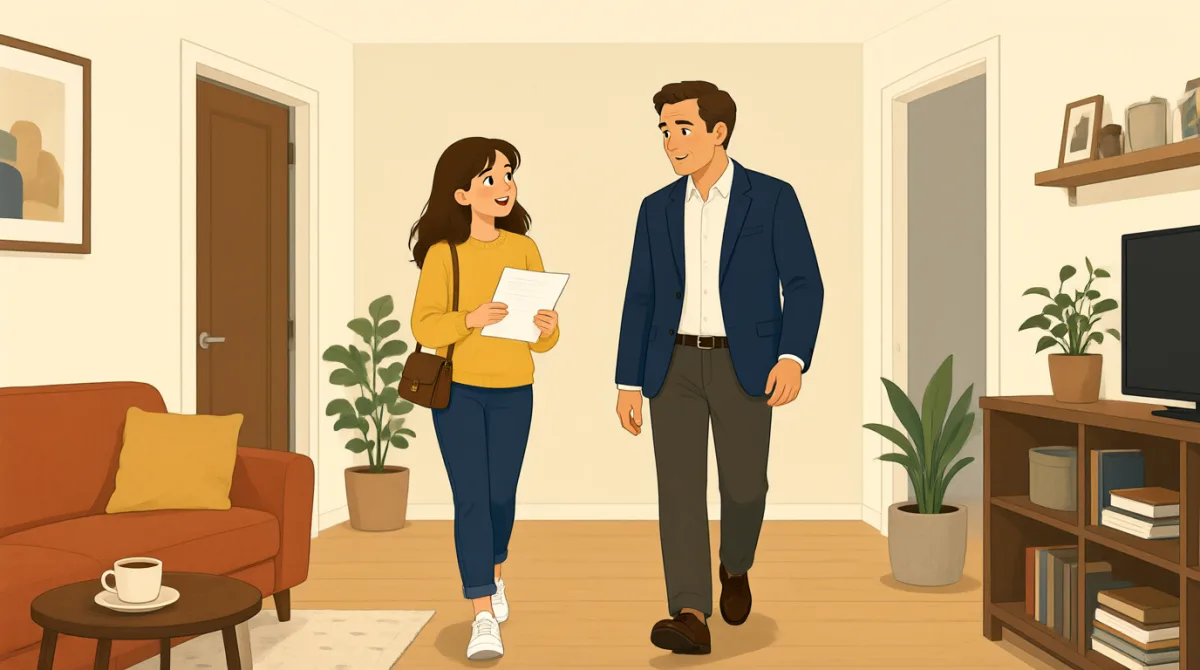

Thanks for meeting me for the walkthrough, David. I’ve got my move-in checklist and photos on my phone, so we can compare anything that’s changed.
퇴거 점검을 함께해 주셔서 감사해요, 데이비드. 입주 점검표와 사진을 휴대폰에 가지고 왔어요. 바뀐 게 있는지 함께 비교해 볼 수 있어요.

That should make things easier. Let’s go room by room, and I’ll note the condition of each area on the inspection form as we go.
그럼 확인하기가 더 쉽겠네요. 방마다 차례로 둘러보고, 제가 점검표에 각 공간의 상태를 적을게요.
In the living room, there’s that small scuff near the doorway. It was already there when I moved in, and I’ve got a photo dated that week.
거실에는 출입구 근처에 작은 긁힌 자국이 있어요. 제가 입주했을 때부터 있던 거고, 그 주에 찍은 사진도 있어요.
I see it. It’s not a major issue, but let’s put it down as pre-existing so there’s no confusion when I review the deposit later.
보이네요. 큰 문제는 아니지만, 나중에 보증금을 검토할 때 혼동이 없도록 기존에 있던 자국이라고 적어 둘게요.
Great, thank you. The bedroom wall has a few faint marks, too. I wiped them, but I don’t want to overstate what came off.
좋아요, 감사합니다. 침실 벽에도 희미한 자국이 몇 개 있어요. 닦아 보긴 했지만, 얼마나 지워졌는지 과장해서 말하고 싶진 않아요.
That’s fair. I’d call those minor marks rather than damage. I’ll note their location and that they’re light, so we’re both working from the same record.
그럴 만해요. 손상이라기보다는 가벼운 자국이라고 하는 게 맞겠네요. 위치와 자국이 희미하다는 점을 적어서 서로 같은 기록을 기준으로 이야기할 수 있게 할게요.
There’s also a loose handle on the kitchen cabinet. It was wobbly at move-in, although it seems a little looser now.
주방 수납장 손잡이도 헐거워요. 입주할 때부터 흔들렸는데, 지금은 조금 더 헐거워진 것 같아요.
I can see that. Let’s note that it was loose at move-in and needs attention now. I’ll check the original checklist before deciding whether it needs repair.
그러네요. 입주할 때도 헐거웠고 지금은 점검이 필요하다고 적어 둘게요. 수리가 필요한지는 원래 점검표를 확인한 다음에 결정하겠습니다.
That sounds reasonable. Could you make sure the form says which items were already there and which ones may have changed? I’d like us to have a clear record.
그게 합리적이네요. 어떤 항목이 원래부터 있었고 어떤 항목이 바뀌었을 수도 있는지 점검표에 확실히 적어 주시겠어요? 저희 둘 다 정확한 기록을 가지고 있으면 좋겠어요.
Absolutely. I’ll write that in, and you can take a look before you sign. Signing just confirms we completed the walkthrough, not that you agree with any future deductions.
물론이죠. 그렇게 적어 둘게요. 서명하기 전에 내용을 확인하시면 돼요. 서명은 점검을 마쳤다는 뜻일 뿐, 앞으로 있을지도 모르는 어떤 공제에 동의한다는 뜻은 아닙니다.
I appreciate that. I’ll read it over carefully, then take a photo of the completed form so I have a copy alongside my move-in records.
그렇게 말씀해 주셔서 감사해요. 꼼꼼히 읽어 본 다음, 작성된 점검표를 사진으로 찍어서 입주 당시 기록과 함께 보관할게요.
어휘8
- walkthrough현장 점검, 둘러보기
A careful inspection of a place, often done together before someone moves out. Here, Emma and David check the apartment’s condition.
장소를 꼼꼼히 살펴보는 일을 말해요. 퇴거 전에 함께 확인하는 경우가 많아요. 여기서는 에마와 데이비드가 아파트 상태를 점검해요.
- move-in checklist입주 점검표
A list that records the condition of a home when a tenant moves in. It can help show whether a mark or problem was already there.
세입자가 입주할 때 집의 상태를 기록하는 목록이에요. 자국이나 문제가 원래부터 있었는지 확인하는 데 도움이 돼요.
- pre-existing기존에 있던
Already present before a particular time or event. Here, the scuff was in the apartment before Emma moved in.
특정 시점이나 사건보다 앞서 이미 존재했다는 뜻이에요. 여기서는 에마가 입주하기 전부터 긁힌 자국이 아파트에 있었어요.
- overstate과장하다
To describe something as more serious or important than it really is. Emma uses it to say she does not want to exaggerate how much of the marks she removed.
어떤 일을 실제보다 더 심각하거나 중요하게 표현하는 거예요. 에마는 자국이 얼마나 지워졌는지 부풀려 말하고 싶지 않다고 해요.
- working from the same record같은 기록을 기준으로 이야기하다
Using the same written information so everyone has a shared understanding. It is useful when discussing details that could later be disputed.
모두가 같은 서면 정보를 바탕으로 이해하고 이야기한다는 뜻이에요. 나중에 이견이 생길 수 있는 세부 사항을 논의할 때 유용해요.
- needs attention점검이 필요하다
Needs to be checked, dealt with, or possibly repaired. David uses this careful phrase for the loose cabinet handle.
확인하거나 조치해야 하며, 수리가 필요할 수도 있다는 뜻이에요. 데이비드는 헐거운 수납장 손잡이에 대해 신중하게 이렇게 표현해요.
- make sure확실히 하다
To take care that something happens or is done correctly. Emma asks David to make sure the form clearly identifies the items’ condition.
어떤 일이 제대로 이루어지도록 주의를 기울인다는 뜻이에요. 에마는 점검표에 항목의 상태를 분명히 적어 달라고 데이비드에게 부탁해요.
- read it over꼼꼼히 읽어 보다
To read something carefully, often to check it for accuracy. Emma plans to review the form before signing it.
내용이 정확한지 확인하려고 주의 깊게 읽는다는 뜻이에요. 에마는 서명하기 전에 점검표를 확인할 생각이에요.
핵심 문장7
- 1
I’ve got my move-in checklist and photos on my phone, so we can compare anything that’s changed.
입주 점검표와 사진을 휴대폰에 가지고 왔어요. 바뀐 게 있는지 함께 비교해 볼 수 있어요.
This explains what evidence you have and why it may help. You can reuse “I’ve got [record or evidence], so we can compare…” when reviewing changes or resolving a disagreement.
어떤 자료나 증거를 가지고 있는지, 그리고 왜 도움이 될 수 있는지를 설명하는 문장이에요. 변경 사항을 확인하거나 의견 차이를 해결할 때 “I’ve got [기록이나 증거], so we can compare…”(저에게 [기록이나 증거]가 있으니 함께 비교해 볼 수 있어요)라는 표현을 활용할 수 있어요.
- 2
It was already there when I moved in, and I’ve got a photo dated that week.
제가 입주했을 때부터 있던 거고, 그 주에 찍은 사진도 있어요.
This calmly states that a problem existed earlier and mentions supporting evidence. It is useful when you need to distinguish pre-existing damage from something that happened later.
문제가 예전부터 있었다는 점을 차분하게 설명하고, 이를 뒷받침할 증거도 언급하는 표현이에요. 기존에 있던 손상과 나중에 생긴 손상을 구분해야 할 때 유용해요.
- 3
I’d call those minor marks rather than damage.
손상이라기보다는 가벼운 자국이라고 하는 게 맞겠네요.
This is a tactful way to describe a problem without making it sound more serious than it is. Reuse “I’d call that [description] rather than [stronger description]” to express a measured opinion.
문제를 실제보다 심각하게 들리지 않도록 배려하며 설명하는 표현이에요. 신중한 의견을 전할 때 “I’d call that [설명] rather than [더 강한 표현]”(그건 [더 강한 표현]이라기보다 [설명]이라고 하는 게 맞겠어요)이라고 말해 보세요.
- 4
Let’s note that it was loose at move-in and needs attention now.
입주할 때도 헐거웠고 지금은 점검이 필요하다고 적어 둘게요.
This records both the earlier condition and the current issue without immediately assigning blame. You can use “Let’s note that…” to suggest adding a clear detail to a shared record.
예전 상태와 현재의 문제를 함께 기록하면서도, 누구의 책임인지 바로 단정하지 않는 표현이에요. 공동 기록에 분명한 내용을 추가하자고 제안할 때 “Let’s note that…”(…라고 적어 둬요)라고 말할 수 있어요.
- 5
Could you make sure the form says which items were already there and which ones may have changed?
어떤 항목이 원래부터 있었고 어떤 항목이 바뀌었을 수도 있는지 점검표에 확실히 적어 주시겠어요?
This polite request asks for a specific distinction to be included in writing. Reuse “Could you make sure [document] says…” when asking someone to record important details.
문서에 특정한 구분을 서면으로 남겨 달라고 정중하게 부탁하는 표현이에요. 중요한 내용을 기록해 달라고 할 때 “Could you make sure [문서] says…”([문서]에 …라고 확실히 적어 주시겠어요?)를 활용해 보세요.
- 6
Signing just confirms we completed the walkthrough, not that you agree with any future deductions.
서명은 점검을 마쳤다는 뜻일 뿐, 앞으로 있을지도 모르는 어떤 공제에 동의한다는 뜻은 아닙니다.
This clarifies what a signature means and limits the chance of misunderstanding. It is useful to ask what signing a document confirms before you agree to it.
서명이 의미하는 바를 분명히 해서 오해를 줄이는 표현이에요. 문서에 동의하기 전에 서명이 무엇을 확인해 주는지 물어보면 좋아요.
- 7
I’ll read it over carefully, then take a photo of the completed form so I have a copy alongside my move-in records.
꼼꼼히 읽어 본 다음, 작성된 점검표를 사진으로 찍어서 입주 당시 기록과 함께 보관할게요.
This describes practical steps for checking and keeping a record. You can adapt the pattern “I’ll [review something], then [save or share a copy]” when handling important paperwork.
문서를 확인하고 기록을 보관하기 위한 실용적인 절차를 설명하는 문장이에요. 중요한 서류를 다룰 때 “I’ll [무언가를 확인할게요], then [사본을 저장하거나 공유할게요]”라는 틀을 응용할 수 있어요.