The First Practice
첫 연습
Emma meets teammate Leo at her first practice. They warm up together, learn a few team plays, and talk about what to expect in their first game.
에마는 첫 연습에서 팀 동료 레오를 만나요. 둘은 함께 몸을 풀고 팀 전술 몇 가지를 배우며, 첫 경기에서 어떤 일이 있을지 이야기해요.
대화9
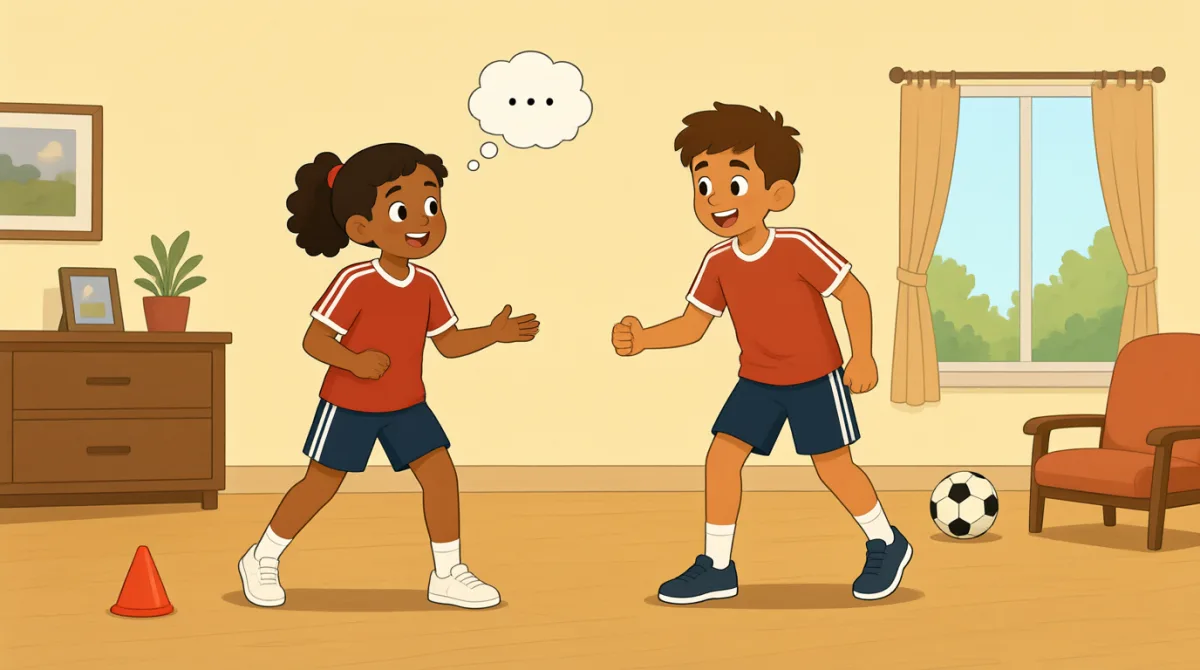

Hey, you must be Emma. I’m Leo. Welcome to your first practice! We’re just getting started with warm-ups.
안녕, 네가 에마구나. 난 레오야. 첫 연습에 온 걸 환영해! 지금 막 준비 운동을 시작하려던 참이야.

Hi, Leo! Thanks. I’m a little nervous, to be honest. I haven’t played on a team in years.
안녕, 레오! 고마워. 솔직히 말하면 조금 긴장돼. 팀에서 경기해 본 지 몇 년 됐거든.
No worries. We’ll take it easy at first. Jog two laps, then we’ll stretch and work on passing.
걱정 마. 처음엔 천천히 할 거야. 두 바퀴 가볍게 뛰고, 그다음 스트레칭하고 패스 연습을 하자.
Sounds good. Is there anything I should watch out for? I’m still getting used to playing on grass.
좋아. 조심해야 할 게 있어? 아직 잔디에서 뛰는 게 익숙하지 않아서.
Just keep your head up when you pass, and call out if you’re open. It helps everyone stay on the same page.
패스할 때는 고개를 들고 주변을 살펴봐. 그리고 패스받을 수 있는 위치에 있으면 크게 외쳐 줘. 그래야 다 같이 상황을 잘 파악할 수 있어.
Got it. What are those cones for? Are we practicing a set play or just working on positioning?
알겠어. 저 콘들은 뭐에 쓰는 거야? 정해진 전술을 연습하는 거야, 아니면 자리 잡는 연습만 하는 거야?
A bit of both. We’ll try a simple corner play, then practice moving into space. Don’t worry if it takes a few tries.
둘 다 조금씩 할 거야. 간단한 코너킥 전술을 해 보고, 빈 공간으로 움직이는 연습도 할 거야. 몇 번 해 봐야 익숙해져도 걱정하지 마.
That makes me feel better. Do you think I’ll be ready for our first game next week?
그렇게 말해 주니까 마음이 놓여. 다음 주 첫 경기에 준비가 될 것 같아?
Definitely. The first game is mostly about communicating and having fun. We’ll figure things out as we go.
당연하지. 첫 경기는 주로 서로 소통하면서 즐기는 게 중요해. 하다 보면 하나씩 알게 될 거야.
어휘7
- warm-ups준비 운동
Light exercises you do before a sport to prepare your body. You can say, “We’ll do some warm-ups before practice.”
운동을 하기 전에 몸을 풀고 준비하려고 하는 가벼운 운동이에요. “We’ll do some warm-ups before practice.”(연습 전에 준비 운동을 좀 할 거야.)처럼 말할 수 있어요.
- take it easy천천히 하다, 무리하지 않다
To do something gently or without too much effort. Here, Leo means they will start the practice slowly.
무리한 노력 없이 부드럽게 무언가를 하는 거예요. 여기서 레오는 연습을 천천히 시작하자는 뜻으로 말했어요.
- keep your head up고개를 들다, 주변을 살피다
To look around instead of down while playing. In other situations, it can also mean to stay positive.
경기 중에 아래만 보지 않고 주변을 살피는 거예요. 다른 상황에서는 긍정적인 마음을 유지하라는 뜻으로도 쓸 수 있어요.
- call out크게 외치다
To say something loudly so other people can hear. In the game, Emma can call out to let teammates know she is open.
다른 사람들도 들을 수 있도록 큰 소리로 말하는 거예요. 경기 중에 에마는 패스를 받을 수 있는 위치에 있다고 팀원들에게 알리려고 외칠 수 있어요.
- on the same page같은 생각을 하다, 서로 상황을 공유하다
Having the same understanding or plan. You can use it when a group needs to communicate clearly.
같은 이해나 계획을 갖고 있다는 뜻이에요. 여러 사람이 명확하게 소통해야 하는 상황에서 쓸 수 있어요.
- set play정해진 전술
A planned movement or strategy used in a sport. Teams often practice set plays before a game.
스포츠에서 미리 정해 놓은 움직임이나 전략이에요. 팀들은 경기 전에 정해진 전술을 자주 연습해요.
- as we go해 나가면서, 진행하면서
While something is happening, rather than planning every detail in advance. You can say, “We’ll make changes as we go.”
모든 세부 사항을 미리 계획하기보다 일이 진행되는 동안 하나씩 처리한다는 뜻이에요. “We’ll make changes as we go.”(진행하면서 바꿔 나갈게.)라고 말할 수 있어요.
핵심 문장7
- 1
I’m a little nervous, to be honest.
솔직히 말하면 조금 긴장돼.
This is a natural way to admit how you feel. You can replace “nervous” with another feeling, such as “excited” or “tired.”
자신의 기분을 솔직하게 털어놓을 때 자연스럽게 쓸 수 있는 표현이에요. “nervous” 대신 “excited”(신이 난)나 “tired”(피곤한)처럼 다른 감정을 나타내는 말을 넣어도 돼요.
- 2
We’ll take it easy at first.
처음엔 천천히 할 거야.
Use this to reassure someone that an activity will start gently. You can also say, “Let’s take it easy at first.”
어떤 활동을 무리하지 않고 천천히 시작할 거라고 안심시킬 때 써요. “Let’s take it easy at first.”(처음엔 천천히 하자.)라고 말할 수도 있어요.
- 3
Is there anything I should watch out for?
조심해야 할 게 있어?
This is a useful way to ask about possible problems or important things to notice. Replace “anything” with a specific topic if needed.
혹시 생길 수 있는 문제나 유의해야 할 점을 물을 때 유용한 표현이에요. 필요하면 “anything” 대신 구체적인 주제를 넣어 물어보세요.
- 4
It helps everyone stay on the same page.
그래야 다 같이 상황을 잘 파악할 수 있어.
This explains why clear communication is useful. You can use it when talking about teamwork or making sure a group understands a plan.
명확한 소통이 왜 유용한지 설명하는 표현이에요. 팀워크를 이야기하거나 모두가 계획을 이해하고 있는지 확인할 때 쓸 수 있어요.
- 5
Don’t worry if it takes a few tries.
몇 번 해 봐야 익숙해져도 걱정하지 마.
Use this to reassure someone that learning may take time. You can replace “it” with a skill or task, such as “the new routine.”
무언가를 배우는 데 시간이 걸릴 수 있다고 안심시킬 때 써요. “it” 대신 “the new routine”(새로운 동작 순서)처럼 기술이나 과제를 넣어도 돼요.
- 6
Do you think I’ll be ready for our first game next week?
다음 주 첫 경기에 준비가 될 것 같아?
This is a natural way to ask for someone’s opinion about your readiness. You can change the event or time to fit your situation.
내가 준비가 됐는지 상대방의 의견을 물을 때 자연스럽게 쓸 수 있어요. 상황에 맞게 행사나 시점을 바꿔 말하면 돼요.
- 7
We’ll figure things out as we go.
하다 보면 하나씩 알게 될 거야.
This means you will deal with problems or decisions as they arise. It is useful when you do not need to plan every detail in advance.
문제나 결정이 생길 때마다 그때그때 해결해 나간다는 뜻이에요. 모든 세부 사항을 미리 계획할 필요가 없을 때 유용한 표현이에요.