The First Practice
Emma meets teammate Leo at her first practice. They warm up together, learn a few team plays, and talk about what to expect in their first game.
Dialogue9
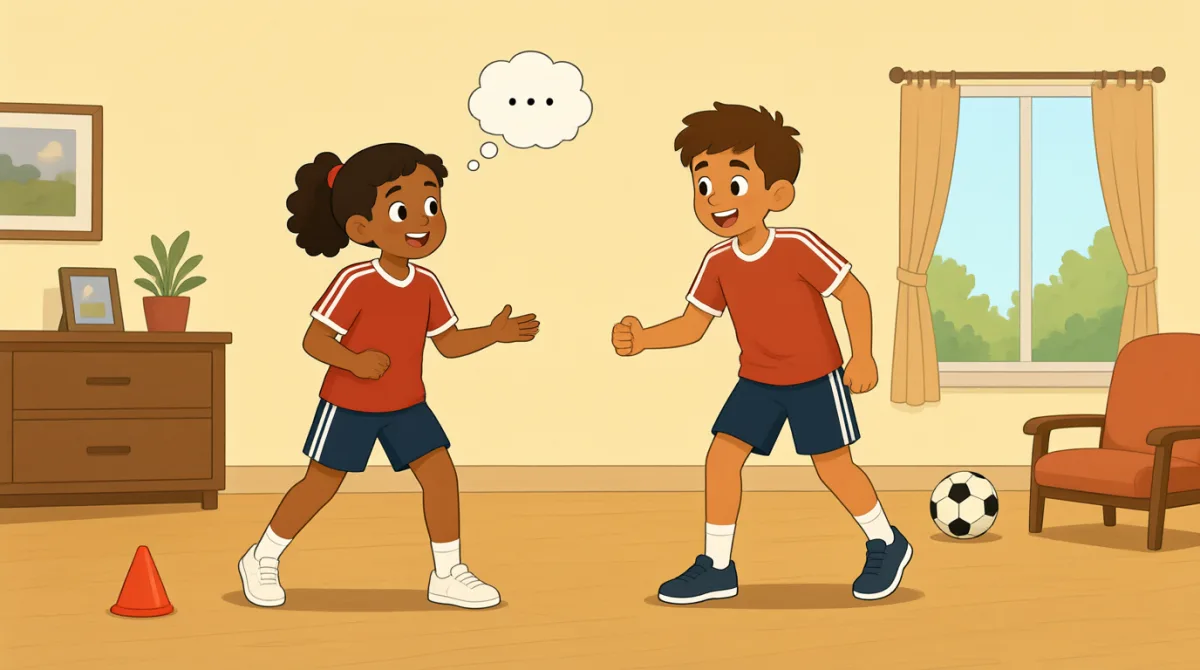

Hey, you must be Emma. I’m Leo. Welcome to your first practice! We’re just getting started with warm-ups.

Hi, Leo! Thanks. I’m a little nervous, to be honest. I haven’t played on a team in years.
No worries. We’ll take it easy at first. Jog two laps, then we’ll stretch and work on passing.
Sounds good. Is there anything I should watch out for? I’m still getting used to playing on grass.
Just keep your head up when you pass, and call out if you’re open. It helps everyone stay on the same page.
Got it. What are those cones for? Are we practicing a set play or just working on positioning?
A bit of both. We’ll try a simple corner play, then practice moving into space. Don’t worry if it takes a few tries.
That makes me feel better. Do you think I’ll be ready for our first game next week?
Definitely. The first game is mostly about communicating and having fun. We’ll figure things out as we go.
Vocabulary7
- warm-ups
Light exercises you do before a sport to prepare your body. You can say, “We’ll do some warm-ups before practice.”
- take it easy
To do something gently or without too much effort. Here, Leo means they will start the practice slowly.
- keep your head up
To look around instead of down while playing. In other situations, it can also mean to stay positive.
- call out
To say something loudly so other people can hear. In the game, Emma can call out to let teammates know she is open.
- on the same page
Having the same understanding or plan. You can use it when a group needs to communicate clearly.
- set play
A planned movement or strategy used in a sport. Teams often practice set plays before a game.
- as we go
While something is happening, rather than planning every detail in advance. You can say, “We’ll make changes as we go.”
Key Sentences7
- 1
I’m a little nervous, to be honest.
This is a natural way to admit how you feel. You can replace “nervous” with another feeling, such as “excited” or “tired.”
- 2
We’ll take it easy at first.
Use this to reassure someone that an activity will start gently. You can also say, “Let’s take it easy at first.”
- 3
Is there anything I should watch out for?
This is a useful way to ask about possible problems or important things to notice. Replace “anything” with a specific topic if needed.
- 4
It helps everyone stay on the same page.
This explains why clear communication is useful. You can use it when talking about teamwork or making sure a group understands a plan.
- 5
Don’t worry if it takes a few tries.
Use this to reassure someone that learning may take time. You can replace “it” with a skill or task, such as “the new routine.”
- 6
Do you think I’ll be ready for our first game next week?
This is a natural way to ask for someone’s opinion about your readiness. You can change the event or time to fit your situation.
- 7
We’ll figure things out as we go.
This means you will deal with problems or decisions as they arise. It is useful when you do not need to plan every detail in advance.