Finding Seats Outside
Szukanie miejsc na zewnątrz
On the ferry, Emma and Jack look for seats outside. They find a place to sit and enjoy the view.
Na promie Emma i Jack szukają miejsc na zewnątrz. Znajdują miejsce do siedzenia i podziwiają widoki.
Dialog8
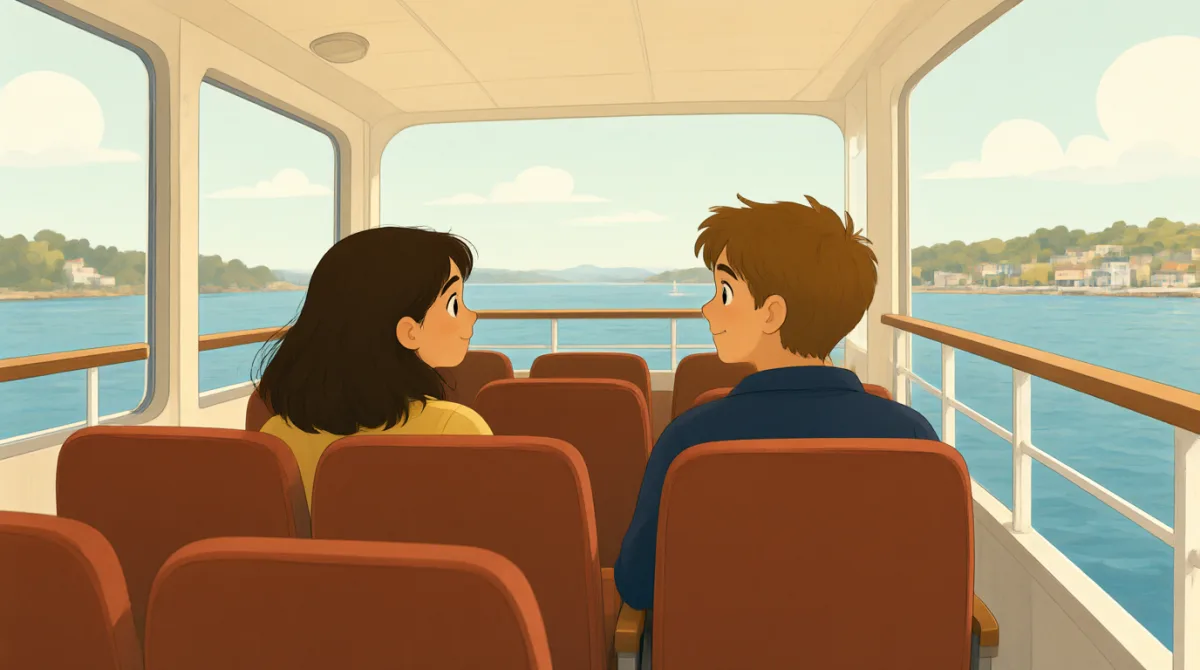

Is there a place to sit outside? I’d love to see the view.
Czy jest gdzieś miejsce na zewnątrz? Chętnie podziwiałabym widoki.

I think there are seats on the upper deck. Let’s go up.
Chyba są miejsca na górnym pokładzie. Chodźmy na górę.
Are these seats free? I don’t see anyone here.
Czy te miejsca są wolne? Nie widzę tu nikogo.
They look free. Let’s sit here, near the rail.
Wyglądają na wolne. Usiądźmy tutaj, przy barierce.
Great! The water looks so blue today.
Świetnie! Woda jest dziś taka niebieska.
Yeah, and we can see the island from here.
No, i stąd widać wyspę.
I’m glad we came outside. It’s much nicer up here.
Cieszę się, że wyszliśmy na zewnątrz. Tutaj na górze jest o wiele przyjemniej.
Me too. Let’s enjoy the ride before we arrive.
Ja też. Cieszmy się rejsem, zanim dopłyniemy.
Słownictwo8
- outsidena zewnątrz
In this conversation, outside means in the open air, not inside the ferry. You can ask, “Can we sit outside?”
W tej rozmowie “outside” oznacza na świeżym powietrzu, a nie wewnątrz promu. Możesz zapytać: “Can we sit outside?” (Czy możemy usiąść na zewnątrz?).
- the viewwidok
The view is what you can see around you, such as the sea and the island. Use “I’d love to see the view” to say you want to look at the scenery.
“The view” to to, co widzisz wokół siebie, na przykład morze i wyspę. Powiedz “I’d love to see the view”, jeśli chcesz podziwiać krajobraz.
- upper deckgórny pokład
The upper deck is the higher level of a boat or ferry. You can say, “Let’s go up to the upper deck.”
“Upper deck” to wyższy poziom łodzi lub promu. Możesz powiedzieć: “Let’s go up to the upper deck.” (Chodźmy na górny pokład).
- freewolny
Here, free means available for someone to use, not costing no money. You can ask, “Is this seat free?”
Tutaj “free” oznacza, że z czegoś można skorzystać, a nie że nic nie kosztuje. Możesz zapytać: “Is this seat free?” (Czy to miejsce jest wolne?).
- near the railprzy barierce
Near the rail means close to the barrier along the edge of the deck. You can use this phrase to describe where you want to sit.
“Near the rail” oznacza blisko barierki wzdłuż krawędzi pokładu. Możesz użyć tego wyrażenia, żeby opisać, gdzie chcesz usiąść.
- the islandwyspa
An island is land with water all around it. In this dialogue, Emma and Jack can see the island from the ferry.
“An island” to ląd otoczony ze wszystkich stron wodą. W tym dialogu Emma i Jack widzą wyspę z promu.
- came outsidewyszliśmy na zewnątrz
“Came outside” means moved from inside to a place outdoors. You can say, “I’m glad we came outside” when you are happy you went outdoors.
“Came outside” oznacza przejście z wnętrza na zewnątrz. Możesz powiedzieć “I’m glad we came outside”, gdy cieszysz się, że wyszliście na dwór.
- arrivedotrzeć
To arrive means to reach a place. Use “before we arrive” to talk about what you can do before reaching your destination.
“To arrive” oznacza dotrzeć do jakiegoś miejsca. Użyj “before we arrive”, by mówić o tym, co można zrobić przed dotarciem do celu.
Kluczowe zdania7
- 1
Is there a place to sit outside?
Czy jest gdzieś miejsce, żeby usiąść na zewnątrz?
Use this question to ask if there is somewhere to sit outdoors. You can replace “outside” with another place, such as “near the window.”
Użyj tego pytania, żeby dowiedzieć się, czy jest gdzieś miejsce do siedzenia na zewnątrz. Możesz zastąpić “outside” innym miejscem, na przykład “near the window” (przy oknie).
- 2
I think there are seats on the upper deck.
Chyba są miejsca na górnym pokładzie.
This is a useful way to share information when you are not completely sure. You can replace “seats” or “on the upper deck” with other details.
To przydatny sposób na przekazanie informacji, gdy nie masz całkowitej pewności. Możesz zastąpić “seats” lub “on the upper deck” innymi szczegółami.
- 3
Are these seats free?
Czy te miejsca są wolne?
Use this question to check if seats are available. You can also ask, “Is this seat free?” when asking about one seat.
Użyj tego pytania, żeby sprawdzić, czy miejsca są wolne. O jedno miejsce możesz też zapytać: “Is this seat free?” (Czy to miejsce jest wolne?).
- 4
Let’s sit here, near the rail.
Usiądźmy tutaj, przy barierce.
Use “Let’s” to suggest doing something together, and add a place to say where. For example, “Let’s sit here, near the window.”
Użyj “Let’s”, żeby zaproponować wspólne zrobienie czegoś, a potem dodaj miejsce, żeby powiedzieć, gdzie. Na przykład: “Let’s sit here, near the window.” (Usiądźmy tutaj, przy oknie).
- 5
The water looks so blue today.
Woda jest dziś taka niebieska.
This sentence describes what you see and gives a simple opinion. You can change “blue” to another describing word, such as “calm.”
To zdanie opisuje to, co widzisz, i wyraża prostą opinię. Możesz zastąpić “blue” innym określeniem, na przykład “calm” (spokojna).
- 6
I’m glad we came outside.
Cieszę się, że wyszliśmy na zewnątrz.
Use this sentence to say you are happy about a choice you made. You can replace “came outside” with another activity, such as “took the ferry.”
Użyj tego zdania, żeby powiedzieć, że cieszysz się z podjętej decyzji. Możesz zastąpić “came outside” inną czynnością, na przykład “took the ferry” (popłynęliśmy promem).
- 7
Let’s enjoy the ride before we arrive.
Cieszmy się rejsem, zanim dopłyniemy.
This is a friendly suggestion to enjoy a journey before reaching your destination. You can replace “the ride” with “the trip.”
To przyjazna propozycja, by cieszyć się podróżą, zanim dotrze się do celu. Możesz zastąpić “the ride” wyrażeniem “the trip”.