Dinner Together
一緒に夕食
Emma joins Grace and Jack for dinner. They talk about local food and make plans for a family outing.
エマはグレースとジャックと一緒に夕食を囲みます。地元の料理について話し、家族で出かける計画を立てます。
会話9
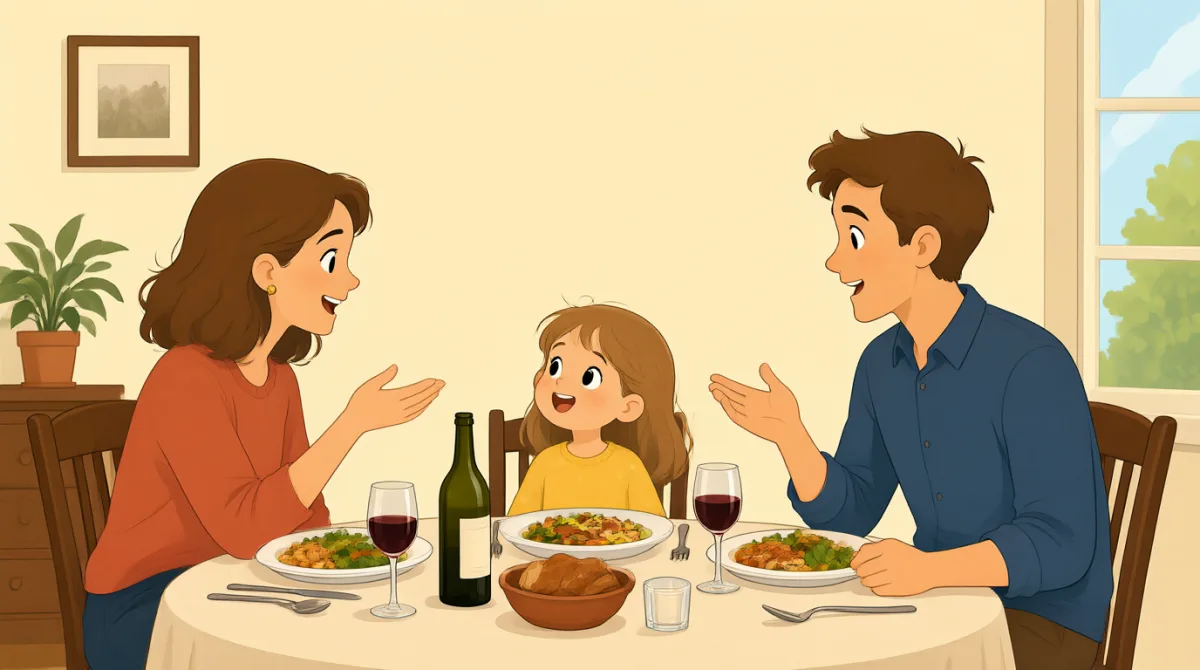

Dinner is ready! Come sit down, Emma. We made a local favorite tonight.
夕食ができたよ!エマ、こっちに座って。今夜は地元で人気の料理を作ったよ。

It smells wonderful. What is it? I’d love to try something new.
いい匂い!何の料理?新しいものを食べてみたいな。

It’s chicken pie with fresh vegetables. There’s salad, too, if you’d like some.
チキンパイだよ。新鮮な野菜も入ってるんだ。サラダもあるよ。よかったらどうぞ。
I’ll try the pie and some salad, please. Do people eat this often here?
パイとサラダを少しもらうね。ここではこれをよく食べるの?
Yes, especially when the weather gets cool. What local food have you tried so far?
そうだね。特に涼しくなるとよく食べるよ。今までにどんな地元の料理を食べた?
I had fish and chips yesterday. It was good, but I’d like to try more.
昨日、フィッシュアンドチップスを食べたよ。おいしかったけど、もっといろいろ試してみたいな。
We could visit the farmers’ market on Saturday. It has local food and nice little shops.
土曜日にファーマーズマーケットに行ってみてもいいね。地元の食べ物や素敵な小さなお店があるよ。
That sounds fun! What time should we go? I’m free in the morning.
楽しそう!何時に行く?午前中なら空いてるよ。
Let’s leave after breakfast, around ten. We can walk there and get a snack.
朝ごはんのあと、10時ごろに出発しよう。歩いて行って、おやつを買うのもいいね。
語彙8
- local favorite地元で人気の料理
A food that many people in a particular area enjoy. Here, it means a popular dish where Grace and Jack live.
ある地域の多くの人に好まれている食べ物のことです。ここでは、グレースとジャックが住んでいる地域で人気の料理を指しています。
- I’d love to try something new.I’d love to try something new.
Use this to say you are excited to taste or do something unfamiliar. You can also say, “I’d love to try [food or activity].”
食べたことのないものを味わったり、慣れないことをしたりするのが楽しみだと伝える表現です。「I’d love to try [食べ物やアクティビティ].」とも言えます。
- if you’d like someif you’d like some
A polite way to offer something. For example, “There’s tea if you’d like some.”
何かを丁寧に勧める言い方です。たとえば、「There’s tea if you’d like some.」(よかったらお茶もあるよ。)のように使います。
- so farso far
This means up to now. Ask, “What have you tried so far?” to learn about someone’s experiences until this moment.
「今までのところ」という意味です。「What have you tried so far?」と聞くと、相手がこれまでに何を経験したか尋ねられます。
- farmers’ marketファーマーズマーケット
A market where people can buy food, often from local farmers. You can use it when talking about places to shop for fresh food.
地元の農家などが販売する食べ物を買える市場です。新鮮な食べ物を買える場所について話すときに使えます。
- That sounds fun!That sounds fun!
Use this to show that you like an idea or plan. You can say it before asking for more details.
相手のアイデアや計画がいいと思ったときに使います。詳しいことを尋ねる前に言うこともできます。
- leave after breakfastleave after breakfast
This means to go somewhere after finishing breakfast. Use “leave after [activity]” to make a simple plan.
朝ごはんを食べ終わってから出かける、という意味です。「leave after [活動]」の形で、簡単な予定を立てられます。
- get a snackget a snack
This means to buy or have a small amount of food between meals. For example, “Let’s get a snack before the trip.”
食事と食事の間に軽く何かを食べたり、買ったりすることです。たとえば、「Let’s get a snack before the trip.」(出かける前に何か軽く食べよう。)のように使います。
重要な文8
- 1
I’d love to try something new.
新しいものを食べてみたいな。
This is a friendly way to show interest in new food or experiences. You can replace “something new” with a specific thing, such as “the local soup.”
新しい食べ物や体験に興味があることを、親しみを込めて伝える表現です。「something new」を「the local soup」のような具体的なものに置き換えられます。
- 2
Do people eat this often here?
ここではこれをよく食べるの?
Use this question to ask whether something is common in a place. Replace “this” with a food, activity, or custom.
ある場所で何かが一般的かどうかを尋ねる表現です。「this」を食べ物、活動、習慣などに置き換えて使えます。
- 3
What local food have you tried so far?
今までにどんな地元の料理を食べた?
This question asks about someone’s experiences up to now. You can reuse the pattern with “What places have you visited so far?”
相手がこれまでに経験したことを尋ねる表現です。「What places have you visited so far?」のように、同じ形で別のことも尋ねられます。
- 4
We could visit the farmers’ market on Saturday.
土曜日にファーマーズマーケットに行ってみてもいいね。
Use “We could” to suggest a possible plan. Replace the place and day to suggest another outing.
「We could」は、実現できそうな予定を提案するときに使います。場所や曜日を変えれば、別のお出かけを提案できます。
- 5
What time should we go?
何時に行く?
This is a simple way to ask someone to choose a time for a plan. You can use it when arranging a visit, meal, or trip.
予定の時間を相手と相談するときの、簡単な尋ね方です。訪問や食事、旅行の予定を決めるときに使えます。
- 6
I’m free in the morning.
午前中なら空いてるよ。
Use this to say when you are available. Replace “in the morning” with another time, such as “after lunch.”
自分の都合がいい時間を伝える表現です。「in the morning」を「after lunch」のような別の時間に置き換えられます。
- 7
Let’s leave after breakfast, around ten.
朝ごはんのあと、10時ごろに出発しよう。
This sentence makes a friendly suggestion and gives an approximate time. You can change the activity and time to plan when to go.
親しみを込めて提案し、おおよその時間も伝える文です。活動や時間を変えて、出発する予定を立てられます。
- 8
We can walk there and get a snack.
歩いて行って、おやつを買うのもいいね。
Use “We can” to suggest what you might do together. Replace “walk” or “get a snack” with other activities.
「We can」は、一緒にできそうなことを提案するときに使います。「walk」や「get a snack」を別の活動に置き換えられます。