Asking to Use the Washing Machine
洗濯機を使わせてもらう
Emma asks Grace how to use the washing machine and when it is okay to do laundry. Grace shows her the settings and offers some helpful tips.
エマがグレースに洗濯機の使い方や洗濯をしてもよい時間を尋ねる。グレースは設定を見せながら、役立つアドバイスをする。
会話8
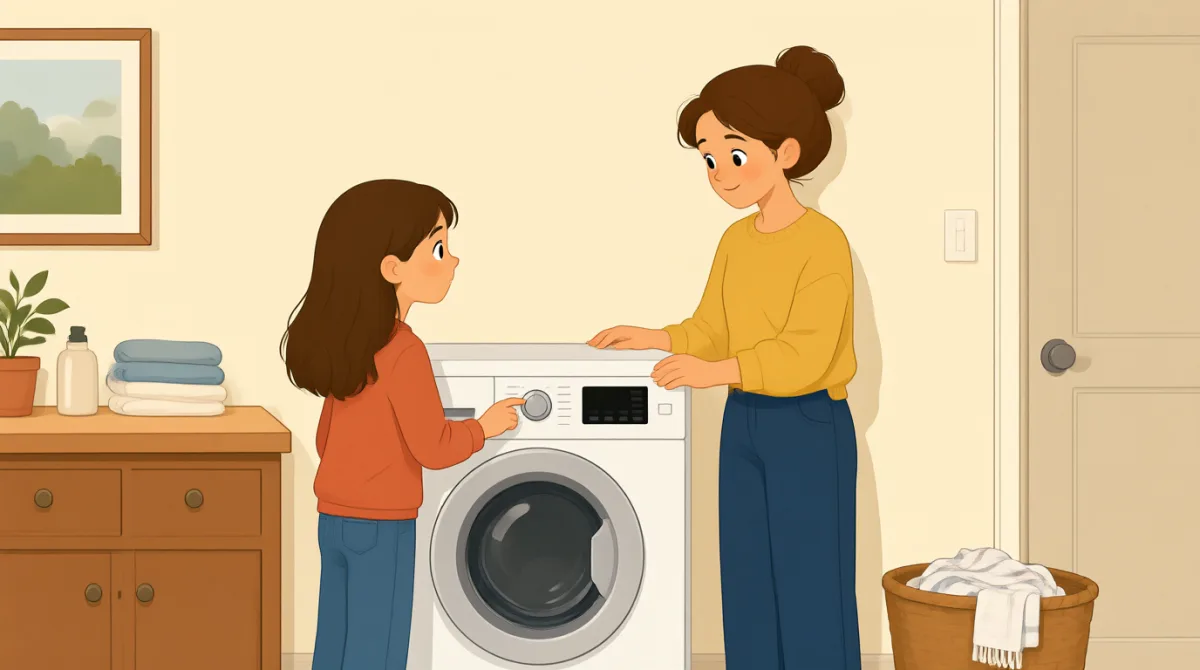

Grace, can I use the washing machine this afternoon?
グレース、今日の午後、洗濯機を使ってもいい?

Of course. It’s in the laundry room, next to the kitchen.
もちろん。洗濯室にあるよ。キッチンの隣ね。
Great. Which button should I press for a normal wash?
よかった。普通に洗うときは、どのボタンを押せばいい?
Use this setting for everyday clothes, and add one cup of detergent.
普段着ならこの設定にして、洗剤をカップ一杯入れてね。
Should I wash my light and dark clothes separately?
薄い色の服と濃い色の服は分けて洗ったほうがいい?
Yes, please. And don’t put sweaters in the dryer; hang them up.
うん、お願い。それと、セーターは乾燥機に入れないでね。干しておいて。
Okay. What time is best? I don’t want to make noise late.
わかった。何時ごろがいい?遅い時間に音を立てたくないんだ。
Any time before nine is fine. Just take your clothes out when it’s done.
9時前ならいつでも大丈夫。終わったら、服を取り出しておいてね。
語彙8
- washing machine洗濯機
A machine that washes clothes with water and soap. You can use it to do laundry at home.
水と洗剤を使って服を洗う機械です。家で洗濯をするときに使います。
- laundry room洗濯室
A room where people wash and dry clothes. In this conversation, it is next to the kitchen.
服を洗ったり乾かしたりする部屋です。この会話では、キッチンの隣にあります。
- normal wash標準洗い
A regular washing program for everyday clothes. You can ask which setting to use by saying, “Which button should I press for a normal wash?”
普段着を洗うための通常の洗濯コースです。“Which button should I press for a normal wash?”(普通に洗うときは、どのボタンを押せばいい?)と聞けば、どの設定を使えばよいか尋ねられます。
- setting設定
A choice on a machine that controls how it works. Choose the right setting for the clothes you are washing.
機械の動作を調整するための選択肢です。洗う服に合った設定を選びましょう。
- detergent洗剤
A soap or liquid used to clean clothes. You add it to the washing machine before you start a wash.
服をきれいにするための粉や液体です。洗濯を始める前に洗濯機に入れます。
- separately別々に
In different groups, not together. People often wash light and dark clothes separately.
一緒にせず、分けてという意味です。薄い色の服と濃い色の服は、別々に洗うことがよくあります。
- hang them up干す
Put clothes on a hanger or clothesline to dry. This is useful for sweaters that should not go in the dryer.
服をハンガーや物干しにかけて乾かすことです。乾燥機に入れないほうがよいセーターを乾かすときに便利です。
- take your clothes out服を取り出す
Remove your clothes from the washing machine. You can use this phrase when reminding someone to get their laundry.
洗濯機から服を出すことです。洗濯物を取り出すよう誰かに伝えるときに使えます。
重要な文8
- 1
Can I use the washing machine this afternoon?
今日の午後、洗濯機を使ってもいい?
Use this polite question to ask permission to use something. You can replace “the washing machine” with another item and “this afternoon” with a different time.
何かを使ってよいか、許可を求める丁寧な質問です。“the washing machine”を別の物に、“this afternoon”を別の時間に置き換えて使えます。
- 2
Which button should I press for a normal wash?
どのボタンを押せば普通に洗えますか?
Use this question when you need help choosing a machine setting. You can replace “a normal wash” with another program or function.
洗濯機の設定を選ぶときに助けが必要なら、この質問を使います。“a normal wash”を別のコースや機能に置き換えられます。
- 3
Use this setting for everyday clothes, and add one cup of detergent.
普段着ならこの設定にして、洗剤をカップ一杯入れてね。
This sentence gives simple instructions for using a washing machine. You can reuse “Use this setting for…” to explain which option is right for a particular task.
洗濯機の使い方を簡単に説明する文です。“Use this setting for…”を使えば、特定の作業にどの選択肢が適しているか説明できます。
- 4
Should I wash my light and dark clothes separately?
薄い色の服と濃い色の服は分けて洗ったほうがいい?
Use “Should I…?” to ask for advice about what to do. You can replace the clothes or action to ask about another household task.
“Should I…?”は、どうしたらよいかアドバイスを求めるときに使います。服や動作を置き換えれば、家事について別の質問ができます。
- 5
And don’t put sweaters in the dryer; hang them up.
それから、セーターは乾燥機に入れないでね。干しておいて。
This sentence gives a warning and a helpful alternative. Use “Don’t…” to say what to avoid, then give a better action.
避けたほうがよいことを伝え、代わりにするとよいことを示す文です。“Don’t…”でしないように伝えてから、よりよい方法を提案します。
- 6
What time is best?
何時ごろがいい?
Use this short question to ask when something is most convenient. You can add an activity, such as “What time is best for laundry?”
何かをするのに都合のよい時間を尋ねる短い質問です。“What time is best for laundry?”(洗濯は何時ごろがいい?)のように、活動を付け加えることもできます。
- 7
Any time before nine is fine.
9時前ならいつでも大丈夫。
This is a simple way to say that several times are okay, as long as they are before a certain time. Replace “nine” with another time to give a different limit.
決まった時刻より前なら、どの時間でもよいと伝える簡単な表現です。“nine”を別の時刻に置き換えて、時間の制限を変えられます。
- 8
Just take your clothes out when it’s done.
終わったら、服を取り出しておいてね。
Use this sentence to remind someone to do something after a machine finishes. You can replace “take your clothes out” with another action.
機械が動き終わったあとにしてほしいことを伝える表現です。“take your clothes out”を別の動作に置き換えられます。