The First Lesson
첫 레슨
Emma joins a beginner lesson with Grace, the ski instructor. Grace shows her how to stand, move, and stop on the snow.
에마가 스키 강사 그레이스의 초급 레슨에 참여해요. 그레이스는 눈 위에서 서고, 움직이고, 멈추는 방법을 알려 줘요.
대화8
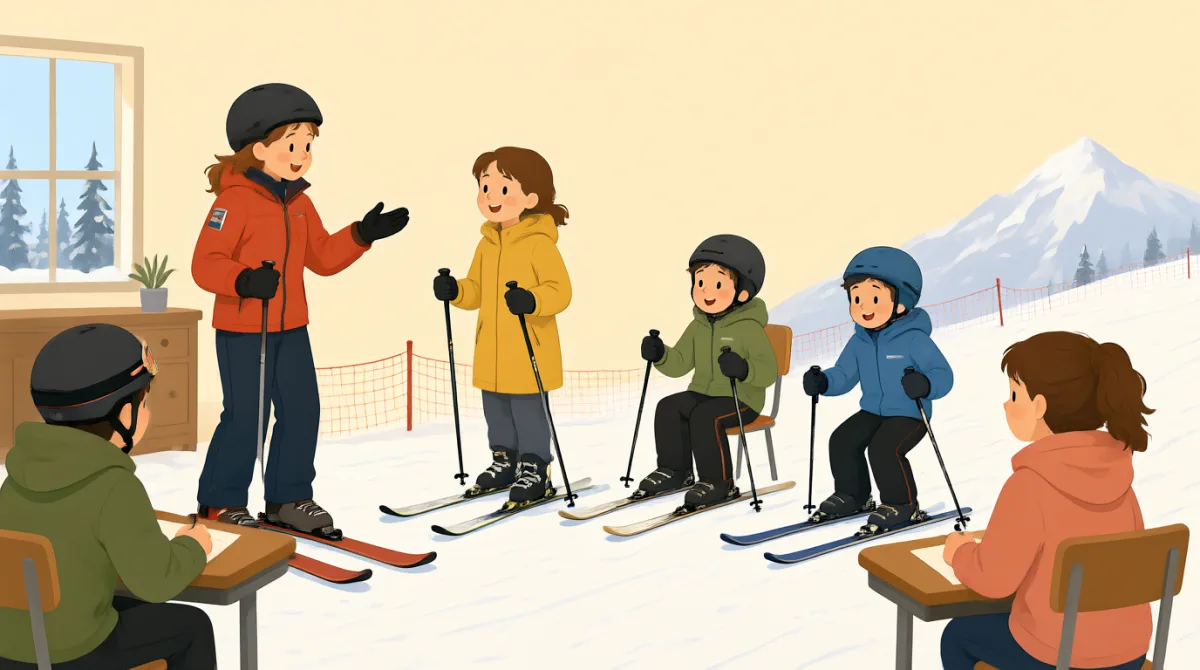

Welcome to your first ski lesson, Emma. Is this your first time on snow?
첫 스키 레슨에 온 걸 환영해요, 에마. 눈 위에 와 보는 건 처음이에요?

Yes! I’m excited, but these boots feel a little strange.
네! 신나지만, 이 부츠가 조금 낯설어요.
That’s normal. First, stand with your feet about shoulder-width apart.
그건 당연해요. 먼저 발을 어깨너비 정도로 벌리고 서세요.
Like this? Should I bend my knees a little?
이렇게요? 무릎을 조금 굽혀야 해요?
Exactly. Keep your knees soft, and lean forward just a little.
맞아요. 무릎에 힘을 살짝 풀고, 몸을 아주 조금 앞으로 기울이세요.
How do I move on the snow without sliding too fast?
너무 빨리 미끄러지지 않고 눈 위에서 어떻게 움직여요?
Take small steps first. To stop, point your ski tips toward each other.
먼저 작은 걸음으로 움직여 보세요. 멈추려면 스키 앞부분을 서로 마주 보게 하세요.
Oh, that makes a snowplow shape. I’ll try it now!
아, 눈을 미는 쟁기 모양이 되네요. 지금 해 볼게요!
어휘8
- first time on snow눈 위에 와 보는 게 처음
This means the first time someone has been on snow. Use it to ask if an activity is new for someone.
누군가 눈 위에 처음 와 봤다는 뜻이에요. 어떤 활동을 처음 해 보는지 물을 때 쓸 수 있어요.
- feel a little strange조금 낯설게 느껴지다
This means something feels unusual or unfamiliar. Use it to describe how new clothes or equipment feel.
무언가가 평소와 다르거나 익숙하지 않게 느껴진다는 뜻이에요. 새 옷이나 장비의 느낌을 설명할 때 써요.
- shoulder-width apart어깨너비로 벌린
This means your feet are as far apart as the width of your shoulders. It describes a stable standing position.
발 사이 간격이 어깨너비만큼이라는 뜻이에요. 안정적으로 서 있는 자세를 설명할 때 써요.
- bend my knees무릎을 굽히다
This means to move your knees so they are not straight. Use it when talking about posture or exercise.
무릎을 곧게 펴지 않고 굽힌다는 뜻이에요. 자세나 운동에 관해 이야기할 때 써요.
- lean forward앞으로 기울이다
This means to move the top of your body toward the front. Use it to give or follow instructions about body position.
상체를 앞쪽으로 움직인다는 뜻이에요. 몸의 자세를 알려 주거나 지시를 따를 때 쓸 수 있어요.
- take small steps작은 걸음으로 걷다
This means to move by making short steps. It is useful advice when you want to move carefully.
짧은 걸음으로 움직인다는 뜻이에요. 조심해서 움직이고 싶을 때 유용한 표현이에요.
- ski tips스키 앞부분
These are the front ends of skis. Ski instructors may use this phrase when explaining how to move or stop.
스키의 앞쪽 끝부분을 말해요. 스키 강사가 움직이거나 멈추는 방법을 설명할 때 쓸 수 있어요.
- snowplow shape눈을 미는 쟁기 모양
This is a shape made when the front ends of the skis point toward each other. Beginners use this position to help stop.
스키 앞부분이 서로 마주 보도록 한 모양이에요. 초보자는 멈추는 데 도움이 되도록 이 자세를 취해요.
핵심 문장8
- 1
Is this your first time on snow?
눈 위에 와 보는 건 처음이에요?
This is a friendly way to ask if someone has done a snow activity before. You can reuse “Is this your first time at/in…?” to ask about a new experience.
상대가 눈과 관련된 활동을 전에 해 본 적 있는지 친근하게 물어보는 표현이에요. 새로운 경험에 관해 물을 때 “Is this your first time at/in…?”을 활용할 수 있어요.
- 2
These boots feel a little strange.
이 부츠가 조금 낯설게 느껴져요.
Use this sentence to say that new footwear or equipment feels unusual. You can replace “boots” with another item, such as “These gloves feel a little strange.”
새 신발이나 장비가 평소와 다르게 느껴진다고 말할 때 써요. “boots” 대신 “These gloves feel a little strange.”처럼 다른 물건을 넣을 수도 있어요.
- 3
First, stand with your feet about shoulder-width apart.
먼저 발을 어깨너비 정도로 벌리고 서세요.
This gives a simple instruction for standing in a stable position. “Stand with your feet…” is useful for explaining how to get ready for an activity.
안정적인 자세로 서는 방법을 간단히 알려 주는 문장이에요. “Stand with your feet…”은 어떤 활동을 시작할 준비를 하는 방법을 설명할 때 유용해요.
- 4
Should I bend my knees a little?
무릎을 조금 굽혀야 해요?
This is a polite way to check whether you are doing something correctly. You can reuse “Should I… a little?” when asking about an action.
무언가를 제대로 하고 있는지 정중하게 확인할 때 쓰는 표현이에요. 어떤 동작을 해야 하는지 물을 때 “Should I… a little?”을 활용할 수 있어요.
- 5
Keep your knees soft, and lean forward just a little.
무릎에 힘을 살짝 풀고, 몸을 아주 조금 앞으로 기울이세요.
This sentence gives two clear instructions about body position. “Keep…” and “lean…” are useful verbs for giving movement directions.
몸의 자세에 관한 두 가지 지시를 분명하게 전달하는 문장이에요. 움직임을 안내할 때 “Keep…”과 “lean…”을 유용하게 쓸 수 있어요.
- 6
How do I move on the snow without sliding too fast?
너무 빨리 미끄러지지 않고 눈 위에서 어떻게 움직여요?
Use this question to ask how to do something safely. You can replace “move on the snow” with another activity, such as “walk on the ice.”
안전하게 무언가를 하는 방법을 물을 때 써요. “move on the snow” 대신 “walk on the ice”처럼 다른 활동을 넣을 수 있어요.
- 7
Take small steps first.
먼저 작은 걸음으로 움직여 보세요.
This is a short instruction to move carefully and slowly. You can use “Take small steps” for other activities that require balance.
조심스럽고 천천히 움직이라고 짧게 지시하는 표현이에요. 균형이 필요한 다른 활동에서도 “Take small steps”를 쓸 수 있어요.
- 8
To stop, point your ski tips toward each other.
멈추려면 스키 앞부분을 서로 마주 보게 하세요.
This explains how to stop while skiing. “To [verb],…” is a useful way to introduce an instruction or explain how to do something.
스키를 타다가 멈추는 방법을 설명해요. “To [verb],…”은 지시를 소개하거나 어떤 일을 하는 방법을 설명할 때 유용한 표현이에요.