Talking To The Coach
コーチと話す
After the lesson, Emma talks with Mia about her daughter’s progress. Mia gives simple advice for practicing safely.
レッスンのあと、エマはミアと娘の上達について話す。ミアは安全に練習するための簡単なアドバイスをする。
会話8
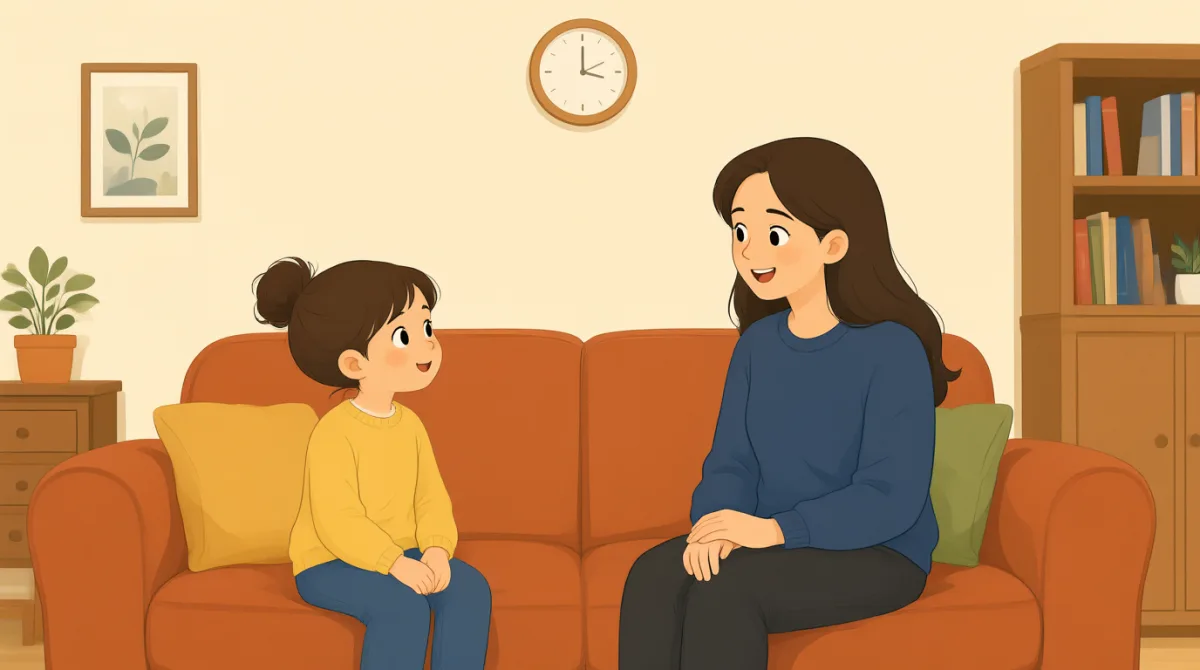

How did my daughter do in her lesson today?
今日のレッスン、娘はどうだった?

She did well. She put her face in the water and kicked across the pool.
よくできてたよ。水に顔をつけて、プールを向こう側まで蹴って進んだよ。
That’s great! She was nervous before class. Did she feel more comfortable?
すごいね!レッスンの前は緊張してたんだ。少しリラックスできた?
Yes, she relaxed after a few minutes. She listened carefully and tried everything.
うん、数分したら落ち着いたよ。よく話を聞いて、何でもやってみてた。
What can we practice at home before her next lesson?
次のレッスンまでに、家で何を練習したらいい?
You can practice blowing bubbles in a bowl of water. Always stay right beside her.
水を入れたボウルで、ブクブクする練習ができるよ。必ずすぐそばについていてね。
Should we practice in a pool too, or wait until next week?
プールでも練習したほうがいいかな?それとも来週まで待ったほうがいい?
A pool is fine, but keep her in shallow water and watch her closely.
プールでも大丈夫だけど、浅いところにいてもらって、しっかり見ていてね。
語彙8
- did wellうまくできた
This means someone performed successfully. You can use it to describe how a person did in a lesson or activity.
誰かがうまくやり遂げた、という意味です。レッスンや活動での様子を伝えるときに使えます。
- put her face in the water水に顔をつけた
This means she lowered her face into the water. It describes a beginner swimming skill.
顔を水の中に入れた、という意味です。水泳初心者が身につける基本的な技術を表します。
- kicked across the poolプールを向こう側まで蹴って進んだ
This means she moved through the pool by kicking her legs. You can use “kicked across” to describe moving through water this way.
足を蹴ってプールの中を進んだ、という意味です。水の中をこうして進むことを表すときは、“kicked across”(蹴って向こう側まで進んだ)と言えます。
- feel more comfortableもっとリラックスできる
This means to feel less nervous or more relaxed. You can ask someone if they felt more comfortable after trying something new.
緊張が和らいだり、気持ちが落ち着いたりすることです。新しいことに挑戦したあと、もっとリラックスできたかを尋ねるときに使えます。
- practice at home家で練習する
This means to do an activity at home to get better at it. You can use this phrase to ask what someone can work on between lessons.
上達するために、家で何かに取り組むことです。レッスンの合間に何を練習できるか尋ねるときに使えます。
- stay right beside herすぐそばについている
This means to remain very close to her. In this conversation, it is advice for keeping a child safe near water.
その人のとても近くにいる、という意味です。この会話では、水のそばで子どもの安全を守るためのアドバイスです。
- shallow water浅い水
This means water that is not deep. It is useful when talking about a safer place for a beginner to practice.
深くない水のことです。初心者がより安全に練習できる場所について話すときに便利です。
- watch her closelyしっかり見ている
This means to pay careful attention to her. You can use it when someone needs to keep an eye on a child or another person.
その人に注意を払って、よく見ているという意味です。子どもやほかの人から目を離さないように伝えるときに使えます。
重要な文6
- 1
How did my daughter do in her lesson today?
今日のレッスン、娘はどうだった?
This is a natural way to ask how someone performed in a lesson. You can replace “my daughter” with another person or “her lesson” with another activity.
レッスンでの様子を尋ねる自然な言い方です。“my daughter”を別の人に、“her lesson”を別の活動に置き換えて使えます。
- 2
She did well.
よくできてたよ。
This is a simple, positive way to describe someone’s performance. You can use it to give a quick update after a class or activity.
誰かの出来を簡潔に、前向きに伝える表現です。授業や活動のあとに、手短に様子を伝えるときに使えます。
- 3
Did she feel more comfortable?
少しリラックスできた?
Use this question to ask if someone became less nervous. You can change “she” to another person, such as “you” or “he.”
緊張が和らいだかを尋ねる質問です。“she”は、“you”や“he”など、別の人を表す言葉に変えられます。
- 4
What can we practice at home before her next lesson?
次のレッスンまでに、家で何を練習したらいい?
This is a useful question when asking for ideas to help someone improve between lessons. Change “at home” or “her next lesson” to fit your situation.
レッスンとレッスンの間に上達するため、何を練習すればいいか尋ねる便利な質問です。状況に合わせて、“at home”や“her next lesson”を変えて使えます。
- 5
Always stay right beside her.
必ずすぐそばについていてね。
This gives a clear safety instruction. You can replace “her” with the person you need to stay close to.
安全のための指示をはっきり伝える表現です。“her”は、そばにいてあげる必要がある人に置き換えられます。
- 6
A pool is fine, but keep her in shallow water and watch her closely.
プールでも大丈夫だけど、浅いところにいてもらって、しっかり見ていてね。
This sentence gives permission and adds important safety advice. You can use “X is fine, but…” to allow something while explaining a condition.
許可を伝えながら、大切な安全上のアドバイスを加える文です。“X is fine, but…”を使うと、何かを認めたうえで条件を伝えられます。