Talking To The Coach
คุยกับครูฝึก
After the lesson, Emma talks with Mia about her daughter’s progress. Mia gives simple advice for practicing safely.
หลังจบบทเรียน เอมมาคุยกับมีอาเรื่องพัฒนาการของลูกสาว มีอาให้คำแนะนำง่าย ๆ เกี่ยวกับการฝึกอย่างปลอดภัย
บทสนทนา8
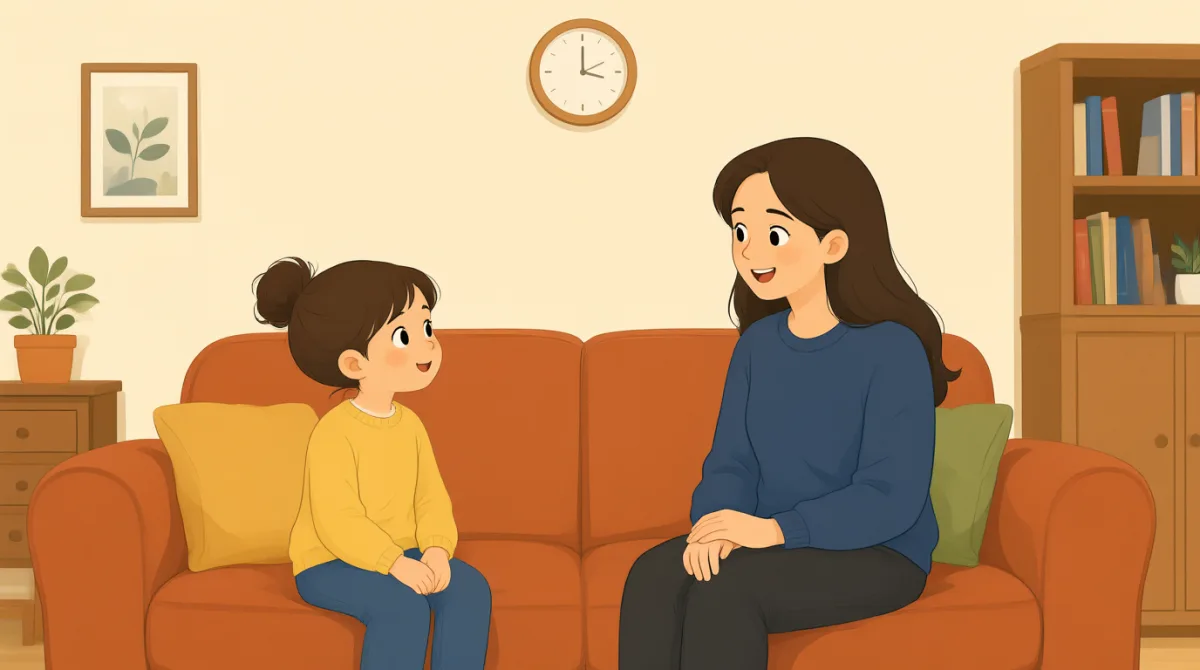

How did my daughter do in her lesson today?
วันนี้ลูกสาวฉันเรียนเป็นยังไงบ้าง?

She did well. She put her face in the water and kicked across the pool.
ทำได้ดีเลย เธอเอาหน้าจุ่มน้ำแล้วก็เตะขาพาตัวข้ามสระได้
That’s great! She was nervous before class. Did she feel more comfortable?
ดีจังเลย! ก่อนเข้าเรียนเธอดูประหม่า เธอรู้สึกสบายใจขึ้นไหม?
Yes, she relaxed after a few minutes. She listened carefully and tried everything.
ใช่ ผ่านไปไม่กี่นาทีเธอก็ผ่อนคลายลง เธอตั้งใจฟังและลองทำทุกอย่างเลย
What can we practice at home before her next lesson?
ก่อนเรียนครั้งหน้า เราฝึกอะไรที่บ้านได้บ้าง?
You can practice blowing bubbles in a bowl of water. Always stay right beside her.
ฝึกเป่าฟองในชามน้ำได้เลย อย่าลืมอยู่ข้าง ๆ เธอตลอดนะ
Should we practice in a pool too, or wait until next week?
เราฝึกในสระด้วยได้ไหม หรือรอถึงสัปดาห์หน้าดี?
A pool is fine, but keep her in shallow water and watch her closely.
ฝึกในสระได้ แต่ให้เธออยู่ในบริเวณน้ำตื้น แล้วคอยดูเธอใกล้ชิดนะ
คำศัพท์8
- did wellทำได้ดี
This means someone performed successfully. You can use it to describe how a person did in a lesson or activity.
หมายถึงทำบางอย่างได้สำเร็จ ใช้พูดถึงผลงานของใครสักคนในบทเรียนหรือกิจกรรมได้
- put her face in the waterเอาหน้าจุ่มน้ำ
This means she lowered her face into the water. It describes a beginner swimming skill.
หมายถึงก้มหน้าให้ลงไปในน้ำ เป็นทักษะว่ายน้ำพื้นฐานสำหรับผู้เริ่มต้น
- kicked across the poolเตะขาพาตัวข้ามสระ
This means she moved through the pool by kicking her legs. You can use “kicked across” to describe moving through water this way.
หมายถึงเคลื่อนตัวไปในสระด้วยการเตะขา ใช้ “kicked across” เพื่อบรรยายการเคลื่อนที่ในน้ำด้วยวิธีนี้ได้
- feel more comfortableรู้สึกสบายใจขึ้น
This means to feel less nervous or more relaxed. You can ask someone if they felt more comfortable after trying something new.
หมายถึงรู้สึกประหม่าน้อยลงหรือผ่อนคลายขึ้น คุณถามใครสักคนได้ว่ารู้สึกสบายใจขึ้นไหมหลังจากลองทำสิ่งใหม่
- practice at homeฝึกที่บ้าน
This means to do an activity at home to get better at it. You can use this phrase to ask what someone can work on between lessons.
หมายถึงทำกิจกรรมที่บ้านเพื่อให้ทำได้ดีขึ้น ใช้วลีนี้ถามได้ว่าระหว่างบทเรียนควรฝึกอะไรบ้าง
- stay right beside herอยู่ข้าง ๆ เธอตลอด
This means to remain very close to her. In this conversation, it is advice for keeping a child safe near water.
หมายถึงอยู่ใกล้เธอมาก ๆ ในบทสนทนานี้เป็นคำแนะนำเพื่อให้เด็กปลอดภัยเมื่ออยู่ใกล้น้ำ
- shallow waterน้ำตื้น
This means water that is not deep. It is useful when talking about a safer place for a beginner to practice.
หมายถึงบริเวณที่น้ำไม่ลึก ใช้พูดถึงจุดที่ปลอดภัยกว่าสำหรับผู้เริ่มต้นฝึกได้
- watch her closelyคอยดูเธอใกล้ชิด
This means to pay careful attention to her. You can use it when someone needs to keep an eye on a child or another person.
หมายถึงคอยสังเกตเธออย่างใกล้ชิด ใช้เมื่อจำเป็นต้องคอยดูแลเด็กหรือคนอื่นอย่างระมัดระวัง
ประโยคสำคัญ6
- 1
How did my daughter do in her lesson today?
วันนี้ลูกสาวฉันเรียนเป็นยังไงบ้าง?
This is a natural way to ask how someone performed in a lesson. You can replace “my daughter” with another person or “her lesson” with another activity.
ประโยคนี้เป็นวิธีธรรมชาติในการถามว่าใครสักคนทำได้ดีแค่ไหนในบทเรียน คุณเปลี่ยน “my daughter” เป็นคนอื่น หรือเปลี่ยน “her lesson” เป็นกิจกรรมอื่นได้
- 2
She did well.
เธอทำได้ดีเลย
This is a simple, positive way to describe someone’s performance. You can use it to give a quick update after a class or activity.
ประโยคนี้ใช้บอกผลงานของใครสักคนในแง่บวกอย่างง่าย ๆ ใช้เล่าคร่าว ๆ หลังจบชั้นเรียนหรือกิจกรรมได้
- 3
Did she feel more comfortable?
เธอรู้สึกสบายใจขึ้นไหม?
Use this question to ask if someone became less nervous. You can change “she” to another person, such as “you” or “he.”
ใช้คำถามนี้ถามว่าใครสักคนรู้สึกประหม่าน้อยลงไหม คุณเปลี่ยน “she” เป็นคนอื่นได้ เช่น “you” หรือ “he”
- 4
What can we practice at home before her next lesson?
ก่อนเรียนครั้งหน้า เราฝึกอะไรที่บ้านได้บ้าง?
This is a useful question when asking for ideas to help someone improve between lessons. Change “at home” or “her next lesson” to fit your situation.
เป็นคำถามที่มีประโยชน์เมื่อต้องการขอไอเดียว่าจะช่วยให้ใครสักคนพัฒนาขึ้นระหว่างบทเรียนได้อย่างไร คุณปรับ “at home” หรือ “her next lesson” ให้เข้ากับสถานการณ์ของคุณได้
- 5
Always stay right beside her.
อย่าลืมอยู่ข้าง ๆ เธอตลอดนะ
This gives a clear safety instruction. You can replace “her” with the person you need to stay close to.
ประโยคนี้เป็นคำแนะนำเรื่องความปลอดภัยที่ชัดเจน คุณเปลี่ยน “her” เป็นคนที่คุณต้องอยู่ใกล้ได้
- 6
A pool is fine, but keep her in shallow water and watch her closely.
ฝึกในสระได้ แต่ให้เธออยู่ในบริเวณน้ำตื้น แล้วคอยดูเธอใกล้ชิดนะ
This sentence gives permission and adds important safety advice. You can use “X is fine, but…” to allow something while explaining a condition.
ประโยคนี้อนุญาตให้ทำสิ่งหนึ่ง พร้อมเสริมคำแนะนำสำคัญเรื่องความปลอดภัย คุณใช้ “X is fine, but…” เพื่อบอกว่าอะไรทำได้ พร้อมอธิบายเงื่อนไขประกอบ