The First Swimming Lesson
初めての水泳レッスン
Emma brings her daughter to the first lesson and meets Mia, the swimming coach. Mia explains what the children will do in class.
エマは娘を初めてのレッスンに連れて行き、水泳コーチのミアに会います。ミアは、クラスで子どもたちが何をするのか説明します。
会話8
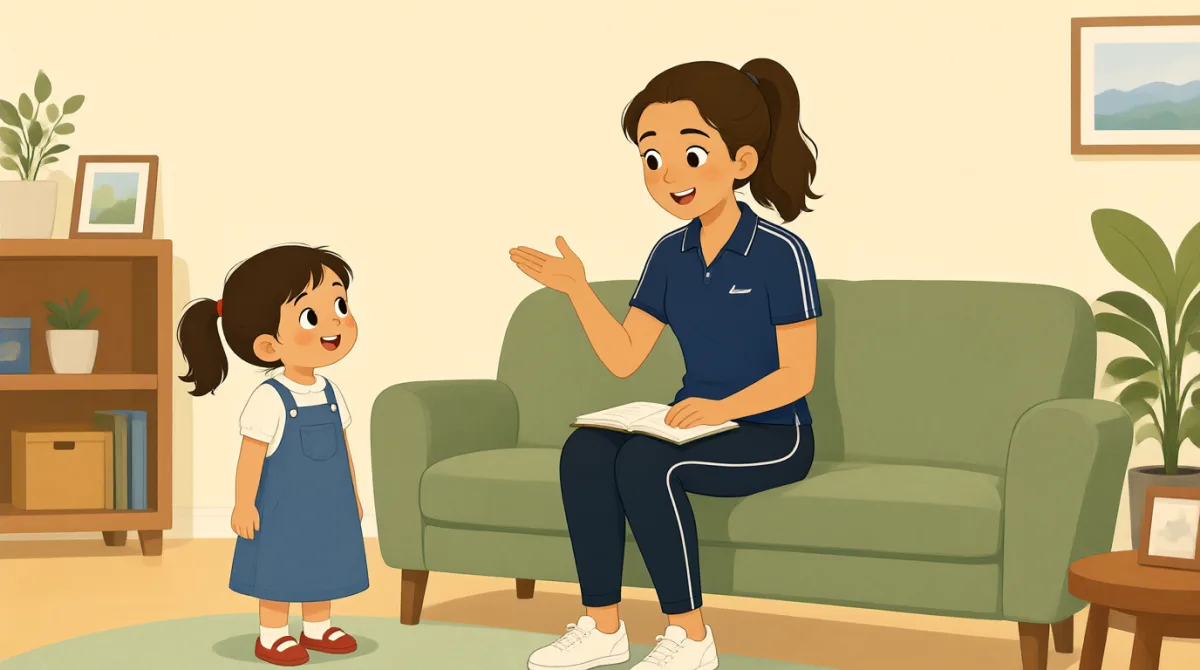

Hi, I’m here for my daughter’s first swimming lesson.
こんにちは。娘の初めての水泳レッスンで来ました。

Welcome! I’m Mia, her coach. Let’s get her ready by the pool.
ようこそ!コーチのミアです。プールサイドで準備をしましょう。
What will the children do in class today?
今日はクラスで子どもたちは何をするんですか?
We’ll start with a warm-up, then practice kicking and blowing bubbles.
まずは準備運動をして、それからキックの練習と、水の中で息を吐いて泡を出す練習をします。
That sounds fun. Should she wear her goggles now?
楽しそうですね。ゴーグルはもう着けたほうがいいですか?
Yes, please. She should also wear her swim cap and bring a towel.
はい、お願いします。水泳帽もかぶって、タオルも持ってきてください。
Okay. Can I watch from here during the lesson?
わかりました。レッスン中、ここから見ていてもいいですか?
Of course. Please stay behind the glass, and I’ll come talk to you afterward.
もちろんです。ガラスの向こう側でお待ちください。あとでお話しに来ますね。
語彙8
- first swimming lesson初めての水泳レッスン
This is the first class a child has to learn how to swim. You can use “first” before the name of a new class or activity.
子どもが泳ぎ方を習うために受ける、最初のレッスンのことです。新しいクラスや活動の名前の前に「first」を付けて使えます。
- get her ready準備をさせる
This means help her prepare for the lesson. You can use “get someone ready” before an activity or event.
レッスンの準備を手伝う、という意味です。活動や行事の前に「get someone ready」と言えます。
- warm-up準備運動
A warm-up is easy exercise at the start of a class. It helps the body get ready for more activity.
クラスの最初にする軽い運動のことです。体を動かす準備をするのに役立ちます。
- blowing bubbles水の中で息を吐いて泡を出すこと
This means breathing out into the water to make bubbles. Children often practice this when learning to swim.
水の中で息を吐いて泡を作る、という意味です。子どもが泳ぎを習うときによく練習します。
- gogglesゴーグル
Goggles are special glasses that protect your eyes in the water. You can ask, “Should I wear my goggles now?”
水の中で目を守るための特別なメガネです。「Should I wear my goggles now?」(ゴーグルはもう着けたほうがいいですか?)と尋ねることができます。
- swim cap水泳帽
A swim cap is a close-fitting hat worn in the pool. You can use “wear a swim cap” to talk about putting one on.
プールでかぶる、頭にぴったりフィットする帽子です。かぶることを表すには「wear a swim cap」と言えます。
- behind the glassガラスの向こう側
This means on the other side of the glass, where parents can watch the lesson. You can use “behind” to say where someone should stay.
ガラスの反対側、つまり保護者がレッスンを見られる場所のことです。「behind」を使うと、誰かがいる場所を表せます。
- afterwardそのあと
“Afterward” means after something is finished. You can use it to say when you will do something later.
何かが終わったあと、という意味です。あとで何かをすることを伝えるときに使えます。
重要な文7
- 1
I’m here for my daughter’s first swimming lesson.
娘の初めての水泳レッスンで来ました。
Use this sentence to explain why you have come somewhere. You can replace “my daughter’s first swimming lesson” with another appointment or activity.
どんな理由でここに来たのかを伝える表現です。「my daughter’s first swimming lesson」を別の約束や活動に置き換えて使えます。
- 2
Let’s get her ready by the pool.
プールサイドで準備をしましょう。
This is a friendly way to suggest preparing someone for an activity. Replace “her” with another person, and change “by the pool” to the place where you will get ready.
誰かの活動の準備をしようと、親しみを込めて提案する表現です。「her」を別の人に、「by the pool」を準備する場所に置き換えられます。
- 3
What will the children do in class today?
今日はクラスで子どもたちは何をするんですか?
Use this question to ask about a class plan. You can replace “the children” with “we” or “my child” to ask about other people.
クラスの予定を尋ねる質問です。「the children」を「we」や「my child」に置き換えると、別の人たちについて尋ねられます。
- 4
We’ll start with a warm-up, then practice kicking and blowing bubbles.
まずは準備運動をして、それからキックと水の中で息を吐いて泡を出す練習をします。
This sentence explains what will happen first and next. Use “We’ll start with…” to describe the beginning of a lesson or activity.
最初にすることと、その次にすることを説明する文です。レッスンや活動の始まりを説明するときは、「We’ll start with…」を使えます。
- 5
Should she wear her goggles now?
彼女はもうゴーグルを着けたほうがいいですか?
Use “Should she…?” to ask if someone ought to do something. Replace “she” and “wear her goggles” to ask about another person or action.
「Should she…?」は、誰かが何かをしたほうがよいか尋ねる表現です。「she」と「wear her goggles」を置き換えると、別の人や行動について尋ねられます。
- 6
Can I watch from here during the lesson?
レッスン中、ここから見ていてもいいですか?
This is a polite way to ask permission to watch. You can replace “watch” with another activity and “the lesson” with another event.
見学の許可を丁寧に尋ねる表現です。「watch」を別の活動に、「the lesson」を別の行事に置き換えられます。
- 7
Please stay behind the glass, and I’ll come talk to you afterward.
ガラスの向こう側でお待ちください。あとでお話しに来ますね。
This sentence gives a polite instruction and explains what will happen later. Use “Please stay…” to ask someone to remain in a place.
丁寧に指示をし、あとで何が起きるかを伝える文です。「Please stay…」を使うと、誰かにその場所にとどまるよう丁寧に頼めます。