The First Evening
初めての夕方
Grace arrives to babysit while Emma gets ready to leave. Emma reviews the children's routine, and Grace reassures her that everything is under control.
エマが出かける準備をしている間に、グレースがベビーシッターをしにやって来ます。エマは子どもたちのいつもの流れを説明し、グレースは大丈夫だと安心させます。
会話8
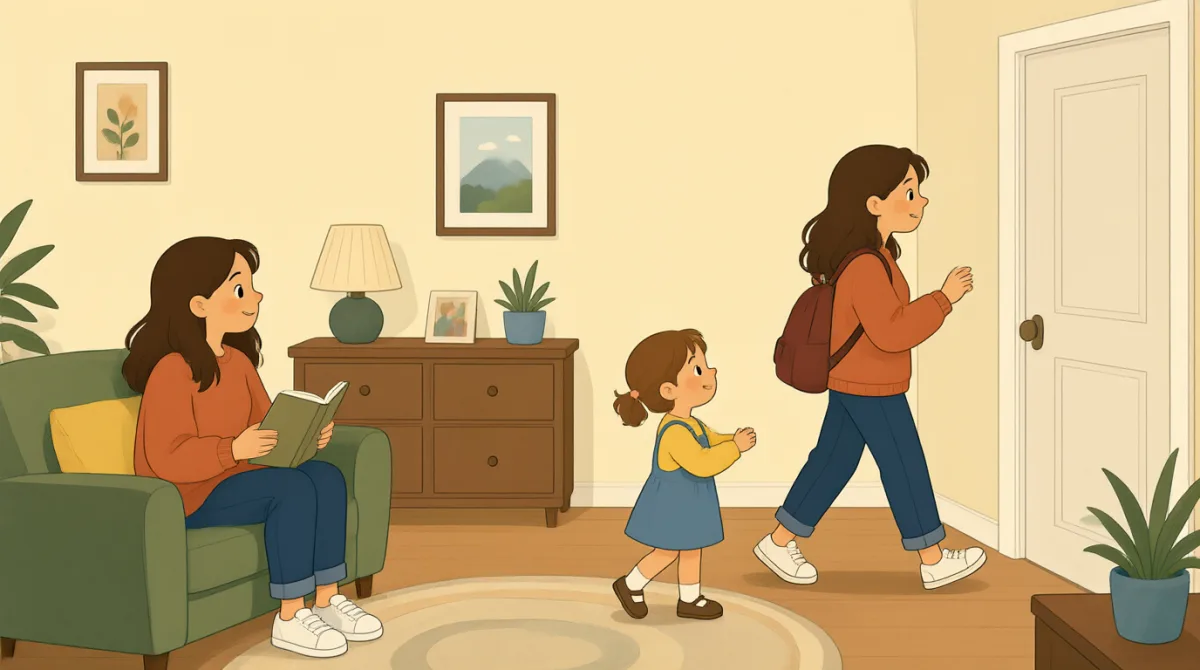

Hi, Emma. I'm here. Are the children ready for me?
やあ、エマ。来たよ。子どもたちはもう大丈夫?

Hi, Grace. They're playing in the living room. I'll be ready in five minutes.
やあ、グレース。リビングで遊んでるよ。あと5分で準備できるからね。
Great. What time do they eat dinner, and what can they have?
いいね。夕食は何時?何を食べさせていいの?
Dinner is at six. Their food is in the fridge, on the middle shelf.
夕食は6時だよ。食べ物は冷蔵庫の真ん中の棚にあるよ。
Got it. After dinner, I'll help them wash up and get ready for bed.
わかった。夕食のあと、手を洗わせて、寝る準備を手伝うね。
Thanks. They usually go to bed at eight. Please read them a short story.
ありがとう。いつも8時に寝るよ。短いお話を読んであげてね。
Of course. You can take your time. Everything is under control here.
もちろん。ゆっくりでいいよ。こっちは全部大丈夫だから。
That makes me feel better. My phone is on the table if you need me.
それを聞いて安心した。何かあったら連絡できるように、電話はテーブルの上に置いておくね。
語彙8
- ready for me準備はできてる?
This asks if someone is prepared for you to take care of the children. You can also ask, “Are you ready for me to start?”
相手に、子どもたちの世話を始めても大丈夫か尋ねる表現です。「Are you ready for me to start?」(始めても大丈夫?)と聞くこともできます。
- in five minutesあと5分で
This means five minutes from now. Use it to say how soon something will happen.
「今から5分後」という意味です。何かがどれくらいで起こるかを伝えるときに使います。
- in the living roomリビングで
This tells someone where the children are. You can use “in the” with other rooms, such as “in the kitchen.”
子どもたちがどこにいるかを伝える表現です。「in the kitchen」(キッチンで)のように、ほかの部屋にも使えます。
- on the middle shelf真ん中の棚に
This describes where something is stored. Use “on” to say something is resting on a shelf.
物がどこに置いてあるかを説明する表現です。棚の上に物があることを表すときは「on」を使います。
- get ready for bed寝る準備をする
This means to do the things you need to do before going to sleep. For example, children might wash up and put on pajamas.
寝る前に必要なことをする、という意味です。たとえば、子どもなら体を洗ったり、パジャマに着替えたりします。
- take your timeゆっくりでいいよ
This means there is no need to hurry. You can say it to help someone feel relaxed.
急がなくていい、という意味です。相手にリラックスしてもらいたいときに使えます。
- under control大丈夫、うまくいってる
This means everything is being handled well. It can reassure someone who is worried.
すべて問題なく進んでいる、という意味です。心配している人を安心させるときに使えます。
- if you need me何かあったら
This means if you want to contact or ask for help from me. You can use it when telling someone how to reach you.
私に連絡したり、助けを頼んだりしたいとき、という意味です。連絡先を伝えるときに使えます。
重要な文8
- 1
Are the children ready for me?
子どもたちはもう大丈夫?
This is a polite way to check if someone is prepared for you to begin. You can replace “the children” with another person or task.
相手に、こちらが始めても大丈夫か確認する表現です。「the children」を別の人や用事に置き換えて使うこともできます。
- 2
I'll be ready in five minutes.
あと5分で準備できるよ。
Use this to say when you will be prepared. “I'll” is a common spoken form of “I will.”
いつ準備ができるかを伝えるときに使います。「I'll」は「I will」を短くした、会話でよく使われる形です。
- 3
What time do they eat dinner, and what can they have?
夕食は何時?何を食べさせていいの?
This asks about the meal schedule and food choices. You can reuse the question when caring for someone or planning a meal.
食事の時間と、食べてよいものを尋ねる表現です。誰かの世話をするときや、食事の計画を立てるときにも使えます。
- 4
Their food is in the fridge, on the middle shelf.
食べ物は冷蔵庫の真ん中の棚にあるよ。
This gives clear information about where food is. You can use the same pattern to explain where other things are kept.
食べ物がどこにあるかを、わかりやすく伝える文です。同じ形を使って、ほかの物の置き場所も説明できます。
- 5
After dinner, I'll help them wash up and get ready for bed.
夕食のあと、手を洗わせて、寝る準備を手伝うね。
This describes what you plan to do next. Use “After [activity], I'll...” to explain a simple future plan.
次に何をする予定かを伝える文です。「After [activity], I'll...」の形で、簡単な予定を説明できます。
- 6
They usually go to bed at eight.
いつも8時に寝るよ。
This explains someone's usual bedtime. You can change the time or activity to talk about a regular routine.
誰かが普段何時に寝るかを伝える文です。時間や行動を変えて、いつもの習慣について話せます。
- 7
You can take your time.
ゆっくりでいいよ。
This is a friendly way to tell someone not to hurry. It is useful when you want to help someone feel less rushed.
相手に急がなくていいと伝える、親しみのある表現です。相手が焦らずに済むようにしたいときに便利です。
- 8
Everything is under control here.
こっちは全部大丈夫だよ。
This reassures someone that things are being handled. You can use it to make a worried person feel more comfortable.
物事がきちんと進んでいると相手に伝え、安心させる表現です。心配している人に、落ち着いてもらいたいときに使えます。