Asking About Experience
経験について尋ねる
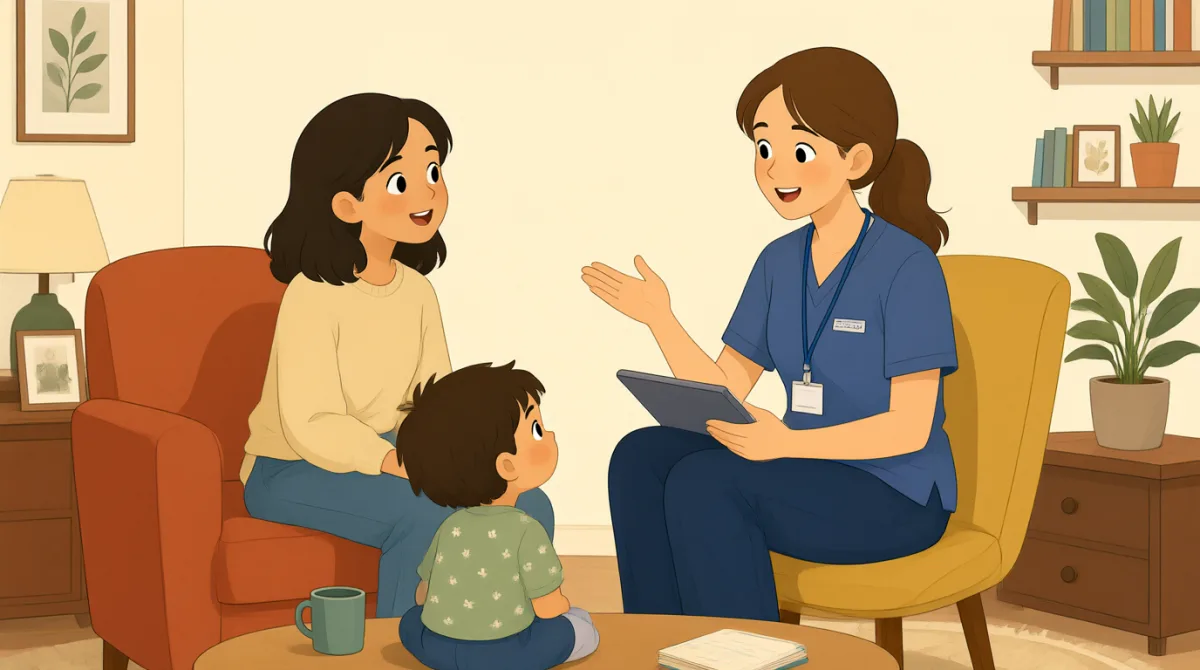
Emma talks with Grace, a babysitter, and asks about her experience with young children. Grace shares what she has done before.
エマはベビーシッターのグレースに、幼い子どもの世話をした経験について尋ねます。グレースはこれまでの経験を話します。
会話9

Hi, Grace. Have you looked after young children before?
こんにちは、グレース。これまでに幼い子どもの世話をしたことはありますか?

Yes, I have. I cared for two children, ages three and five.
はい、あります。3歳と5歳の子どもを2人お世話しました。
How long did you work with that family?
そのご家族とはどのくらいの期間働いていたんですか?
I worked with them for two years, mostly in the evenings.
そのご家族とは2年間働いていました。主に夕方です。
What did you do with the children?
子どもたちとは何をしていましたか?
We read books, played games, and got ready for bed.
本を読んだり、ゲームをしたり、寝る準備をしたりしました。
Have you ever cared for two children at the same time?
これまでに、2人の子どもを同時にお世話したことはありますか?
Yes. I stayed calm and made sure both children were safe.
はい。落ち着いて対応して、2人とも安全に過ごせるように気を配りました。
That sounds good. I’m glad you have experience with young children.
いいですね。幼い子どもの世話をした経験があると聞けてうれしいです。
語彙8
- looked afterlooked after:世話をした
To looked after children means to take care of them. You can also use this phrase for caring for a person or pet.
子どもについて使う「looked after」は、「世話をした」という意味です。人やペットの世話をするときにも使えます。
- cared forcared for:世話をした
This means took care of someone. Grace uses it to describe her past work with children.
「誰かの世話をした」という意味です。グレースは、以前子どもたちの世話をした経験について話すときに使っています。
- How longHow long:どのくらいの期間
Use this phrase to ask about the length of time something lasted. For example, “How long did you live there?”
何かがどのくらいの期間続いたのかを尋ねる表現です。たとえば、“How long did you live there?”(そこにはどのくらい住んでいましたか?)のように使えます。
- mostlymostly:主に
This means usually or for the most part. Grace worked in the evenings most of the time.
「たいてい」「大部分は」という意味です。グレースは、ほとんどの場合、夕方に働いていました。
- got ready for bedgot ready for bed:寝る準備をした
This means did the things needed before going to sleep, such as putting on pajamas. You can use it to talk about a child's bedtime routine.
パジャマに着替えるなど、寝る前に必要なことをした、という意味です。子どもの寝る前の習慣について話すときに使えます。
- at the same timeat the same time:同時に
This means during the same period or together. You can use it to ask if someone can care for two children together.
「同じ時間に」「一緒に」という意味です。2人の子どもを同時にお世話できるか尋ねるときに使えます。
- stayed calmstayed calm:落ち着いていた
This means remained relaxed and did not become upset. It is useful to describe how someone handles a difficult situation.
冷静さを保ち、動揺しなかったという意味です。誰かが難しい状況にどう対応したかを説明するときに便利です。
- made suremade sure:確かめた、必ず〜するようにした
This means checked or took action to ensure something happened. For example, you can make sure children are safe.
何かが確実に行われるように確認したり、行動したりするという意味です。たとえば、子どもたちが安全かどうか確かめるときに使えます。
重要な文8
- 1
Have you looked after young children before?
これまでに幼い子どもの世話をしたことはありますか?
Use this question to ask about someone's past experience caring for children. You can replace “young children” with another kind of work or responsibility.
子どもの世話をした過去の経験について尋ねる質問です。“young children”を別の仕事や責任に置き換えて使えます。
- 2
I cared for two children, ages three and five.
3歳と5歳の子どもを2人お世話しました。
This sentence gives a simple example of past childcare experience. You can use the pattern “I cared for [number] children, ages [ages].”
子どもの世話をした経験を簡潔に伝える文です。“I cared for [number] children, ages [ages].”という形で、人数や年齢を入れ替えて使えます。
- 3
How long did you work with that family?
そのご家族とはどのくらいの期間働いていたんですか?
Use this question to ask how much time someone spent working with a person or group. Replace “that family” with a job, company, or person.
人やグループとどのくらいの期間働いていたかを尋ねる質問です。“that family”を仕事先や会社、人などに置き換えて使えます。
- 4
I worked with them for two years, mostly in the evenings.
そのご家族とは2年間働いていました。主に夕方です。
This explains how long Grace worked and when she usually worked. You can reuse “I worked with them for [length of time], mostly [when].”
グレースがどのくらいの期間、いつごろ働いていたかを説明しています。“I worked with them for [length of time], mostly [when].”の形で応用できます。
- 5
What did you do with the children?
子どもたちとは何をしていましたか?
Use this question to ask about someone's past activities or duties. You can replace “the children” with another group or person.
相手が以前していた活動や仕事の内容を尋ねる質問です。“the children”を別のグループや人に置き換えて使えます。
- 6
Have you ever cared for two children at the same time?
これまでに、2人の子どもを同時にお世話したことはありますか?
This question asks if someone has had a particular experience at any point in their life. You can change the number or activity to ask about other experiences.
これまでの人生で、特定の経験をしたことがあるか尋ねる質問です。人数や活動を変えて、ほかの経験について尋ねることもできます。
- 7
I stayed calm and made sure both children were safe.
落ち着いて対応して、2人とも安全に過ごせるように気を配りました。
This sentence describes how Grace handled her responsibility. You can use “I stayed calm and made sure…” to explain how you dealt with a situation.
グレースが責任を持ってどのように対応したかを表す文です。“I stayed calm and made sure…”を使うと、状況にどう対処したかを説明できます。
- 8
I’m glad you have experience with young children.
幼い子どもの世話をした経験があると聞けてうれしいです。
Use this sentence to show that you are pleased someone has relevant experience. Replace “young children” with another skill or kind of experience.
相手に関連する経験があることを喜ぶときに使う文です。“young children”を別のスキルや経験に置き換えられます。