The First Evening
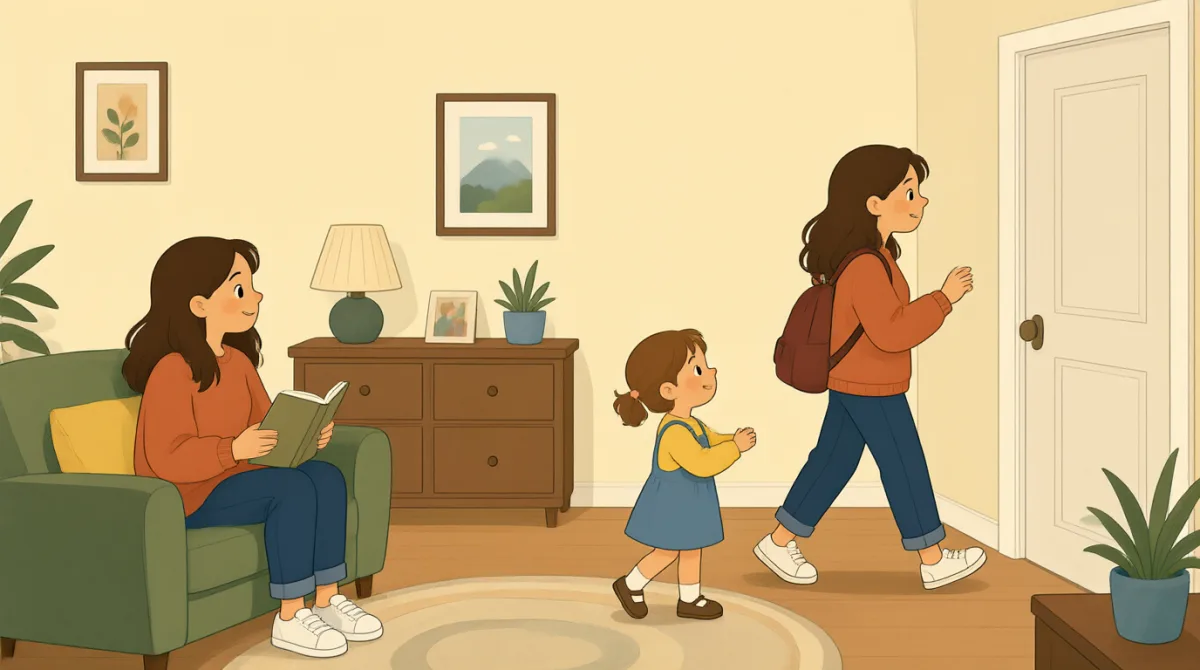
Grace arrives to babysit while Emma gets ready to leave. Emma reviews the children's routine, and Grace reassures her that everything is under control.
Dialogue8

Hi, Emma. I'm here. Are the children ready for me?

Hi, Grace. They're playing in the living room. I'll be ready in five minutes.
Great. What time do they eat dinner, and what can they have?
Dinner is at six. Their food is in the fridge, on the middle shelf.
Got it. After dinner, I'll help them wash up and get ready for bed.
Thanks. They usually go to bed at eight. Please read them a short story.
Of course. You can take your time. Everything is under control here.
That makes me feel better. My phone is on the table if you need me.
Vocabulary8
- ready for me
This asks if someone is prepared for you to take care of the children. You can also ask, “Are you ready for me to start?”
- in five minutes
This means five minutes from now. Use it to say how soon something will happen.
- in the living room
This tells someone where the children are. You can use “in the” with other rooms, such as “in the kitchen.”
- on the middle shelf
This describes where something is stored. Use “on” to say something is resting on a shelf.
- get ready for bed
This means to do the things you need to do before going to sleep. For example, children might wash up and put on pajamas.
- take your time
This means there is no need to hurry. You can say it to help someone feel relaxed.
- under control
This means everything is being handled well. It can reassure someone who is worried.
- if you need me
This means if you want to contact or ask for help from me. You can use it when telling someone how to reach you.
Key Sentences8
- 1
Are the children ready for me?
This is a polite way to check if someone is prepared for you to begin. You can replace “the children” with another person or task.
- 2
I'll be ready in five minutes.
Use this to say when you will be prepared. “I'll” is a common spoken form of “I will.”
- 3
What time do they eat dinner, and what can they have?
This asks about the meal schedule and food choices. You can reuse the question when caring for someone or planning a meal.
- 4
Their food is in the fridge, on the middle shelf.
This gives clear information about where food is. You can use the same pattern to explain where other things are kept.
- 5
After dinner, I'll help them wash up and get ready for bed.
This describes what you plan to do next. Use “After [activity], I'll...” to explain a simple future plan.
- 6
They usually go to bed at eight.
This explains someone's usual bedtime. You can change the time or activity to talk about a regular routine.
- 7
You can take your time.
This is a friendly way to tell someone not to hurry. It is useful when you want to help someone feel less rushed.
- 8
Everything is under control here.
This reassures someone that things are being handled. You can use it to make a worried person feel more comfortable.