Feeling Tired the Next Day
The next day, Emma tells her friend Mia that she feels tired and has a sore arm. Mia helps her decide what to do.
Dialogue8
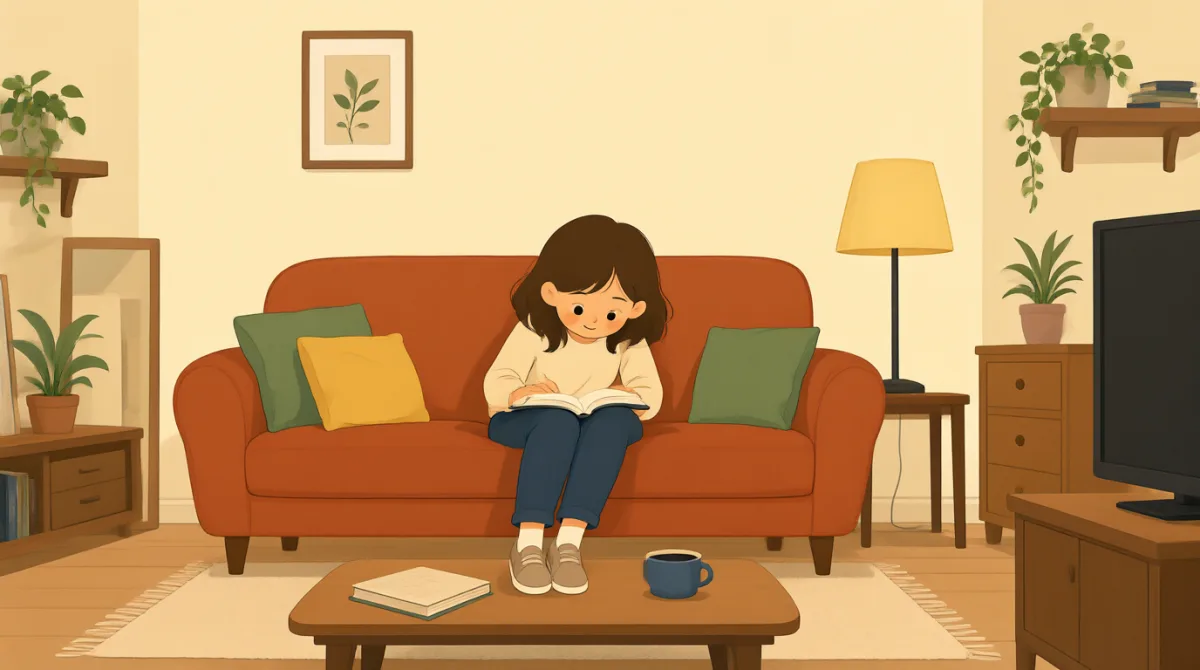

I feel tired today, and my arm is sore where I got the flu shot.

That can happen after a shot. Did you get enough sleep last night?
Not really. I woke up a few times, but my arm hurts more than I expected.
Try resting and drinking some water. You can move your arm gently, too.
Should I take medicine, or should I wait and see if it gets better?
Check the instructions from the pharmacy, or ask your doctor before taking anything.
Okay. If I feel worse, I’ll call my doctor. How long might this last?
It often gets better in a day or two. Take it easy today.
Vocabulary6
- feel tired
This means you do not have much energy. You can use it to describe how you feel: “I feel tired today.”
- sore
Sore means painful or uncomfortable. You can use it to describe a part of your body: “My arm is sore.”
- get enough sleep
This means to sleep for the amount of time your body needs. You can ask someone, “Did you get enough sleep?”
- resting
Resting means relaxing instead of doing tiring activities. You can say, “Try resting” to suggest taking it easy.
- gets better
This means that a problem or symptom improves. You can ask, “When will it get better?”
- take it easy
This means to relax and avoid doing too much. You can say it to someone who needs to rest.
Key Sentences8
- 1
I feel tired today, and my arm is sore where I got the flu shot.
This sentence describes how you feel and where you have pain. You can reuse the pattern “I feel [feeling], and my [body part] is sore.”
- 2
Did you get enough sleep last night?
This is a simple way to ask whether someone slept well. You can change “enough sleep” to ask about other needs, such as “Did you get enough water?”
- 3
Try resting and drinking some water.
This gives two simple suggestions. You can use “Try [activity]” to recommend something helpful.
- 4
You can move your arm gently, too.
This suggests doing a movement carefully and without force. You can use “You can [action] gently” for other gentle actions.
- 5
Check the instructions from the pharmacy, or ask your doctor before taking anything.
This gives safe next steps before taking medicine. You can reuse “Check the instructions, or ask [person]” when you need advice.
- 6
If I feel worse, I’ll call my doctor.
This explains what you will do if your condition becomes worse. Use “If [situation], I’ll [action]” to talk about a future plan.
- 7
It often gets better in a day or two.
This describes how long a problem may last. You can use “It gets better in [amount of time]” to talk about improvement.
- 8
Take it easy today.
This is a friendly way to tell someone to rest and avoid doing too much. You can use it when someone feels tired or unwell.