Feeling Tired the Next Day
Cansancio al día siguiente
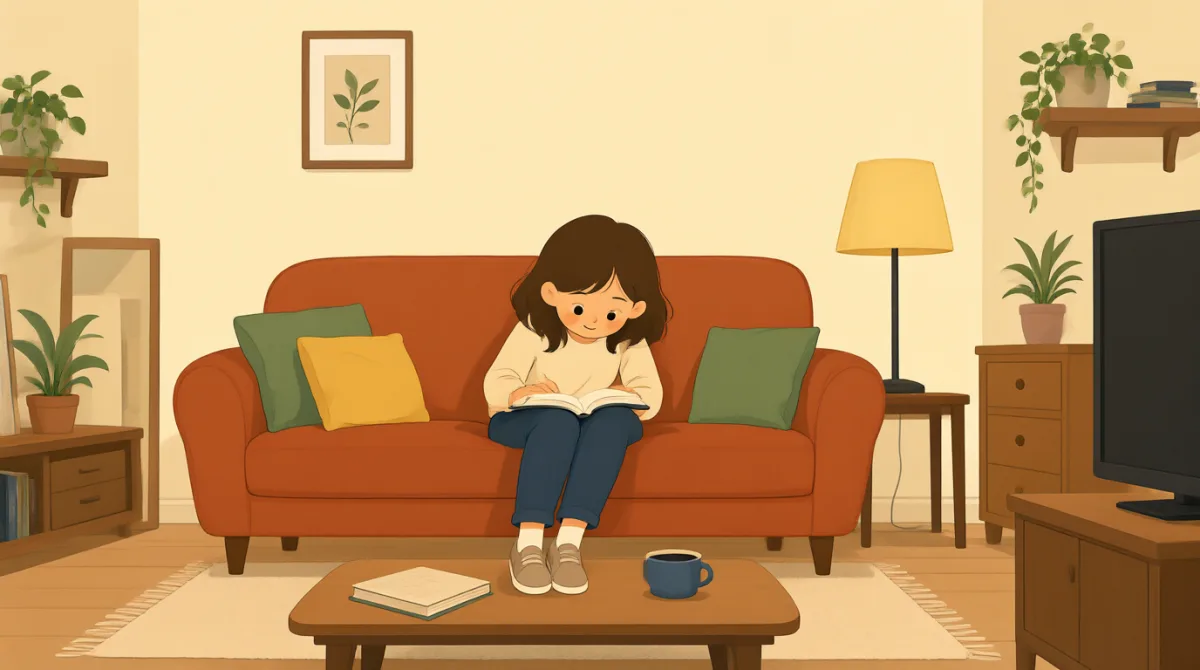
The next day, Emma tells her friend Mia that she feels tired and has a sore arm. Mia helps her decide what to do.
Al día siguiente, Emma le cuenta a su amiga Mia que está cansada y le duele el brazo. Mia la ayuda a decidir qué hacer.
Diálogo8

I feel tired today, and my arm is sore where I got the flu shot.
Hoy me siento cansada y me duele el brazo donde me pusieron la vacuna contra la gripe.

That can happen after a shot. Did you get enough sleep last night?
Eso puede pasar después de una vacuna. ¿Dormiste lo suficiente anoche?
Not really. I woke up a few times, but my arm hurts more than I expected.
No mucho. Me desperté varias veces, pero me duele el brazo más de lo que esperaba.
Try resting and drinking some water. You can move your arm gently, too.
Prueba descansar y tomar un poco de agua. También puedes mover el brazo con cuidado.
Should I take medicine, or should I wait and see if it gets better?
¿Debería tomar algún medicamento o esperar a ver si mejora?
Check the instructions from the pharmacy, or ask your doctor before taking anything.
Revisa las instrucciones de la farmacia o consulta con tu médico antes de tomar cualquier cosa.
Okay. If I feel worse, I’ll call my doctor. How long might this last?
Está bien. Si me siento peor, llamaré a mi médico. ¿Cuánto podría durar esto?
It often gets better in a day or two. Take it easy today.
A menudo mejora en uno o dos días. Hoy tómatelo con calma.
Vocabulario6
- feel tiredsentirse cansado
This means you do not have much energy. You can use it to describe how you feel: “I feel tired today.”
Significa que no tienes mucha energía. Puedes usarlo para describir cómo te sientes: “I feel tired today.” (Hoy me siento cansado/a).
- soreadolorido
Sore means painful or uncomfortable. You can use it to describe a part of your body: “My arm is sore.”
Sore significa que algo te duele o te molesta. Puedes usarlo para describir una parte del cuerpo: “My arm is sore.” (Me duele el brazo).
- get enough sleepdormir lo suficiente
This means to sleep for the amount of time your body needs. You can ask someone, “Did you get enough sleep?”
Significa dormir el tiempo que tu cuerpo necesita. Puedes preguntarle a alguien: “Did you get enough sleep?” (¿Dormiste lo suficiente?).
- restingdescansar
Resting means relaxing instead of doing tiring activities. You can say, “Try resting” to suggest taking it easy.
Resting significa relajarse en vez de hacer actividades que cansan. Puedes decir “Try resting” (Prueba descansar) para sugerirle a alguien que se lo tome con calma.
- gets bettermejorar
This means that a problem or symptom improves. You can ask, “When will it get better?”
Significa que un problema o síntoma mejora. Puedes preguntar: “When will it get better?” (¿Cuándo mejorará?).
- take it easytomárselo con calma
This means to relax and avoid doing too much. You can say it to someone who needs to rest.
Significa relajarse y evitar hacer demasiadas cosas. Puedes decírselo a alguien que necesita descansar.
Frases clave8
- 1
I feel tired today, and my arm is sore where I got the flu shot.
Hoy me siento cansada y me duele el brazo donde me pusieron la vacuna contra la gripe.
This sentence describes how you feel and where you have pain. You can reuse the pattern “I feel [feeling], and my [body part] is sore.”
Esta oración describe cómo te sientes y dónde te duele. Puedes reutilizar la estructura “I feel [feeling], and my [body part] is sore.” (Me siento [sensación] y me duele [parte del cuerpo]).
- 2
Did you get enough sleep last night?
¿Dormiste lo suficiente anoche?
This is a simple way to ask whether someone slept well. You can change “enough sleep” to ask about other needs, such as “Did you get enough water?”
Es una forma sencilla de preguntar si alguien durmió bien. Puedes cambiar “enough sleep” por otra necesidad, por ejemplo: “Did you get enough water?” (¿Tomaste suficiente agua?).
- 3
Try resting and drinking some water.
Prueba descansar y tomar un poco de agua.
This gives two simple suggestions. You can use “Try [activity]” to recommend something helpful.
Aquí se ofrecen dos sugerencias sencillas. Puedes usar “Try [activity]” (Prueba [actividad]) para recomendar algo útil.
- 4
You can move your arm gently, too.
También puedes mover el brazo con cuidado.
This suggests doing a movement carefully and without force. You can use “You can [action] gently” for other gentle actions.
Esta frase sugiere hacer un movimiento con cuidado y sin forzar. Puedes usar “You can [action] gently” (Puedes [acción] con cuidado) para hablar de otras acciones suaves.
- 5
Check the instructions from the pharmacy, or ask your doctor before taking anything.
Revisa las instrucciones de la farmacia o consulta con tu médico antes de tomar cualquier cosa.
This gives safe next steps before taking medicine. You can reuse “Check the instructions, or ask [person]” when you need advice.
Esta frase da pasos seguros que puedes seguir antes de tomar un medicamento. Puedes reutilizar “Check the instructions, or ask [person]” (Revisa las instrucciones o consulta con [persona]) cuando necesites consejo.
- 6
If I feel worse, I’ll call my doctor.
Si me siento peor, llamaré a mi médico.
This explains what you will do if your condition becomes worse. Use “If [situation], I’ll [action]” to talk about a future plan.
Esta frase explica qué harás si tu estado empeora. Usa “If [situation], I’ll [action]” (Si [situación], [acción]) para hablar de un plan futuro.
- 7
It often gets better in a day or two.
A menudo mejora en uno o dos días.
This describes how long a problem may last. You can use “It gets better in [amount of time]” to talk about improvement.
Esta frase describe cuánto puede durar un problema. Puedes usar “It gets better in [amount of time]” (Mejora en [cantidad de tiempo]) para hablar de una mejoría.
- 8
Take it easy today.
Hoy tómatelo con calma.
This is a friendly way to tell someone to rest and avoid doing too much. You can use it when someone feels tired or unwell.
Es una forma amable de decirle a alguien que descanse y no haga demasiadas cosas. Puedes usarla cuando alguien se siente cansado o indispuesto.