Asking About Their Health
उनकी सेहत के बारे में पूछना
Emma asks how her grandparents have been feeling. They talk about a recent checkup and their daily walks.
एमा पूछती है कि उसके दादा-दादी की तबीयत कैसी है। वे हाल ही में हुई स्वास्थ्य-जाँच और रोज़ाना की सैर के बारे में बात करते हैं।
संवाद9
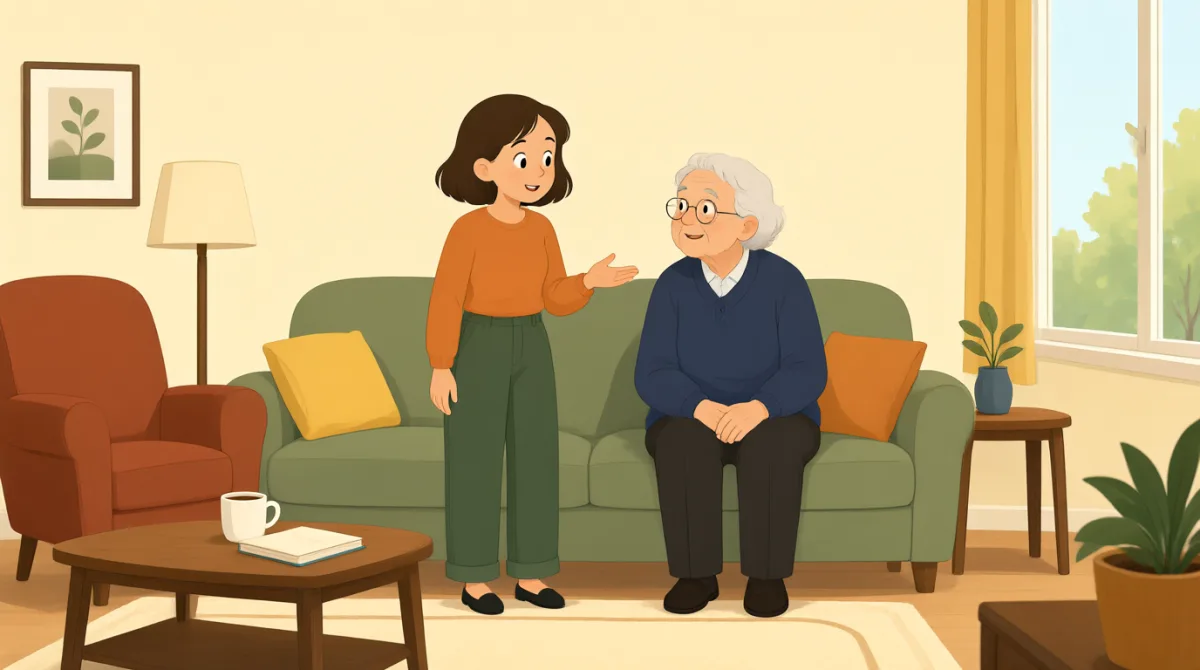

How have you both been feeling lately? Are you getting enough rest?
हाल में आप दोनों की तबीयत कैसी रही है? क्या आप पर्याप्त आराम कर रहे हैं?

I’ve been feeling well, thank you. I went for a checkup last week.
मेरी तबीयत अच्छी है, धन्यवाद। पिछले हफ़्ते मैं स्वास्थ्य-जाँच कराने गई थी।
That’s good. What did the doctor say?
यह तो अच्छी बात है। डॉक्टर ने क्या कहा?
Everything looked fine. I just need to drink more water and keep walking.
सब कुछ ठीक लग रहा था। मुझे बस ज़्यादा पानी पीना है और टहलते रहना है।

We walk around the park every morning, unless it rains.
हम हर सुबह पार्क में टहलते हैं, बस बारिश हो तो नहीं।
How far do you walk? Does it make you tired?
आप कितनी दूर तक चलते हैं? क्या आपको थकान होती है?
Not too far. We take our time and sit down if we need to.
ज़्यादा दूर नहीं। हम आराम से चलते हैं और ज़रूरत पड़े तो बैठ जाते हैं।
Walking helps us feel strong. You should come with us tomorrow.
टहलने से हम स्वस्थ और मज़बूत महसूस करते हैं। तुम्हें कल हमारे साथ आना चाहिए।
I’d love to! I’ll bring my walking shoes.
मुझे बहुत अच्छा लगेगा! मैं अपने चलने वाले जूते ले आऊँगी।
शब्दावली8
- feeling wellतबीयत अच्छी होना
This means being in good health. Use it to tell someone how you are doing.
इसका मतलब है कि आपकी सेहत अच्छी है। किसी को बताने के लिए इसका इस्तेमाल करें कि आप कैसा महसूस कर रहे हैं।
- checkupस्वास्थ्य-जाँच
A checkup is a visit to the doctor to see if you are healthy. You can say, “I have a checkup next week.”
स्वास्थ्य-जाँच के लिए आप यह देखने डॉक्टर के पास जाते हैं कि आप स्वस्थ हैं या नहीं। आप कह सकते हैं, “I have a checkup next week.” (अगले हफ़्ते मेरी स्वास्थ्य-जाँच है।)
- everything looked fineसब कुछ ठीक लग रहा था
This means the doctor did not find a problem. Use it to share reassuring news after a visit or test.
इसका मतलब है कि डॉक्टर को कोई समस्या नहीं मिली। डॉक्टर से मिलने या जाँच के बाद अच्छी खबर देने के लिए इसका इस्तेमाल करें।
- keep walkingटहलते रहना
This means to continue walking regularly. Use “keep” with an -ing verb to encourage someone to continue an activity.
इसका मतलब है नियमित रूप से टहलना जारी रखना। किसी को कोई गतिविधि जारी रखने के लिए प्रोत्साहित करते समय “keep” के साथ -ing वाली क्रिया का इस्तेमाल करें।
- unless it rainsजब तक बारिश न हो
This means something will happen if it does not rain. Use “unless” to describe an exception to a plan.
इसका मतलब है कि कोई काम तभी होगा जब बारिश नहीं होगी। किसी योजना में अपवाद बताने के लिए “unless” का इस्तेमाल करें।
- take our timeआराम से करना
This means to do something slowly and without rushing. You can use it when you want to go at a comfortable pace.
इसका मतलब है कोई काम धीरे-धीरे और बिना जल्दबाज़ी के करना। जब आप आरामदायक गति से काम करना चाहते हैं, तो इस वाक्यांश का इस्तेमाल कर सकते हैं।
- sit downबैठ जाना
This means to move into a sitting position. Use it when you need to rest.
इसका मतलब है बैठने की मुद्रा में आना। आराम करने की ज़रूरत हो तो इसका इस्तेमाल करें।
- walking shoesचलने वाले जूते
These are comfortable shoes for walking. You can use this phrase when talking about what to wear for a walk.
ये चलने के लिए आरामदायक जूते होते हैं। सैर पर जाते समय क्या पहनना है, इस बारे में बात करने के लिए इस वाक्यांश का इस्तेमाल कर सकते हैं।
मुख्य वाक्य8
- 1
How have you both been feeling lately?
हाल में आप दोनों की तबीयत कैसी रही है?
This is a friendly way to ask two people about their health recently. You can change “both” to “you” when speaking to one person.
दो लोगों से हाल ही में उनकी सेहत के बारे में पूछने का यह एक दोस्ताना तरीका है। एक व्यक्ति से बात करते समय “both” की जगह “you” कह सकते हैं।
- 2
I went for a checkup last week.
पिछले हफ़्ते मैं स्वास्थ्य-जाँच कराने गई थी।
Use this sentence to say that you visited a doctor for a health check. Change “last week” to another time phrase to say when it happened.
डॉक्टर के पास स्वास्थ्य-जाँच कराने जाने की बात कहने के लिए इस वाक्य का इस्तेमाल करें। यह बताने के लिए कि यह कब हुआ, “last week” की जगह कोई और समय बताने वाला वाक्यांश रख सकते हैं।
- 3
What did the doctor say?
डॉक्टर ने क्या कहा?
This is a simple way to ask about the results or advice from a doctor. You can also use it to ask what another person said.
डॉक्टर की सलाह या जाँच के नतीजों के बारे में पूछने का यह एक आसान तरीका है। किसी दूसरे व्यक्ति ने क्या कहा, यह पूछने के लिए भी इसका इस्तेमाल कर सकते हैं।
- 4
Everything looked fine.
सब कुछ ठीक लग रहा था।
Use this to say that there did not seem to be a problem. It is a reassuring reply after a checkup or test.
कोई समस्या नज़र नहीं आई, यह बताने के लिए इसका इस्तेमाल करें। स्वास्थ्य-जाँच या किसी परीक्षण के बाद यह आश्वस्त करने वाला जवाब है।
- 5
We walk around the park every morning, unless it rains.
हम हर सुबह पार्क में टहलते हैं, बस बारिश हो तो नहीं।
This sentence describes a regular routine and an exception to it. Use “unless” to explain when a routine may not happen.
यह वाक्य एक नियमित दिनचर्या और उसके अपवाद के बारे में बताता है। यह समझाने के लिए “unless” का इस्तेमाल करें कि दिनचर्या कब नहीं हो सकती।
- 6
We take our time and sit down if we need to.
हम आराम से चलते हैं और ज़रूरत पड़े तो बैठ जाते हैं।
This explains how the speakers walk at a comfortable pace and rest when needed. You can reuse “if we need to” to talk about doing something only when necessary.
इससे पता चलता है कि बोलने वाले आरामदायक गति से चलते हैं और ज़रूरत पड़ने पर आराम करते हैं। केवल ज़रूरत होने पर कुछ करने की बात कहने के लिए “if we need to” का दोबारा इस्तेमाल कर सकते हैं।
- 7
You should come with us tomorrow.
तुम्हें कल हमारे साथ आना चाहिए।
This is a friendly way to invite someone to join an activity. Change “tomorrow” to say when you want them to come.
किसी को साथ में कोई गतिविधि करने के लिए बुलाने का यह एक दोस्ताना तरीका है। आप जिस समय उन्हें बुलाना चाहते हैं, वह बताने के लिए “tomorrow” की जगह कोई और समय रख सकते हैं।
- 8
I’ll bring my walking shoes.
मैं अपने चलने वाले जूते ले आऊँगी।
Use “I’ll bring…” to say what you plan to take with you. You can replace “walking shoes” with another useful item.
साथ ले जाने की योजना बताने के लिए “I’ll bring…” का इस्तेमाल करें। “walking shoes” की जगह कोई दूसरी काम की चीज़ रख सकते हैं।