Arriving With Flowers
फूल लेकर पहुँचना
Emma arrives at her grandparents’ home with flowers. They welcome her inside and thank her for the gift.
एमा अपने दादा-दादी के घर फूल लेकर पहुँचती है। वे उसका स्वागत करके उसे अंदर बुलाते हैं और तोहफ़े के लिए शुक्रिया कहते हैं।
संवाद8
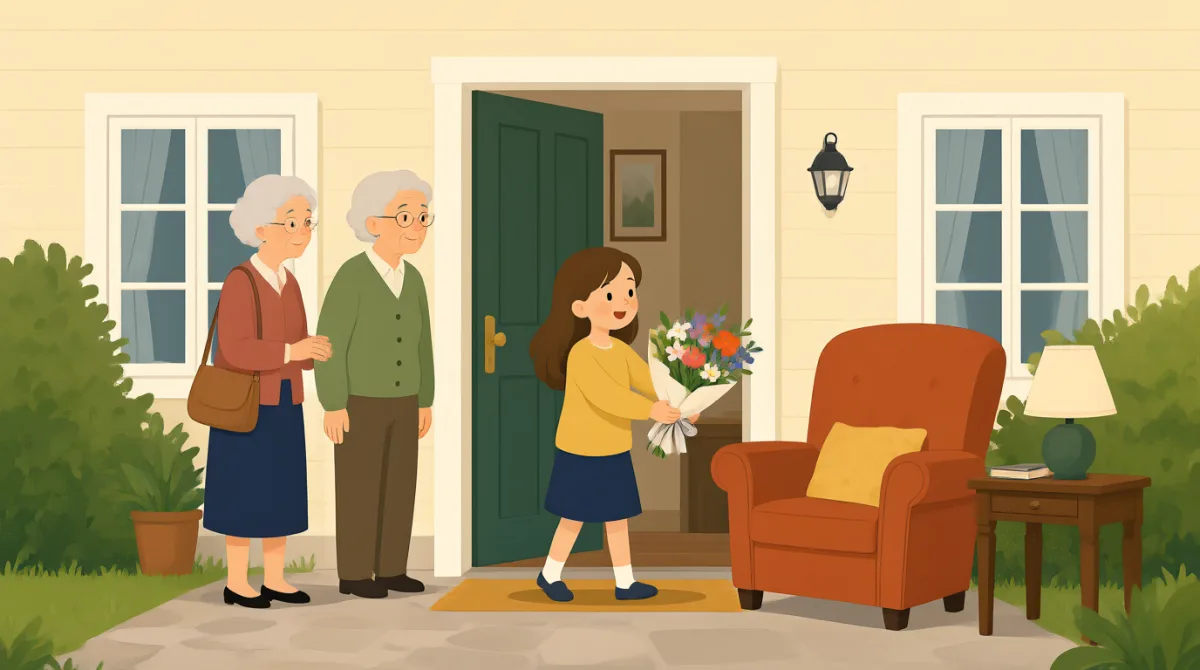

Hi, Grandma! Hi, Grandpa! I brought you some flowers.
नमस्ते, दादी! नमस्ते, दादाजी! मैं आपके लिए कुछ फूल लाई हूँ।

Emma, what a lovely surprise! Come in, dear.
एमा, यह तो कितना प्यारा सरप्राइज़ है! अंदर आओ, बेटा।

Those flowers are beautiful. Thank you for bringing them.
ये फूल बहुत सुंदर हैं। इन्हें लाने के लिए शुक्रिया।
You’re welcome! I saw them at the flower shop on my way here.
कोई बात नहीं! यहाँ आते हुए रास्ते में मैंने इन्हें फूलों की दुकान पर देखा था।
They smell wonderful. Let me find a vase for them.
इनकी खुशबू कितनी अच्छी है। मैं इनके लिए एक फूलदान ढूँढ़ती हूँ।
Take off your coat, Emma. It’s warm inside.
अपना कोट उतार दो, एमा। अंदर गर्मी है।
Thanks, Grandpa. It’s nice to visit you both today.
शुक्रिया, दादाजी। आज आप दोनों से मिलकर अच्छा लग रहा है।
We’re happy you came. Would you like some tea?
हमें खुशी है कि तुम आई। चाय पियोगी?
शब्दावली8
- what a lovely surpriseकितना प्यारा सरप्राइज़
This is a warm way to show that something makes you happy and you did not expect it.
यह गर्मजोशी से कहने का एक तरीका है कि कोई चीज़ आपको खुश कर रही है और आपने उसकी उम्मीद नहीं की थी।
- Come inअंदर आओ
This is a friendly way to invite someone to enter your home.
किसी को अपने घर के अंदर आने के लिए प्यार से बुलाने का यह तरीका है।
- bringing thembringing them
Here, this means carrying the flowers to someone. You can use “bringing” for things you take to another person.
यहाँ इसका मतलब है फूलों को किसी के पास लेकर जाना। जब आप कोई चीज़ किसी दूसरे व्यक्ति के लिए लेकर जाते हैं, तो “bringing” कह सकते हैं।
- on my way hereरास्ते में यहाँ आते हुए
This means while traveling to this place. You can use it to explain when you did something.
इसका मतलब है इस जगह की यात्रा करते समय। आप इसका इस्तेमाल यह बताने के लिए कर सकते हैं कि आपने कोई काम कब किया।
- smell wonderfulबहुत अच्छी खुशबू आना
This means to have a very nice smell. You can use “smell” to describe flowers, food, or other things.
इसका मतलब है कि किसी चीज़ की खुशबू बहुत अच्छी है। फूलों, खाने या दूसरी चीज़ों की खुशबू बताने के लिए आप “smell” का इस्तेमाल कर सकते हैं।
- find a vaseएक फूलदान ढूँढ़ना
This means to look for and get a container for flowers. You can use “find” when you need to look for something.
इसका मतलब है फूल रखने के लिए एक बर्तन ढूँढ़ना और लाना। किसी चीज़ को तलाशने की ज़रूरत हो, तो आप “find” का इस्तेमाल कर सकते हैं।
- Take off your coatअपना कोट उतार दो
This is a friendly suggestion to remove your coat. “Take off” is a common phrasal verb for removing clothing.
यह किसी को अपना कोट उतारने का दोस्ताना सुझाव है। कपड़े उतारने के लिए “Take off” एक आम phrasal verb है।
- Would you like some tea?क्या तुम चाय पियोगी?
This is a polite way to offer someone tea. You can replace “tea” with another food or drink.
किसी को चाय देने की पेशकश करने का यह एक विनम्र तरीका है। आप “tea” की जगह किसी दूसरे खाने या पेय का नाम रख सकते हैं।
मुख्य वाक्य8
- 1
I brought you some flowers.
मैं तुम्हारे लिए कुछ फूल लाई हूँ।
Use this sentence to tell someone you brought them a gift. You can replace “flowers” with another thing, such as “some cookies.”
किसी को यह बताने के लिए इस वाक्य का इस्तेमाल करो कि तुम उसके लिए कोई तोहफ़ा लाई हो। “flowers” की जगह तुम कोई दूसरी चीज़ कह सकती हो, जैसे “some cookies”।
- 2
Come in, dear.
अंदर आओ, बेटा।
This is a warm way to invite someone into your home. You can use “Come in” with guests or visitors.
किसी को अपने घर में बुलाने का यह एक प्यार भरा तरीका है। मेहमानों या मिलने आने वालों से तुम “Come in” कह सकती हो।
- 3
Those flowers are beautiful.
वे फूल बहुत सुंदर हैं।
Use this sentence to give a simple compliment. You can replace “flowers” with another plural noun, such as “pictures.”
किसी की तारीफ़ करने के लिए इस सरल वाक्य का इस्तेमाल करो। “flowers” की जगह तुम कोई और बहुवचन संज्ञा रख सकती हो, जैसे “pictures”।
- 4
I saw them at the flower shop on my way here.
यहाँ आते हुए रास्ते में मैंने उन्हें फूलों की दुकान पर देखा था।
This sentence explains where and when you saw something. You can replace “the flower shop” with another place.
यह वाक्य बताता है कि तुमने कोई चीज़ कहाँ और कब देखी। “the flower shop” की जगह तुम किसी दूसरी जगह का नाम रख सकती हो।
- 5
Let me find a vase for them.
मैं उनके लिए एक फूलदान ढूँढ़ती हूँ।
Use “Let me” to offer to do something for someone. You can replace “find a vase” with another helpful action.
किसी की मदद करने की पेशकश करने के लिए “Let me” का इस्तेमाल करो। “find a vase” की जगह तुम मदद का कोई और काम रख सकती हो।
- 6
Take off your coat, Emma.
अपना कोट उतार दो, एमा।
This is a friendly way to suggest that someone remove their coat. You can use “Take off your…” with other clothing.
यह किसी को अपना कोट उतारने का दोस्ताना सुझाव देने का तरीका है। दूसरे कपड़ों के साथ भी “Take off your…” का इस्तेमाल कर सकती हो।
- 7
It’s nice to visit you both today.
आज आप दोनों से मिलकर अच्छा लग रहा है।
Use this sentence to say you are happy to visit two people. You can replace “you both” with the person or people you are visiting.
दो लोगों से मिलने की खुशी जताने के लिए इस वाक्य का इस्तेमाल करो। “you both” की जगह तुम उस व्यक्ति या लोगों का नाम ले सकती हो जिनसे मिलने आई हो।
- 8
We’re happy you came.
हमें खुशी है कि तुम आई।
This is a warm way to tell someone you are glad they visited. You can use it to welcome a guest.
किसी को यह बताने का यह प्यार भरा तरीका है कि उनके आने से तुम्हें खुशी हुई। मेहमान का स्वागत करने के लिए तुम इसका इस्तेमाल कर सकती हो।