Parking by the Curb
कर्ब के पास पार्क करना
David guides Emma as she pulls over and parks by the curb. Emma checks whether the car is close enough and asks how to straighten the wheels.
डेविड एमा को गाड़ी सड़क के किनारे लगाकर कर्ब के पास पार्क करने में मार्गदर्शन करता है। एमा पूछती है कि गाड़ी कर्ब के काफी पास है या नहीं और पहियों को सीधा कैसे करना है।
संवाद9
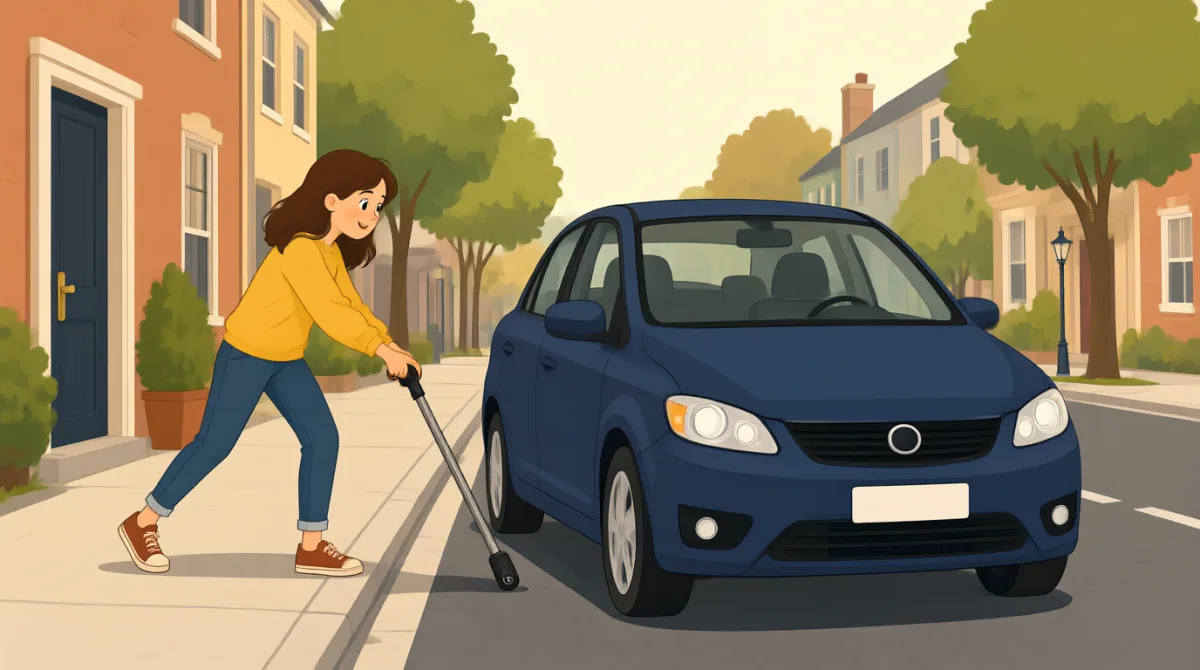

When it’s safe, pull over slowly and stop beside the curb.
जब सुरक्षित हो, तो धीरे-धीरे सड़क के किनारे गाड़ी रोककर कर्ब के पास लगा दो।

Okay. Should I turn on my signal now?
ठीक है। क्या मैं अभी इंडिकेटर चालू करूँ?
Yes, signal right. Check your mirror, then move closer to the curb.
हाँ, दायाँ इंडिकेटर दो। शीशे में देखो, फिर कर्ब के थोड़ा पास ले जाओ।
I’m stopped. Is the car close enough to the curb?
मैंने गाड़ी रोक दी है। क्या गाड़ी कर्ब के काफी पास है?
A little closer, please. Move forward slowly and stop when I say.
थोड़ा और पास। धीरे-धीरे आगे बढ़ो और जब मैं कहूँ, तब रोक देना।
Is this good? I don’t want to hit the curb.
क्या यहाँ ठीक है? मैं कर्ब से टकराना नहीं चाहती।
That’s good. Now straighten the wheels by turning the steering wheel back.
हाँ, ठीक है। अब स्टीयरिंग वापस घुमाकर पहियों को सीधा कर लो।
Like this? The car is straight now, right?
ऐसे? अब गाड़ी सीधी है, है ना?
Yes, nice work. You parked safely and left enough space from the curb.
हाँ, बहुत अच्छा किया। तुमने सुरक्षित तरीके से पार्क किया और कर्ब से पर्याप्त दूरी रखी।
शब्दावली8
- pull overसड़क के किनारे गाड़ी रोकना
To move your car to the side of the road and stop. Here, David asks Emma to stop beside the curb.
गाड़ी को सड़क के किनारे ले जाकर रोकना। यहाँ डेविड एमा से कर्ब के पास रुकने को कहता है।
- beside the curbकर्ब के पास
Next to the raised edge of the road. Use this phrase to describe where you want to park.
सड़क के ऊँचे किनारे के बगल में। पार्किंग की जगह बताने के लिए इस वाक्यांश का इस्तेमाल करें।
- signal rightदायाँ इंडिकेटर देना
To use your right turn signal to show that you are moving right. You can say this when giving a driver a simple instruction.
यह दिखाने के लिए दायाँ टर्न सिग्नल चालू करना कि आप दाईं ओर जा रहे हैं। ड्राइवर को कोई आसान निर्देश देते समय आप यह कह सकते हैं।
- mirrorशीशा
A mirror in the car that helps you see behind you. Check it before moving closer to the curb.
गाड़ी का वह शीशा जिससे आपको पीछे का हिस्सा दिखाई देता है। कर्ब के पास जाने से पहले इसे देख लें।
- move closerऔर पास जाना
To go nearer to something. You can use this phrase to tell someone to approach a place or object carefully.
किसी चीज़ के नज़दीक जाना। किसी व्यक्ति को किसी जगह या चीज़ के पास सावधानी से जाने के लिए कहने में इस वाक्यांश का इस्तेमाल करें।
- steering wheelस्टीयरिंग व्हील
The wheel you turn to guide a car. Turning it helps you change the direction of the car.
वह पहिया जिसे घुमाकर गाड़ी को दिशा देते हैं। इसे घुमाने से गाड़ी की दिशा बदलती है।
- straighten the wheelsपहियों को सीधा करना
To turn the front wheels so they point straight ahead. This is useful after turning or parking.
आगे के पहियों को इस तरह घुमाना कि वे सीधे आगे की ओर रहें। मोड़ने या पार्क करने के बाद ऐसा करना उपयोगी होता है।
- left enough spaceपर्याप्त दूरी रखना
Kept a suitable distance from something. Use this phrase to say there is room between the car and the curb.
किसी चीज़ से उचित दूरी बनाए रखना। गाड़ी और कर्ब के बीच पर्याप्त जगह होने की बात कहने के लिए इस वाक्यांश का इस्तेमाल करें।
मुख्य वाक्य7
- 1
When it’s safe, pull over slowly and stop beside the curb.
जब सुरक्षित हो, तो धीरे-धीरे सड़क के किनारे गाड़ी रोककर कर्ब के पास लगा दो।
This is a clear instruction for stopping a car by the side of the road. You can reuse “When it’s safe” before giving another driving instruction.
सड़क के किनारे गाड़ी रोकने का यह एक स्पष्ट निर्देश है। ड्राइविंग का कोई और निर्देश देने से पहले “When it’s safe” (जब सुरक्षित हो) का फिर से इस्तेमाल कर सकते हैं।
- 2
Should I turn on my signal now?
क्या मैं अभी इंडिकेटर चालू करूँ?
This is a useful way to check when to use a car signal. Replace “my signal” with another action to ask when to do it.
गाड़ी का इंडिकेटर कब देना है, यह पूछने का यह एक उपयोगी तरीका है। कब करना है, यह पूछने के लिए “my signal” की जगह कोई दूसरी कार्रवाई रख सकते हैं।
- 3
Check your mirror, then move closer to the curb.
शीशे में देखो, फिर कर्ब के थोड़ा पास ले जाओ।
This sentence gives two simple driving instructions in order. Use “then” to show what action comes next.
इस वाक्य में ड्राइविंग के दो आसान निर्देश क्रम से दिए गए हैं। अगली कार्रवाई बताने के लिए “then” का इस्तेमाल करें।
- 4
Is the car close enough to the curb?
क्या गाड़ी कर्ब के काफी पास है?
This question checks whether the car is at a good distance from the curb. You can use “close enough to” to ask about distance from other things.
इस सवाल से पता चलता है कि गाड़ी कर्ब से सही दूरी पर है या नहीं। दूसरी चीज़ों से दूरी पूछने के लिए भी “close enough to” का इस्तेमाल कर सकते हैं।
- 5
I don’t want to hit the curb.
मैं कर्ब से टकराना नहीं चाहती।
This explains a concern about getting too close while parking. Use “I don’t want to” to talk about something you want to avoid.
यह वाक्य पार्क करते समय बहुत पास आ जाने की चिंता बताता है। जिस चीज़ से बचना चाहते हैं, उसके बारे में कहने के लिए “I don’t want to” का इस्तेमाल करें।
- 6
Now straighten the wheels by turning the steering wheel back.
अब स्टीयरिंग वापस घुमाकर पहियों को सीधा कर लो।
This explains how to make the wheels point straight after parking. Use “by” plus an action to explain how to do something.
इसमें बताया गया है कि पार्क करने के बाद पहियों को सीधा कैसे करना है। कोई काम कैसे करना है, यह बताने के लिए “by” के बाद कोई कार्रवाई बताएं।
- 7
You parked safely and left enough space from the curb.
तुमने सुरक्षित तरीके से पार्क किया और कर्ब से पर्याप्त दूरी रखी।
This sentence gives positive feedback about how someone parked. You can use “left enough space” to describe keeping a good distance from something.
यह वाक्य किसी के पार्क करने के तरीके की तारीफ़ करता है। किसी चीज़ से उचित दूरी बनाए रखने की बात कहने के लिए “left enough space” का इस्तेमाल कर सकते हैं।