Understanding the Doctor's Advice
डॉक्टर की सलाह समझना
The doctor explains that Leo has a common cold and gives simple advice. Leo learns to rest, drink water, and stay home if he feels worse.
डॉक्टर बताते हैं कि लियो को आम सर्दी-जुकाम है और उन्हें कुछ आसान सलाह देते हैं। लियो सीखते हैं कि आराम करना चाहिए, पानी पीना चाहिए और तबीयत बिगड़ने पर घर पर रहना चाहिए।
संवाद9
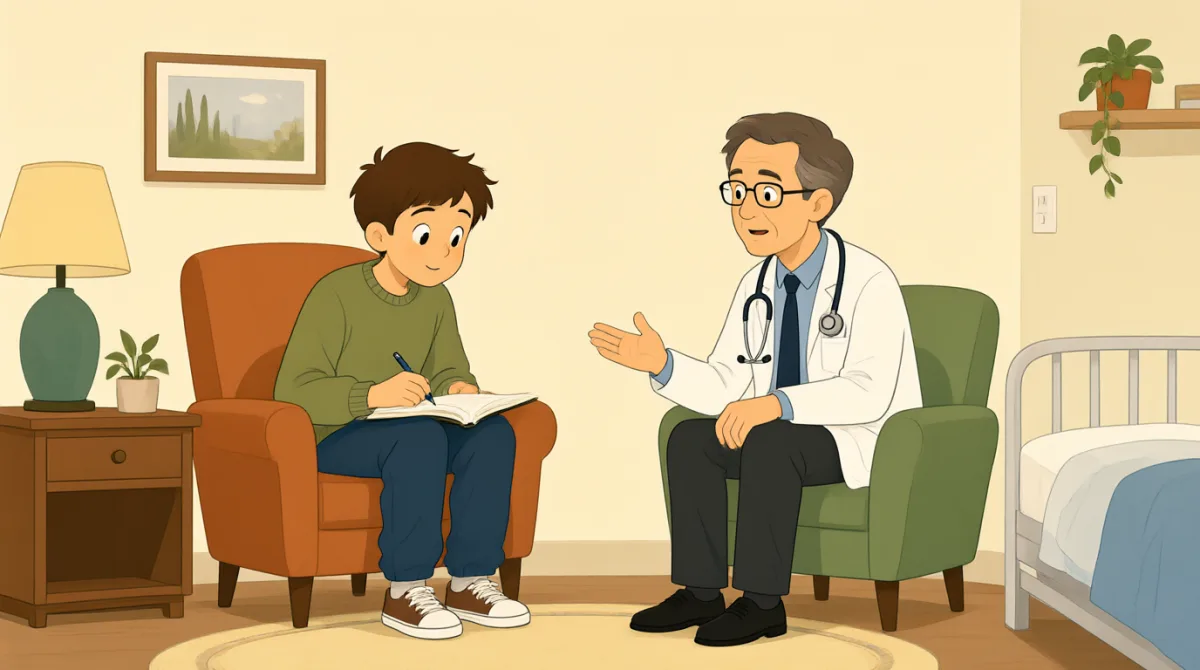

Leo, you have a common cold. It should get better in about a week.
लियो, आपको आम सर्दी-जुकाम है। लगभग एक हफ़्ते में आप बेहतर हो जाएँगे।

That’s good to hear. What should I do at home?
यह सुनकर अच्छा लगा। मुझे घर पर क्या करना चाहिए?
Get plenty of rest, and drink lots of water or warm tea.
खूब आराम कीजिए और ढेर सारा पानी या गरम चाय पीजिए।
Can I go to work tomorrow, or should I stay home?
क्या मैं कल काम पर जा सकता हूँ, या मुझे घर पर रहना चाहिए?
Stay home if you feel worse or have a fever. Try not to spread the cold.
अगर आपकी तबीयत बिगड़े या बुखार हो, तो घर पर रहिए। सर्दी-जुकाम दूसरों को न फैलाने की कोशिश कीजिए।
Okay. Should I take any medicine for my cough?
ठीक है। क्या मुझे खाँसी के लिए कोई दवा लेनी चाहिए?
You can ask the pharmacist about cough medicine. Follow the directions on the package.
आप खाँसी की दवा के बारे में फ़ार्मासिस्ट से पूछ सकते हैं। पैकेट पर दिए निर्देशों का पालन कीजिए।
All right. I’ll rest and drink more water. When should I call you?
ठीक है। मैं आराम करूँगा और ज़्यादा पानी पीऊँगा। मुझे आपको कब फ़ोन करना चाहिए?
Call the clinic if you have trouble breathing or your fever gets worse.
अगर साँस लेने में तकलीफ़ हो या आपका बुखार बढ़ जाए, तो क्लिनिक को फ़ोन कीजिए।
शब्दावली7
- common coldआम सर्दी-जुकाम
A common cold is a mild illness that can cause a cough or runny nose. Use this phrase to name the illness.
आम सर्दी-जुकाम एक हल्की बीमारी है, जिससे खाँसी या नाक बहने जैसे लक्षण हो सकते हैं। बीमारी का नाम बताने के लिए इस शब्द-समूह का इस्तेमाल करें।
- get betterठीक होना
To get better means to become healthier. You can use it to talk about recovering from an illness.
“Get better” का मतलब है सेहत में सुधार होना। बीमारी से उबरने की बात करते समय इसका इस्तेमाल कर सकते हैं।
- plenty of restभरपूर आराम
This means getting a lot of rest or sleep. It is common advice when someone is sick.
इसका मतलब है खूब आराम करना या सोना। बीमार होने पर अक्सर यह सलाह दी जाती है।
- stay homeघर पर रहना
To stay home means not to go out, such as to work or school. You can use it when you need to rest or avoid spreading an illness.
“Stay home” का मतलब है बाहर न जाना, जैसे काम या स्कूल पर न जाना। आराम करने या बीमारी फैलने से रोकने के लिए घर पर रहने की बात में इसका इस्तेमाल करें।
- feel worseतबीयत बिगड़ना
To feel worse means to feel less healthy than before. Use it to describe a change in how you feel.
“Feel worse” का मतलब है पहले से कम स्वस्थ महसूस करना। अपनी तबीयत में बदलाव बताने के लिए इसका इस्तेमाल करें।
- follow the directionsनिर्देशों का पालन करना
This means to do what the instructions say. You can use it when talking about medicine or other instructions.
“Follow the directions” का मतलब है निर्देशों के मुताबिक काम करना। दवा या किसी और चीज़ के निर्देशों की बात में इसका इस्तेमाल कर सकते हैं।
- trouble breathingसाँस लेने में तकलीफ़
This means difficulty breathing normally. It is important to tell a doctor if you have trouble breathing.
इसका मतलब है सामान्य रूप से साँस लेने में कठिनाई होना। अगर साँस लेने में तकलीफ़ हो, तो डॉक्टर को बताना ज़रूरी है।
मुख्य वाक्य6
- 1
It should get better in about a week.
लगभग एक हफ़्ते में आप बेहतर हो जाएँगे।
This sentence gives an estimate of how long recovery may take. Use “should get better” to talk about an expected improvement.
इस वाक्य में बताया गया है कि ठीक होने में लगभग कितना समय लग सकता है। अपेक्षित सुधार की बात करने के लिए “should get better” का इस्तेमाल करें।
- 2
What should I do at home?
मुझे घर पर क्या करना चाहिए?
This is a useful way to ask for advice. You can replace “at home” with another situation, such as “at work.”
सलाह माँगने का यह एक उपयोगी तरीका है। “at home” की जगह आप कोई दूसरी परिस्थिति रख सकते हैं, जैसे “at work”।
- 3
Get plenty of rest, and drink lots of water or warm tea.
खूब आराम कीजिए और ढेर सारा पानी या गरम चाय पीजिए।
This gives two simple health recommendations. You can use “Get plenty of…” to suggest something someone needs.
इसमें सेहत से जुड़ी दो आसान सलाह दी गई हैं। किसी को बताने के लिए कि उसे क्या करना चाहिए, “Get plenty of…” का इस्तेमाल कर सकते हैं।
- 4
Stay home if you feel worse or have a fever.
अगर आपकी तबीयत बिगड़े या बुखार हो, तो घर पर रहिए।
This gives advice with a condition using “if.” Use the same pattern to explain what someone should do in a particular situation.
इसमें “if” का इस्तेमाल करके एक शर्त के साथ सलाह दी गई है। किसी खास परिस्थिति में क्या करना चाहिए, यह बताने के लिए इसी ढाँचे का इस्तेमाल करें।
- 5
Follow the directions on the package.
पैकेट पर दिए निर्देशों का पालन कीजिए।
This is a clear reminder to read and obey instructions. You can use it when giving advice about medicine or a product.
यह निर्देश पढ़ने और उनका पालन करने की साफ़ याद दिलाता है। दवा या किसी उत्पाद के बारे में सलाह देते समय इसका इस्तेमाल कर सकते हैं।
- 6
Call the clinic if you have trouble breathing or your fever gets worse.
अगर साँस लेने में तकलीफ़ हो या आपका बुखार बढ़ जाए, तो क्लिनिक को फ़ोन कीजिए।
This explains when to contact a medical service. Use “Call… if…” to give someone a clear next step.
इस वाक्य में बताया गया है कि चिकित्सा सेवा से कब संपर्क करना चाहिए। किसी को अगला कदम साफ़ तौर पर बताने के लिए “Call… if…” का इस्तेमाल करें।