Asking a Ranger for Advice
रेंजर से सलाह लेना
At the trail entrance, Emma and Jack ask Grace, a park ranger, about the path and the weather. Grace gives them simple safety tips for the hike.
ट्रेल के प्रवेश द्वार पर एमा और जैक पार्क रेंजर ग्रेस से रास्ते और मौसम के बारे में पूछते हैं। ग्रेस उन्हें पैदल यात्रा के लिए कुछ आसान सुरक्षा सुझाव देती हैं।
संवाद9
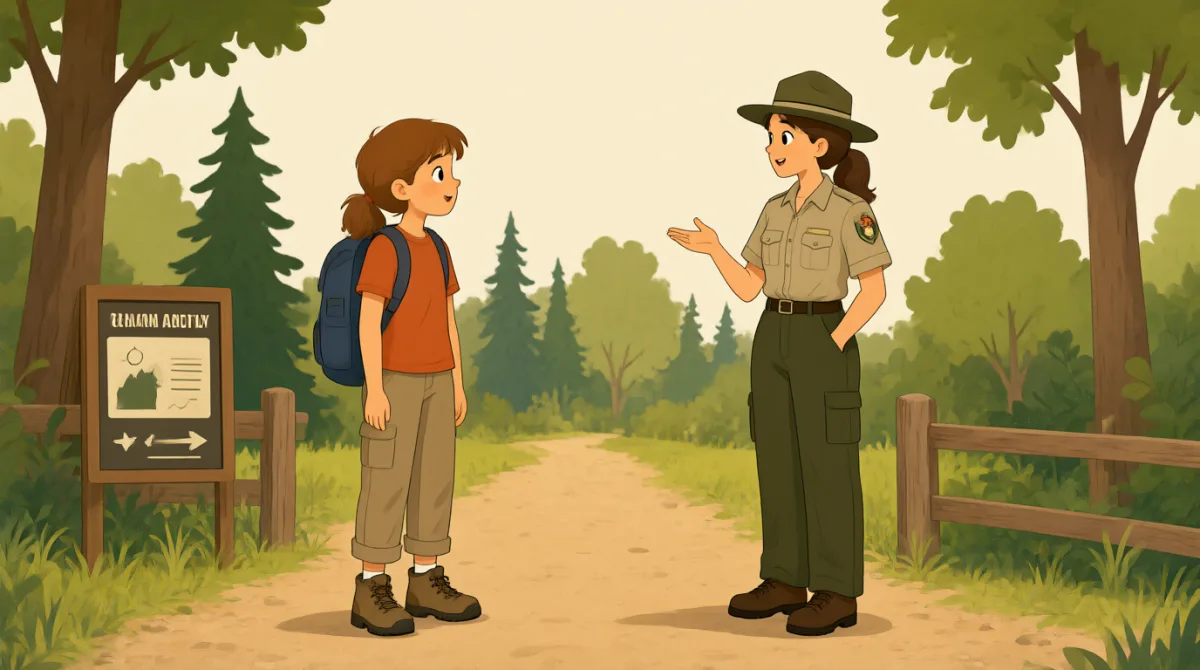

Hi, Grace. We’re planning to hike the Pine Loop. Is it open today?
हाय, ग्रेस। हम पाइन लूप पर पैदल यात्रा करने की योजना बना रहे हैं। क्या यह आज खुला है?

Yes, it’s open. It takes about two hours, and there are some steep parts.
हाँ, यह खुला है। इसमें करीब दो घंटे लगते हैं और रास्ते के कुछ हिस्से काफी खड़े हैं।

Is the trail easy to follow? We haven’t hiked here before.
क्या इस रास्ते पर चलना आसान है? हमने पहले यहाँ पैदल यात्रा नहीं की है।
Yes. Follow the blue markers, and stay on the marked trail.
हाँ। नीले निशानों का पीछा करें और चिह्नित रास्ते पर ही रहें।
How’s the weather up there? Should we bring our rain jackets?
ऊपर मौसम कैसा है? क्या हमें अपनी बरसाती जैकेटें साथ लानी चाहिए?
It may rain this afternoon, so bring them. Also, take plenty of water.
आज दोपहर बारिश हो सकती है, इसलिए इन्हें साथ ले आइए। साथ ही, खूब पानी भी ले जाइए।
Got it. Is there anything else we should watch out for?
समझ गया। क्या कोई और चीज़ है जिसका हमें ध्यान रखना चाहिए?
Watch your step on the rocky parts, and come back before sunset.
पथरीले हिस्सों पर संभलकर चलिए और सूर्यास्त से पहले लौट आइए।
Thanks, Grace. We’ll follow the markers and keep an eye on the time.
धन्यवाद, ग्रेस। हम निशानों का पीछा करेंगे और समय का ध्यान रखेंगे।
शब्दावली7
- steep partsखड़े हिस्से
Sections of a path that go up or down sharply. They may be harder to walk on.
रास्ते के ऐसे हिस्से जो तेज़ी से ऊपर या नीचे जाते हैं। उन पर चलना थोड़ा मुश्किल हो सकता है।
- blue markersनीले निशान
Blue signs or marks that show the way. Follow them to stay on the right path.
नीले रंग के संकेत या निशान जो रास्ता दिखाते हैं। सही रास्ते पर बने रहने के लिए उनका पीछा करें।
- marked trailचिह्नित रास्ता
The path shown by signs or markers. Stay on it to avoid getting lost.
वह रास्ता जिसे संकेतों या निशानों से दिखाया गया हो। भटकने से बचने के लिए इसी पर रहें।
- rain jacketsबरसाती जैकेटें
Jackets that help keep you dry in the rain. Bring them if rain is possible.
ऐसी जैकेटें जो बारिश में आपको भीगने से बचाती हैं। बारिश की संभावना हो तो इन्हें साथ ले जाएँ।
- plenty of waterभरपूर पानी
A large enough amount of water. Take enough to drink during your hike.
इतनी मात्रा में पानी जो पर्याप्त हो। यात्रा के दौरान पीने के लिए काफी पानी साथ ले जाएँ।
- watch your stepकदम संभालकर रखना
Be careful where you put your feet. This is useful on rocky or uneven ground.
इस बात का ध्यान रखना कि आप पैर कहाँ रख रहे हैं। पथरीली या ऊबड़-खाबड़ ज़मीन पर यह सलाह काम आती है।
- keep an eye on the timeसमय का ध्यान रखना
Check the time from time to time. This can help you return before sunset.
बीच-बीच में समय देखते रहना। इससे आपको सूर्यास्त से पहले लौटने में मदद मिल सकती है।
मुख्य वाक्य8
- 1
Is it open today?
क्या यह आज खुला है?
Use this question to check if a place or activity is available. Replace “it” with a trail, shop, or attraction.
किसी जगह या गतिविधि के उपलब्ध होने के बारे में पूछने के लिए इस सवाल का इस्तेमाल करें। “it” की जगह किसी ट्रेल, दुकान या दर्शनीय स्थल का नाम रख सकते हैं।
- 2
It takes about two hours, and there are some steep parts.
इसमें करीब दो घंटे लगते हैं और रास्ते के कुछ हिस्से काफी खड़े हैं।
This gives the time needed and describes the route. You can use “It takes about…” to talk about how long a trip or activity lasts.
इस वाक्य में लगने वाला समय बताया गया है और रास्ते का वर्णन किया गया है। किसी यात्रा या गतिविधि में कितना समय लगता है, यह बताने के लिए “It takes about…” का इस्तेमाल कर सकते हैं।
- 3
Follow the blue markers, and stay on the marked trail.
नीले निशानों का पीछा करें और चिह्नित रास्ते पर ही रहें।
This gives two clear directions for staying on the right path. Replace “blue markers” with another sign or landmark.
यह सही रास्ते पर बने रहने के लिए दो साफ़ निर्देश देता है। “blue markers” की जगह किसी दूसरे संकेत या पहचान-चिह्न का नाम रख सकते हैं।
- 4
Should we bring our rain jackets?
क्या हमें अपनी बरसाती जैकेटें साथ लानी चाहिए?
Use “Should we bring…?” to ask what to take with you. Replace “rain jackets” with another useful item.
साथ ले जाने के लिए ज़रूरी चीज़ों के बारे में पूछने हेतु “Should we bring…?” का इस्तेमाल करें। “rain jackets” की जगह किसी दूसरी काम की चीज़ का नाम रख सकते हैं।
- 5
It may rain this afternoon, so bring them.
आज दोपहर बारिश हो सकती है, इसलिए उन्हें साथ ले आइए।
This warns someone about possible weather and gives advice. Use “It may…” for something that could happen.
इस वाक्य में किसी को मौसम की संभावना के बारे में बताकर सलाह दी जाती है। जो बात हो सकती है, उसके लिए “It may…” का इस्तेमाल करें।
- 6
Take plenty of water.
भरपूर पानी ले जाइए।
This is a simple way to advise someone to bring enough water. You can use “Take plenty of…” for other important supplies.
किसी को पर्याप्त पानी साथ ले जाने की सलाह देने का यह एक आसान तरीका है। दूसरी ज़रूरी चीज़ों के लिए भी “Take plenty of…” का इस्तेमाल कर सकते हैं।
- 7
Watch your step on the rocky parts, and come back before sunset.
पथरीले हिस्सों पर कदम संभालकर रखें और सूर्यास्त से पहले लौट आएँ।
This gives safety advice and a time to return. You can use “Watch your step” when the ground is uneven.
इस वाक्य में सुरक्षा की सलाह और लौटने का समय दिया गया है। ज़मीन ऊबड़-खाबड़ हो तो “Watch your step” का इस्तेमाल कर सकते हैं।
- 8
We’ll follow the markers and keep an eye on the time.
हम निशानों का पीछा करेंगे और समय का ध्यान रखेंगे।
Use this to say what you plan to do. “We’ll” introduces a future plan, and “keep an eye on” means check something regularly.
अपनी योजना बताने के लिए इसका इस्तेमाल करें। “We’ll” भविष्य की योजना बताता है, और “keep an eye on” का मतलब है किसी चीज़ को नियमित रूप से देखते रहना।