Choosing a Trail
पगडंडी चुनना
Emma and Jack look at the trail map and choose a route that fits their time and experience. They pack water and a few snacks before setting off.
एमा और जैक पगडंडी का नक्शा देखकर ऐसा रास्ता चुनते हैं जो उनके पास मौजूद समय और अनुभव के मुताबिक हो। निकलने से पहले वे पानी और कुछ हल्के नाश्ते साथ रख लेते हैं।
संवाद8
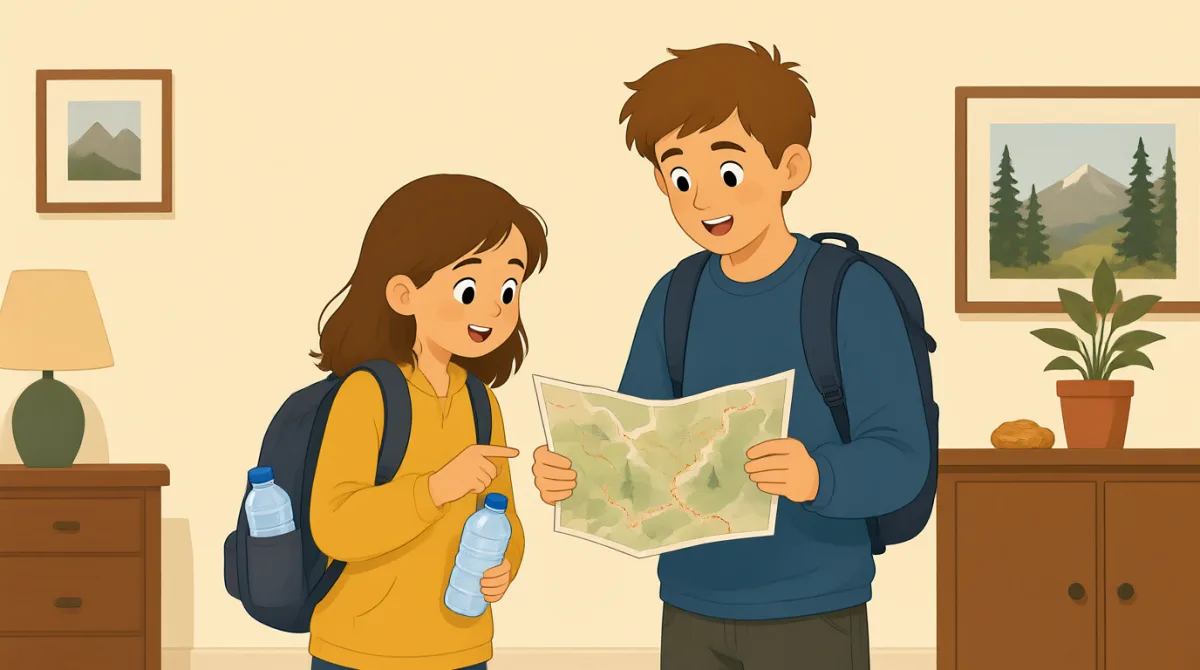

Jack, how much time do we have for the hike?
जैक, हमारे पास पैदल यात्रा के लिए कितना समय है?

About two hours. Let's check the trail map before we choose.
लगभग दो घंटे। रास्ता चुनने से पहले नक्शा देख लेते हैं।
This loop is four miles. Is that too far for us?
यह चक्कर वाला रास्ता चार मील का है। क्या यह हमारे लिए बहुत लंबा होगा?
It looks a little hard, and it may take three hours.
यह थोड़ा मुश्किल लग रहा है, और इसमें तीन घंटे लग सकते हैं।
What about the shorter trail? It says one and a half miles.
छोटी पगडंडी कैसी रहेगी? लिखा है कि यह डेढ़ मील की है।
That sounds good. It should take about an hour, and the view looks nice.
यह अच्छा लग रहा है। इसमें लगभग एक घंटा लगेगा, और नज़ारा भी अच्छा दिखता है।
Great! I'll pack water and some snacks. Do you have the map?
बढ़िया! मैं पानी और कुछ नाश्ता रख लेती हूँ। नक्शा तुम्हारे पास है?
Yes. I've got the map. Let's pack up and set off.
हाँ, नक्शा मेरे पास है। चलो सामान समेटकर निकलते हैं।
शब्दावली6
- trail mapपगडंडी का नक्शा
A map that shows paths in a natural area. You can check it to choose a route.
किसी प्राकृतिक इलाके के रास्ते दिखाने वाला नक्शा। रास्ता चुनने के लिए इसे देखा जा सकता है।
- loopचक्कर वाला रास्ता
A route that goes around and returns to where it started. You can use “loop” when talking about a walking or hiking path.
ऐसा रास्ता जो घूमकर वापस उसी जगह पहुँचता है जहाँ से शुरू हुआ था। पैदल चलने या लंबी पैदल यात्रा के रास्ते के लिए “loop” शब्द इस्तेमाल किया जा सकता है।
- a little hardथोड़ा मुश्किल
Somewhat difficult. Use “a little” before an adjective to describe something as slightly difficult or different.
कुछ हद तक कठिन। किसी चीज़ को थोड़ा कठिन या अलग बताने के लिए विशेषण से पहले “a little” लगाएँ।
- shorter trailछोटी पगडंडी
A trail that is not as long as another one. Use “shorter” to compare the lengths of two routes.
ऐसी पगडंडी जो किसी दूसरी पगडंडी जितनी लंबी न हो। दो रास्तों की लंबाई की तुलना करने के लिए “shorter” इस्तेमाल करें।
- pack waterपानी साथ रखना
To put water in your bag to take with you. You can use “pack” with other things you need for a trip, like snacks or clothes.
अपने साथ ले जाने के लिए पानी को अपने बैग में रखना। यात्रा में ज़रूरी दूसरी चीज़ों, जैसे नाश्ते या कपड़ों, के लिए भी “pack” का इस्तेमाल कर सकते हैं।
- set offनिकल पड़ना
To begin a journey or trip. You can say “set off” when you start walking, driving, or traveling.
किसी सफ़र या यात्रा की शुरुआत करना। पैदल चलना, गाड़ी चलाना या यात्रा शुरू करना बताने के लिए “set off” कह सकते हैं।
मुख्य वाक्य7
- 1
How much time do we have for the hike?
पैदल यात्रा के लिए हमारे पास कितना समय है?
This is a useful way to ask how much time is available for an activity. You can replace “the hike” with another event or task.
किसी काम के लिए कितना समय उपलब्ध है, यह पूछने का यह एक उपयोगी तरीका है। आप “the hike” की जगह किसी दूसरी घटना या काम का नाम रख सकते हैं।
- 2
Let's check the trail map before we choose.
चुनने से पहले पगडंडी का नक्शा देख लेते हैं।
Use “Let’s” to suggest doing something together. You can replace “check the trail map” with another action and “choose” with a decision.
साथ मिलकर कुछ करने का सुझाव देने के लिए “Let’s” का इस्तेमाल करें। “check the trail map” की जगह कोई दूसरी क्रिया और “choose” की जगह कोई दूसरा फ़ैसला रख सकते हैं।
- 3
Is that too far for us?
क्या यह हमारे लिए बहुत दूर है?
This is a simple way to ask whether something is beyond your group’s ability or comfort. You can replace “far” with an adjective like “hard” or “expensive.”
यह पूछने का आसान तरीका है कि कोई चीज़ आपके समूह की क्षमता या सहजता की सीमा से बाहर तो नहीं है। “far” की जगह “hard” या “expensive” जैसे विशेषण रख सकते हैं।
- 4
It may take three hours.
इसमें तीन घंटे लग सकते हैं।
Use “may” to say that something is possible but not certain. You can change the activity or the amount of time.
किसी बात के संभव होने, लेकिन पक्का न होने का संकेत देने के लिए “may” का इस्तेमाल करें। आप काम या समय की अवधि बदल सकते हैं।
- 5
That sounds good.
यह अच्छा लग रहा है।
This is a friendly way to agree with an idea or plan. You can use it in everyday conversations when someone makes a suggestion.
किसी विचार या योजना से सहमत होने का यह एक दोस्ताना तरीका है। रोज़मर्रा की बातचीत में, जब कोई सुझाव दे, तब इसका इस्तेमाल कर सकते हैं।
- 6
I'll pack water and some snacks.
मैं पानी और कुछ नाश्ता रख लूँगी।
Use “I’ll” to talk about a decision or plan you are making now. You can replace “water and some snacks” with other things you will bring.
अभी लिए जा रहे किसी फ़ैसले या बनाई जा रही योजना के बारे में बताने के लिए “I’ll” का इस्तेमाल करें। “water and some snacks” की जगह वे दूसरी चीज़ें रख सकते हैं जिन्हें आप साथ ले जाएँगे।
- 7
Let's pack up and set off.
चलो सामान समेटकर निकल पड़ते हैं।
This suggests getting your things ready and then starting a journey. You can use “Let’s” to invite someone to do both actions with you.
इसका मतलब है अपना सामान तैयार करके फिर यात्रा शुरू करना। दोनों काम किसी के साथ करने का सुझाव देने के लिए “Let’s” का इस्तेमाल कर सकते हैं।