Inquiring About a Specific Stop
किसी खास बस स्टॉप के बारे में पूछना
A passenger asks the bus driver or another passenger to identify a specific bus stop or indicate when the bus approaches it.
एक यात्री बस चालक या किसी दूसरे यात्री से किसी खास बस स्टॉप की पहचान पूछता है या जानना चाहता है कि बस वहाँ कब पहुँचेगी।
संवाद6
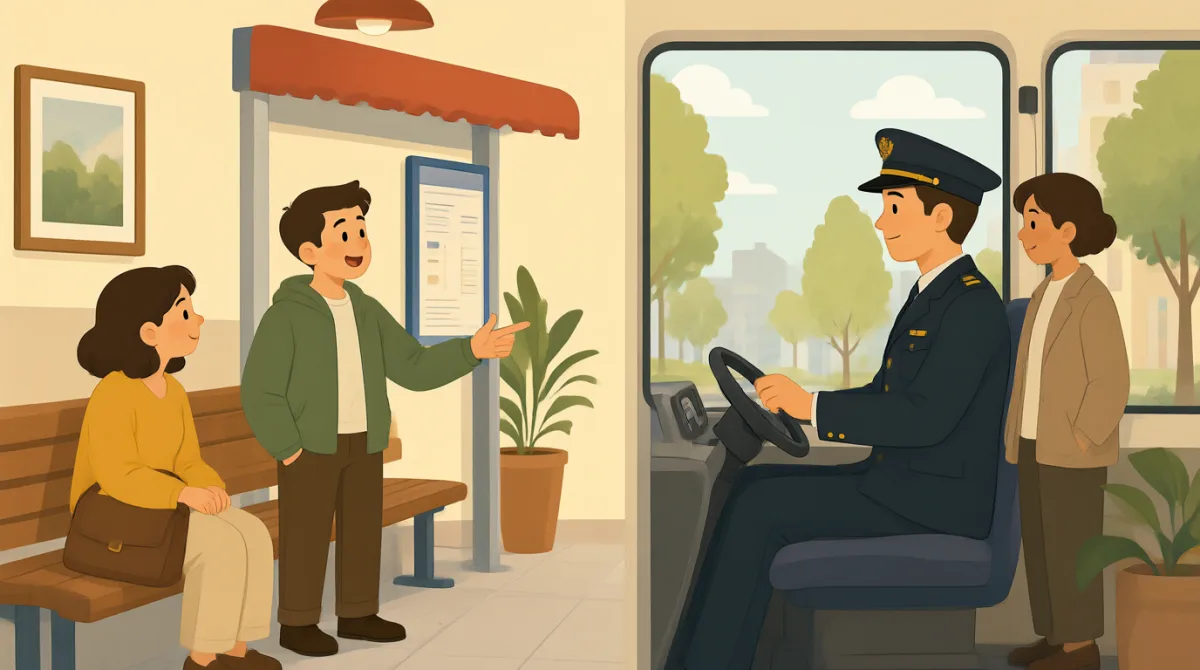

Excuse me, driver. Does this bus go to the City Hall stop?
माफ़ कीजिए, ड्राइवर साहब। क्या यह बस सिटी हॉल वाले स्टॉप तक जाती है?

Yes, it does. It's about five stops from here.
जी हाँ। यहाँ से करीब पाँच स्टॉप दूर है।
Okay, great. Would you mind telling me when we’re getting close, or how I can recognize the stop?
अच्छा, बढ़िया। क्या आप मुझे बता देंगे कि हम वहाँ पहुँचने वाले कब होंगे, या मैं उस स्टॉप को कैसे पहचानूँ?
Sure, no problem. The City Hall stop is right after a large park on your left. You'll see a big, modern building with a clock tower.
ज़रूर, कोई बात नहीं। सिटी हॉल वाला स्टॉप आपके बाईं ओर एक बड़े पार्क के ठीक बाद है। आपको एक बड़ी, आधुनिक इमारत दिखेगी, जिसके ऊपर घड़ी वाला टावर है।
A big building with a clock tower, got it. That sounds easy enough to spot. Thanks a lot for your help!
घड़ी वाले टावर की बड़ी इमारत, समझ गई। उसे देख पाना आसान लग रहा है। मदद के लिए आपका बहुत-बहुत धन्यवाद!
You're welcome. Enjoy your trip.
कोई बात नहीं। आपकी यात्रा शुभ हो।
शब्दावली7
- excuse meमाफ़ कीजिए
A polite way to get someone's attention, especially when asking for help or directions on public transport.
किसी का ध्यान खींचने का यह एक विनम्र तरीका है, खासकर सार्वजनिक परिवहन में मदद या रास्ता पूछते समय।
- driverचालक
The person who operates a vehicle like a bus; use this when speaking to the bus operator.
वह व्यक्ति जो बस जैसी गाड़ी चलाता है। बस चलाने वाले से बात करते समय इस शब्द का इस्तेमाल करें।
- stopस्टॉप
A place where a bus pauses to let passengers get on or off; often used in phrases like 'bus stop' or 'next stop'.
वह जगह जहाँ बस यात्रियों को चढ़ाने या उतारने के लिए रुकती है। यह अक्सर 'bus stop' या 'next stop' जैसे वाक्यांशों में आता है।
- recognizeपहचानना
To identify or know something or someone from memory; helpful when asking how to spot a landmark.
किसी चीज़ या व्यक्ति को देखकर पहचानना या याद से जानना। किसी पहचान-चिह्न को कैसे ढूँढ़ें, यह पूछते समय यह शब्द काम आता है।
- mindmind
Used in 'would you mind' to politely ask for a favor, meaning 'do you object to' or 'is it okay if'.
'would you mind' में किसी से विनम्रता से मदद माँगने के लिए इसका इस्तेमाल होता है। इसका मतलब है 'क्या आपको एतराज़ होगा' या 'क्या यह ठीक रहेगा'।
- spotदेख पाना
To see or notice something easily, especially a landmark; informal and useful for describing visibility.
किसी चीज़ को आसानी से देख लेना या नज़र में पहचान लेना, खासकर किसी पहचान-चिह्न को। दिखाई देने की बात करते समय यह अनौपचारिक शब्द उपयोगी है।
- got itसमझ गया/गई
Informal way to say 'I understand' or 'I've noted that'; shows confirmation in conversations.
'I understand' या 'I've noted that' कहने का अनौपचारिक तरीका। बातचीत में यह बताता है कि आपने बात समझ ली है।
मुख्य वाक्य6
- 1
Excuse me, driver. Does this bus go to the City Hall stop?
माफ़ कीजिए, ड्राइवर साहब। क्या यह बस सिटी हॉल वाले स्टॉप तक जाती है?
This is a polite question to check if a bus route includes your destination. Use it when boarding or on a bus. The structure 'Does this bus go to [place]?' is a yes/no question with 'does' for confirmation.
यह विनम्र सवाल पूछता है कि क्या बस आपके गंतव्य तक जाती है। बस में चढ़ते समय या सफ़र के दौरान इसका इस्तेमाल करें। 'Does this bus go to [place]?' में 'does' के साथ हाँ-या-नहीं में जवाब दिया जा सकता है।
- 2
Yes, it does. It's about five stops from here.
जी हाँ। यहाँ से करीब पाँच स्टॉप दूर है।
A helpful response confirming the route and giving distance in stops. Useful for passengers; 'it does' affirms the question, and 'about five stops' estimates time casually.
यह जवाब बस के रास्ते की पुष्टि करता है और स्टॉप की संख्या बताता है। यह यात्रियों के लिए उपयोगी है। 'it does' सवाल का जवाब हाँ में देता है, और 'about five stops' स्टॉप की संख्या का सहज अनुमान बताता है।
- 3
Would you mind telling me when we’re getting close, or how I can recognize the stop?
क्या आप मुझे बता देंगे कि हम वहाँ पहुँचने वाले कब होंगे, या मैं उस स्टॉप को कैसे पहचानूँ?
Politely asks for assistance in identifying a stop. 'Would you mind + gerund' is a common polite request structure. Use this to seek guidance without being direct.
इस वाक्य से आप किसी स्टॉप को पहचानने में विनम्रता से मदद माँगते हैं। 'Would you mind + gerund' अनुरोध करने का एक आम विनम्र तरीका है। सीधे आदेश दिए बिना मार्गदर्शन माँगने के लिए इसका इस्तेमाल करें।
- 4
The City Hall stop is right after a large park on your left.
सिटी हॉल वाला स्टॉप आपके बाईं ओर एक बड़े पार्क के ठीक बाद है।
Describes a location using landmarks for easy identification. 'Right after' means immediately following; 'on your left' specifies direction. Great for giving directions in travel scenarios.
यह जगह पहचानने में आसानी के लिए आसपास की चीज़ों का ज़िक्र करता है। 'Right after' का मतलब है 'ठीक बाद में', और 'on your left' दिशा बताता है। सफ़र के दौरान रास्ता बताने के लिए यह बहुत काम का है।
- 5
A big building with a clock tower, got it. That sounds easy enough to spot.
घड़ी वाले टावर की बड़ी इमारत, समझ गई। उसे देख पाना आसान लग रहा है।
Confirms understanding and comments on visibility. 'Got it' is casual for 'understood'; 'easy enough to spot' means simple to see. Use to show you've grasped instructions.
इसमें आप अपनी समझ की पुष्टि करते हैं और बताते हैं कि जगह पहचानना कितना आसान होगा। 'Got it' अनौपचारिक रूप से 'समझ गया/गई' कहता है; 'easy enough to spot' का मतलब है कि उसे आसानी से देखा जा सकेगा। निर्देश समझ आने पर यह कहें।
- 6
Thanks a lot for your help! You're welcome. Enjoy your trip.
मदद के लिए आपका बहुत-बहुत धन्यवाद! कोई बात नहीं। आपकी यात्रा शुभ हो।
Standard polite exchange: thanks and response. 'Thanks a lot' emphasizes gratitude; 'You're welcome' is the reply; 'Enjoy your trip' wishes well. Essential for ending helpful conversations.
यह धन्यवाद और उसके जवाब का एक आम विनम्र आदान-प्रदान है। 'Thanks a lot' आभार जताने पर ज़ोर देता है, 'You're welcome' उसका जवाब है, और 'Enjoy your trip' शुभकामना देता है। मददगार बातचीत को समाप्त करने के लिए ये वाक्य ज़रूरी हैं।