Asking for Transfer Information
स्थानांतरण की जानकारी पूछना
A passenger asks the bus driver or a fellow passenger for information on how to transfer to another bus line to reach their final destination.
एक यात्री अपने गंतव्य तक पहुँचने के लिए दूसरी बस में कैसे बदलें, इसकी जानकारी बस चालक या किसी सहयात्री से पूछता है।
संवाद8
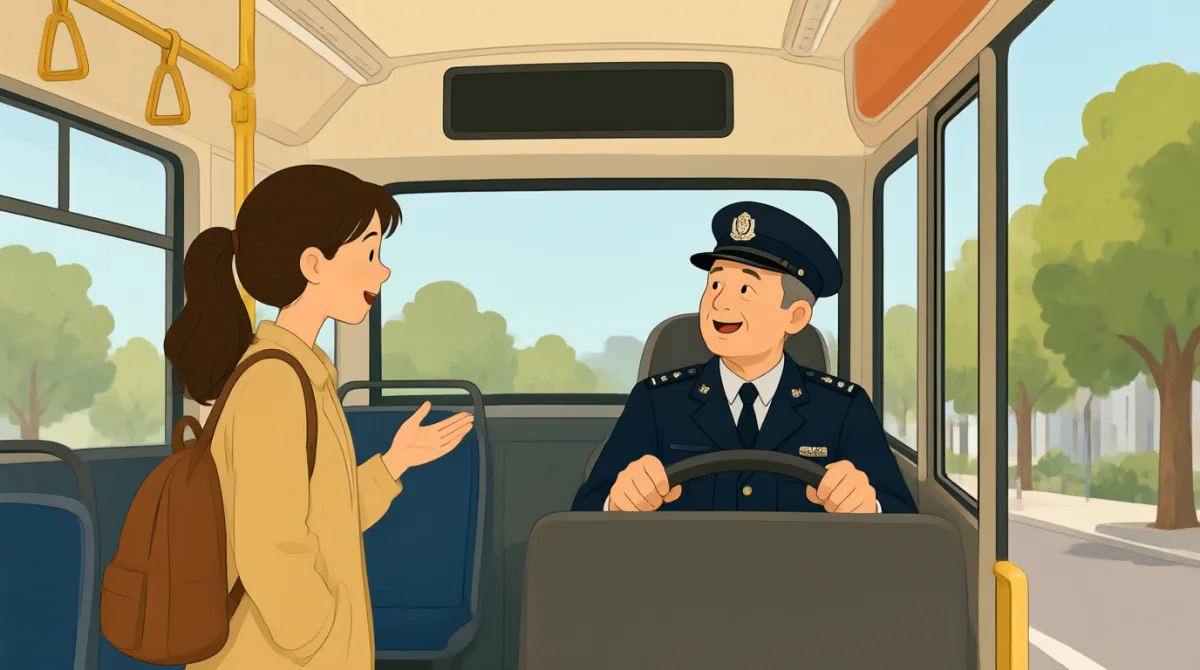

Excuse me, driver. Could you tell me how to get to the City Museum from here?
माफ़ कीजिए, ड्राइवर साहब। क्या आप बता सकते हैं कि यहाँ से सिटी म्यूज़ियम कैसे पहुँचूँ?

The City Museum, huh? This bus doesn't go there directly. You'll need to transfer.
सिटी म्यूज़ियम, है ना? यह बस वहाँ सीधे नहीं जाती। आपको बस बदलनी होगी।
Okay, I see. What's the best way to transfer then? Which bus line should I take?
अच्छा, समझ गई। तो बस बदलने का सबसे अच्छा तरीका क्या है? मुझे कौन-सी बस लेनी चाहिए?
Your best bet is to get off at Central Station, which is about five stops from here. From there, you can catch the Line 12 bus.
आपके लिए सबसे अच्छा होगा कि सेंट्रल स्टेशन पर उतर जाएँ, जो यहाँ से लगभग पाँच स्टॉप दूर है। वहाँ से आप 12 नंबर की बस पकड़ सकती हैं।
Line 12, got it. And how many stops is it from Central Station to the museum on Line 12?
12 नंबर की बस, समझ गई। और सेंट्रल स्टेशन से म्यूज़ियम तक 12 नंबर की बस में कितने स्टॉप हैं?
It's only two stops from Central Station. Just look out for the large glass building. That's the museum.
सेंट्रल स्टेशन से बस दो ही स्टॉप दूर है। बस उस बड़ी काँच की इमारत पर ध्यान रखिएगा। वही म्यूज़ियम है।
Perfect! Thank you so much for your help, driver. I really appreciate it.
बहुत अच्छा! आपकी मदद के लिए आपका बहुत-बहुत धन्यवाद, ड्राइवर साहब। मैं सचमुच आपकी आभारी हूँ।
No problem. Have a good day!
कोई बात नहीं। आपका दिन अच्छा रहे!
शब्दावली7
- transferबस बदलना
To change from one bus or vehicle to another to continue your journey; useful when asking about bus routes that require switching lines.
अपनी यात्रा जारी रखने के लिए एक बस या वाहन से उतरकर दूसरे में जाना। बस के रास्तों के बारे में पूछते समय यह काम का शब्द है, खासकर जब रास्ते में बस बदलनी हो।
- get offउतरना
To leave a bus, train, or similar vehicle at a stop; a common phrase in public transportation contexts.
किसी स्टॉप पर बस, ट्रेन या ऐसे ही किसी वाहन से बाहर निकलना। सार्वजनिक परिवहन के संदर्भ में यह आम तौर पर इस्तेमाल होने वाला शब्द है।
- catchपकड़ना
To board or take a bus or train in time; often used like 'catch the bus' meaning to get on it.
समय रहते बस या ट्रेन में चढ़ना या उसे लेना। जैसे, 'बस पकड़ना' का अर्थ है बस में चढ़ना।
- stopsस्टॉप
The places where a bus pauses to pick up or drop off passengers; count them to know how far your destination is.
वे जगहें जहाँ बस यात्रियों को चढ़ाने या उतारने के लिए रुकती है। गंतव्य की दूरी जानने के लिए स्टॉप गिनें।
- lineबस रूट
A specific bus route identified by a number, like 'Line 12'; essential for navigating public transport systems.
बस का एक खास रास्ता, जिसकी पहचान किसी नंबर से होती है, जैसे 'Line 12'। सार्वजनिक परिवहन में रास्ता ढूँढ़ने के लिए यह ज़रूरी है।
- got itसमझ गया/गई
An informal way to say 'I understand' or 'Okay, noted'; helpful in conversations to confirm information quickly.
'मुझे समझ आ गया' या 'ठीक है, ध्यान में रख लिया' कहने का अनौपचारिक तरीका। बातचीत में मिली जानकारी की तुरंत पुष्टि करने के लिए यह उपयोगी है।
- look out forध्यान रखना
To watch carefully for a landmark or sign; useful for identifying your stop without relying only on names.
किसी पहचान-चिह्न या संकेत पर ध्यान से नज़र रखना। केवल नाम पर निर्भर हुए बिना अपना स्टॉप पहचानने में यह काम आता है।
मुख्य वाक्य7
- 1
Excuse me, driver. Could you tell me how to get to the City Museum from here?
माफ़ कीजिए, ड्राइवर साहब। क्या आप बता सकते हैं कि यहाँ से सिटी म्यूज़ियम कैसे पहुँचूँ?
This is a polite way to ask for directions on a bus; 'Could you tell me' is a formal request structure using 'could' for politeness, and 'get to' means 'reach or arrive at'. Use it to start inquiries with strangers.
बस में रास्ता पूछने का यह एक विनम्र तरीका है। 'Could you tell me' विनम्रता से अनुरोध करने का ढाँचा है, जिसमें 'could' का इस्तेमाल किया जाता है। 'get to' का अर्थ है 'पहुँचना'। अजनबियों से जानकारी पूछते समय इस तरह शुरुआत करें।
- 2
This bus doesn't go there directly. You'll need to transfer.
यह बस वहाँ सीधे नहीं जाती। आपको बस बदलनी होगी।
Explains that a direct route isn't available and suggests changing buses; 'doesn't go...directly' uses negation for routes, and 'you'll need to' is future necessity with 'will'. Practical for giving or receiving travel advice.
इससे बताया जाता है कि वहाँ तक सीधा रास्ता नहीं है और बस बदलने की ज़रूरत होगी। 'doesn't go...directly' रास्ते के बारे में नकारात्मक बात कहने का ढाँचा है, जबकि 'you'll need to' में 'will' भविष्य की ज़रूरत बताता है। सफ़र की सलाह देते या लेते समय यह उपयोगी है।
- 3
What's the best way to transfer then? Which bus line should I take?
तो बस बदलने का सबसे अच्छा तरीका क्या है? मुझे कौन-सी बस लेनी चाहिए?
Asks for the optimal method and specific details; 'What's the best way' seeks recommendations, and 'should I' asks for advice. This pattern is useful for clarifying options in travel situations.
यह सबसे अच्छा तरीका और उससे जुड़ी खास जानकारी पूछता है। 'What's the best way' से सुझाव माँगा जाता है और 'should I' से सलाह। यात्रा के दौरान अलग-अलग विकल्पों के बारे में और स्पष्टता पाने के लिए यह ढाँचा उपयोगी है।
- 4
Your best bet is to get off at Central Station, which is about five stops from here.
आपके लिए सबसे अच्छा होगा कि सेंट्रल स्टेशन पर उतर जाएँ, जो यहाँ से लगभग पाँच स्टॉप दूर है।
Gives practical advice with a landmark stop; 'your best bet' means the most reliable option idiomatically, and 'which is' adds relative clause for details. Helps in explaining routes step by step.
यह एक पहचानने योग्य स्टॉप के साथ व्यावहारिक सलाह देता है। मुहावरे 'your best bet' का अर्थ है सबसे भरोसेमंद विकल्प। 'which is' अतिरिक्त जानकारी देने वाला उपवाक्य जोड़ता है। इससे रास्ता चरण-दर-चरण समझाने में मदद मिलती है।
- 5
Line 12, got it. And how many stops is it from Central Station to the museum on Line 12?
12 नंबर की बस, समझ गई। और सेंट्रल स्टेशन से म्यूज़ियम तक 12 नंबर की बस में कितने स्टॉप हैं?
Confirms understanding and asks for distance; 'got it' is casual confirmation, and 'how many stops is it' inquires about journey length. Useful for interactive questioning in directions.
इसमें मिली जानकारी की पुष्टि करने के बाद दूरी पूछी जाती है। 'got it' अनौपचारिक ढंग से समझने की पुष्टि करता है और 'how many stops is it' यात्रा की लंबाई पूछता है। रास्ता पूछते समय यह बहुत उपयोगी है।
- 6
It's only two stops from Central Station. Just look out for the large glass building.
सेंट्रल स्टेशन से बस दो ही स्टॉप दूर है। बस उस बड़ी काँच की इमारत पर ध्यान रखिएगा।
Describes short distance and a visual cue; 'it's only' emphasizes brevity, and 'just' suggests simplicity. This helps learners describe easy-to-spot landmarks for better navigation.
यह कम दूरी बताता है और साथ ही देखने लायक एक संकेत देता है। 'it's only' दूरी कम होने पर ज़ोर देता है और 'just' बताता है कि पहचानना आसान है। रास्ता ढूँढ़ने में मदद के लिए आसानी से दिखने वाले पहचान-चिह्न बताए जा सकते हैं।
- 7
Perfect! Thank you so much for your help, driver. I really appreciate it.
बहुत अच्छा! आपकी मदद के लिए आपका बहुत-बहुत धन्यवाद, ड्राइवर साहब। मैं सचमुच आपकी आभारी हूँ।
Expresses gratitude emphatically; 'thank you so much' intensifies thanks, and 'I really appreciate it' shows sincere thanks. Always use polite closings in service interactions like with a bus driver.
इसमें दिल से आभार जताया गया है। 'thank you so much' धन्यवाद को ज़ोरदार बनाता है, जबकि 'I really appreciate it' सच्ची कृतज्ञता दिखाता है। बस चालक जैसे सेवा-कर्मियों से बात करते समय विनम्रता से बातचीत समाप्त करें।