Explaining Route by Landmarks
स्थलों के आधार पर रास्ता बताना
A passenger or driver explains a route or a stop's location by referencing nearby landmarks, rather than just street names.
यात्री या चालक केवल सड़क के नाम बताने के बजाय आसपास के प्रमुख स्थलों का ज़िक्र करके रास्ता या बस स्टॉप की जगह समझाता है।
संवाद8
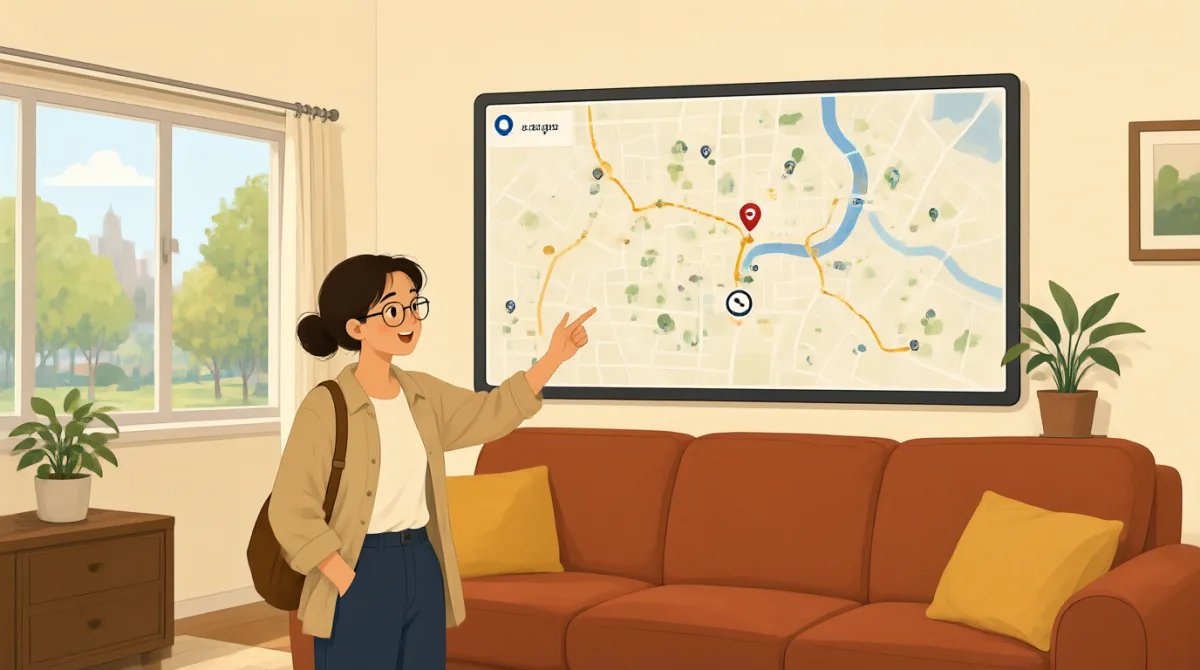

Excuse me, I'm trying to get to the City Library. Does this bus go there?
माफ़ कीजिए, मुझे सिटी लाइब्रेरी जाना है। क्या यह बस वहाँ जाती है?

Yes, it does. You need to get off at the stop right after the big park.
हाँ, जाती है। आपको बड़े पार्क के ठीक बाद वाले स्टॉप पर उतरना होगा।
The big park? Is that the Central Park?
बड़ा पार्क? क्या वह सेंट्रल पार्क है?
That's right. After Central Park, you'll see a large fountain on your left. The stop is just past that, on the right side of the street.
हाँ, वही। सेंट्रल पार्क के बाद आपको अपनी बाईं ओर एक बड़ा फव्वारा दिखेगा। स्टॉप उससे थोड़ा आगे, सड़क के दाईं ओर है।
Okay, so Central Park, then the fountain, and then my stop. Got it. Is the library visible from the bus stop?
ठीक है, तो पहले सेंट्रल पार्क, फिर फव्वारा, और फिर मेरा स्टॉप। समझ गया। क्या बस स्टॉप से लाइब्रेरी दिखती है?
Not directly from the stop. Once you get off, walk a bit back towards the fountain, and you'll see a large building with a grand staircase. That's the library.
स्टॉप से सीधे नहीं दिखती। उतरने के बाद थोड़ा पीछे फव्वारे की ओर चलिए, तो आपको एक बड़ी इमारत दिखेगी, जिसके सामने भव्य सीढ़ियाँ हैं। वही लाइब्रेरी है।
A grand staircase. That's very helpful! Thank you so much!
भव्य सीढ़ियाँ। यह बहुत मददगार है! आपका बहुत-बहुत धन्यवाद!
You're welcome! Enjoy your visit.
कोई बात नहीं! आपकी यात्रा सुखद हो।
शब्दावली7
- excuse meमाफ़ कीजिए
A polite phrase used to get someone's attention when you need to ask a question, like starting a conversation on a bus.
किसी का ध्यान खींचने के लिए इस्तेमाल किया जाने वाला विनम्र वाक्यांश, जैसे बस में सवाल पूछने से पहले बातचीत शुरू करते समय।
- get offउतरना
To leave a vehicle like a bus or train at a stop; it's a common phrasal verb for public transportation.
बस या ट्रेन जैसे वाहन से किसी स्टॉप पर बाहर निकलना। सार्वजनिक परिवहन के संदर्भ में यह एक आम क्रिया है।
- stopस्टॉप
A place where a bus pauses to let passengers get on or off; in this context, it refers to a bus stop.
वह जगह जहाँ बस यात्रियों को चढ़ाने या उतारने के लिए रुकती है। यहाँ इसका मतलब बस स्टॉप है।
- right afterके ठीक बाद
Immediately following something, used to describe the next location or action in a sequence.
किसी चीज़ के तुरंत बाद। इसका इस्तेमाल क्रम में अगले स्थान या काम के बारे में बताने के लिए होता है।
- fountainफव्वारा
A structure with water shooting up, often in parks or public areas; here, it's used as a landmark to help describe directions.
पानी की धार ऊपर उछालने वाली संरचना, जो अक्सर पार्कों या सार्वजनिक जगहों पर होती है। यहाँ इसका इस्तेमाल रास्ता बताने के लिए एक पहचान-चिह्न के रूप में किया गया है।
- visibleदिखाई देने वाला
Able to be seen; in travel, it means you can spot something from where you are, like from a bus stop.
जिसे देखा जा सके। यात्रा के संदर्भ में, इसका मतलब है कि आप किसी जगह से कोई चीज़ देख सकते हैं, जैसे बस स्टॉप से।
- staircaseसीढ़ियाँ
A set of stairs inside or outside a building; 'grand staircase' means an impressive, large one, helping identify the library.
इमारत के अंदर या बाहर बनी सीढ़ियों की कतार। 'grand staircase' का मतलब भव्य और बड़ी सीढ़ियाँ है; यहाँ इससे लाइब्रेरी की पहचान करने में मदद मिलती है।
मुख्य वाक्य6
- 1
Excuse me, I'm trying to get to the City Library. Does this bus go there?
माफ़ कीजिए, मुझे सिटी लाइब्रेरी जाना है। क्या यह बस वहाँ जाती है?
This is a polite way to ask for directions on public transport. 'I'm trying to get to' expresses your destination goal, and the question uses 'does' for yes/no answers about routes. Useful for starting inquiries.
सार्वजनिक परिवहन में रास्ता पूछने का यह एक विनम्र तरीका है। 'I'm trying to get to' से आप अपनी मंज़िल बताते हैं, और रास्ते के बारे में हाँ-या-नहीं वाला सवाल पूछने के लिए 'does' का इस्तेमाल होता है। जानकारी पूछने की शुरुआत करने के लिए यह वाक्य उपयोगी है।
- 2
Yes, it does. You need to get off at the stop right after the big park.
हाँ, जाती है। आपको बड़े पार्क के ठीक बाद वाले स्टॉप पर उतरना होगा।
A helpful response confirming a route. 'It does' is a short affirmative answer to a yes/no question. 'You need to get off' gives clear instructions using a modal verb 'need to' for necessity. Great for giving directions by landmarks.
यह रास्ते की पुष्टि करते हुए मददगार जवाब देने का तरीका है। 'It does' हाँ-या-नहीं वाले सवाल का छोटा-सा सकारात्मक जवाब है। 'You need to get off' में ज़रूरी निर्देश देने के लिए 'need to' का इस्तेमाल होता है। आसपास के स्थलों के आधार पर रास्ता बताने में यह बहुत काम आता है।
- 3
After Central Park, you'll see a large fountain on your left.
सेंट्रल पार्क के बाद आपको अपनी बाईं ओर एक बड़ा फव्वारा दिखेगा।
This describes a sequence of landmarks using 'after' for order and 'you'll see' for future prediction. 'On your left' specifies direction. It's practical for explaining routes without street names, common in real-life navigation.
यहाँ 'after' से स्थलों का क्रम और 'you'll see' से आगे दिखाई देने वाली चीज़ का ज़िक्र किया गया है। 'On your left' दिशा बताता है। सड़क का नाम बताए बिना रास्ता समझाने का यह व्यावहारिक तरीका है, जो रोज़मर्रा में रास्ता बताने के लिए आम है।
- 4
Okay, so Central Park, then the fountain, and then my stop. Got it.
ठीक है, तो पहले सेंट्रल पार्क, फिर फव्वारा, और फिर मेरा स्टॉप। समझ गया।
This shows summarizing directions with 'so' for clarification and 'then' for sequence. 'Got it' is informal slang meaning 'I understand.' Useful for confirming understanding in conversations to avoid mistakes.
यह वाक्य 'so' से बात स्पष्ट करते हुए और 'then' से क्रम बताकर रास्ते को दोहराता है। 'Got it' का अनौपचारिक मतलब है 'मैं समझ गया।' बातचीत में अपनी समझ की पुष्टि करने और गलती से बचने के लिए यह उपयोगी है।
- 5
Once you get off, walk a bit back towards the fountain, and you'll see a large building with a grand staircase.
उतरने के बाद थोड़ा पीछे फव्वारे की ओर चलिए, तो आपको एक बड़ी इमारत दिखेगी, जिसके सामने भव्य सीढ़ियाँ हैं।
Gives step-by-step instructions after alighting. 'Once you get off' means immediately after, 'walk a bit back' suggests a short distance, and 'towards' indicates direction. The relative clause 'with a grand staircase' describes the building. Ideal for detailed guidance.
यह उतरने के बाद उठाए जाने वाले कदमों के बारे में एक-एक करके निर्देश देता है। 'Once you get off' का मतलब है उतरते ही, 'walk a bit back' थोड़ी दूरी पीछे चलने का सुझाव देता है, और 'towards' दिशा बताता है। 'With a grand staircase' वाला वाक्यांश इमारत का वर्णन करता है। विस्तार से रास्ता समझाने के लिए यह बहुत उपयोगी है।
- 6
That's very helpful! Thank you so much!
यह बहुत मददगार है! आपका बहुत-बहुत धन्यवाद!
Expresses gratitude politely. 'That's very helpful' acknowledges useful information, and 'thank you so much' is an emphatic way to say thanks. Always use this to end helpful interactions positively.
यह विनम्रता से आभार व्यक्त करता है। 'That's very helpful' उपयोगी जानकारी के लिए धन्यवाद जताता है, और 'thank you so much' धन्यवाद कहने का ज़ोरदार तरीका है। मददगार बातचीत को सकारात्मक ढंग से समाप्त करने के लिए इनका इस्तेमाल करें।