Inquiring About a Specific Stop
الاستفسار عن موقف محدد
A passenger asks the bus driver or another passenger to identify a specific bus stop or indicate when the bus approaches it.
يسأل أحد الركاب سائق الحافلة أو راكبًا آخر عن موقف محدد، أو عن الوقت الذي تقترب فيه الحافلة منه.
حوار6
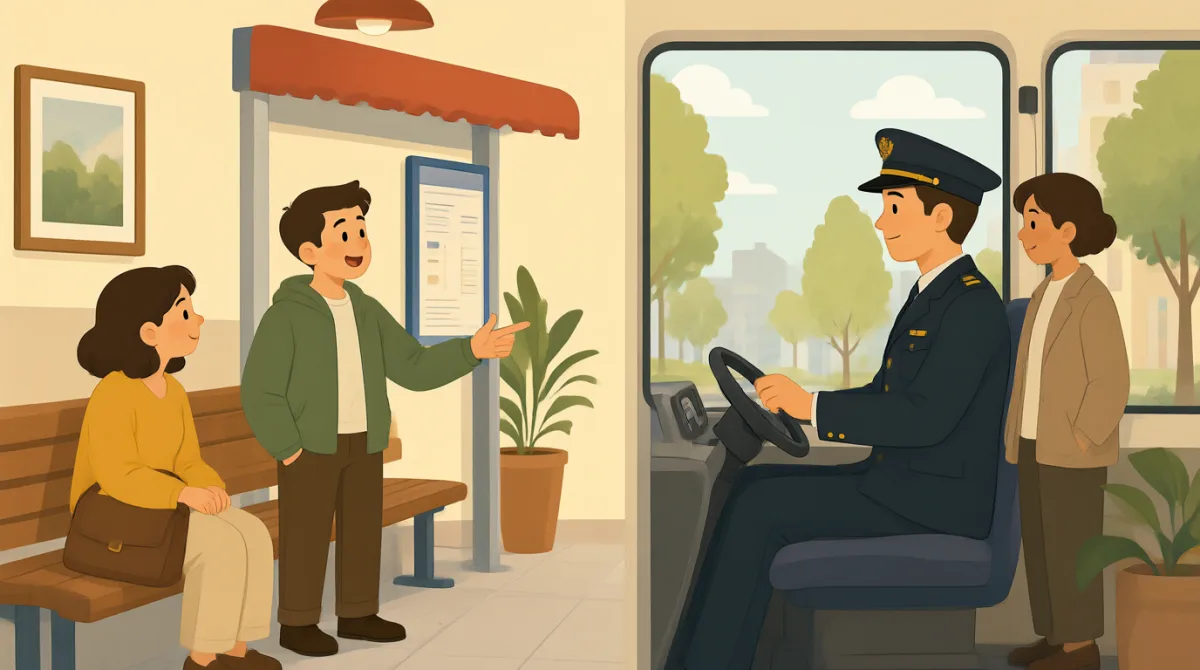

Excuse me, driver. Does this bus go to the City Hall stop?
عذرًا أيها السائق، هل تمر هذه الحافلة بموقف مبنى البلدية؟

Yes, it does. It's about five stops from here.
نعم، تمر به. يبعد نحو خمسة مواقف من هنا.
Okay, great. Would you mind telling me when we’re getting close, or how I can recognize the stop?
حسنًا، رائع. هل تمانع في إخباري عندما نقترب، أو كيف يمكنني التعرّف على الموقف؟
Sure, no problem. The City Hall stop is right after a large park on your left. You'll see a big, modern building with a clock tower.
بالتأكيد، لا مشكلة. موقف مبنى البلدية يقع مباشرة بعد حديقة كبيرة على يسارك. سترين مبنى كبيرًا وحديثًا تعلوه ساعة برجية.
A big building with a clock tower, got it. That sounds easy enough to spot. Thanks a lot for your help!
مبنى كبير تعلوه ساعة برجية، فهمت. يبدو من السهل تمييزه. شكرًا جزيلًا على مساعدتك!
You're welcome. Enjoy your trip.
على الرحب والسعة. رحلة سعيدة.
المفردات7
- excuse meعذرًا
A polite way to get someone's attention, especially when asking for help or directions on public transport.
طريقة مهذبة للفت انتباه شخص، خاصة عند طلب المساعدة أو السؤال عن الاتجاهات في وسائل النقل العام.
- driverسائق
The person who operates a vehicle like a bus; use this when speaking to the bus operator.
الشخص الذي يقود مركبة مثل الحافلة؛ استخدم هذه الكلمة عند مخاطبة سائق الحافلة.
- stopموقف
A place where a bus pauses to let passengers get on or off; often used in phrases like 'bus stop' or 'next stop'.
مكان تتوقف فيه الحافلة ليركب الركاب أو ينزلوا؛ تُستخدم الكلمة في عبارات مثل 'bus stop' أو 'next stop'.
- recognizeيتعرّف على
To identify or know something or someone from memory; helpful when asking how to spot a landmark.
يميّز شيئًا أو شخصًا أو يعرفه من الذاكرة؛ وهي مفيدة عند السؤال عن كيفية تمييز معلم بارز.
- mindيُمانع
Used in 'would you mind' to politely ask for a favor, meaning 'do you object to' or 'is it okay if'.
تُستخدم في 'would you mind' لطلب معروف بأدب، بمعنى «هل تعترض على» أو «هل يناسبك أن».
- spotيميّز
To see or notice something easily, especially a landmark; informal and useful for describing visibility.
يرى شيئًا أو يلاحظه بسهولة، خاصةً معلمًا بارزًا؛ وهي كلمة غير رسمية ومفيدة لوصف مدى سهولة رؤية شيء.
- got itفهمت
Informal way to say 'I understand' or 'I've noted that'; shows confirmation in conversations.
تعبير غير رسمي بمعنى «أنا أفهم» أو «سجّلت ذلك»؛ ويُظهر تأكيد الفهم في المحادثة.
الجمل الأساسية6
- 1
Excuse me, driver. Does this bus go to the City Hall stop?
عذرًا أيها السائق، هل تمر هذه الحافلة بموقف مبنى البلدية؟
This is a polite question to check if a bus route includes your destination. Use it when boarding or on a bus. The structure 'Does this bus go to [place]?' is a yes/no question with 'does' for confirmation.
هذا سؤال مهذب للتأكد من أن مسار الحافلة يشمل وجهتك. استخدمه عند الصعود إلى الحافلة أو أثناء الرحلة. التركيب 'Does this bus go to [place]?' سؤال إجابته نعم أو لا، ويُستخدم فيه 'does' لطلب التأكيد.
- 2
Yes, it does. It's about five stops from here.
نعم، تمر به. يبعد نحو خمسة مواقف من هنا.
A helpful response confirming the route and giving distance in stops. Useful for passengers; 'it does' affirms the question, and 'about five stops' estimates time casually.
إجابة مفيدة تؤكد أن الحافلة تسلك هذا المسار وتوضح المسافة بعدد المواقف. تفيد الركاب؛ فعبارة 'it does' تؤكد ما ورد في السؤال، وعبارة 'about five stops' تقدّر المسافة تقريبًا بأسلوب غير رسمي.
- 3
Would you mind telling me when we’re getting close, or how I can recognize the stop?
هل تمانع في إخباري عندما نقترب، أو كيف يمكنني التعرّف على الموقف؟
Politely asks for assistance in identifying a stop. 'Would you mind + gerund' is a common polite request structure. Use this to seek guidance without being direct.
طلب مهذب للمساعدة في التعرّف على موقف. يُعدّ التركيب 'Would you mind + gerund' طريقة شائعة لتقديم طلب مهذب. استخدمه لطلب الإرشاد دون أن تكون مباشرًا أكثر من اللازم.
- 4
The City Hall stop is right after a large park on your left.
موقف مبنى البلدية يقع مباشرة بعد حديقة كبيرة على يسارك.
Describes a location using landmarks for easy identification. 'Right after' means immediately following; 'on your left' specifies direction. Great for giving directions in travel scenarios.
يصف موقعًا باستخدام معالم لتسهيل التعرّف عليه. تعني 'Right after' «مباشرة بعد»، وتحدد 'on your left' الاتجاه. يفيد هذا التعبير عند إعطاء الاتجاهات أثناء السفر.
- 5
A big building with a clock tower, got it. That sounds easy enough to spot.
مبنى كبير تعلوه ساعة برجية، فهمت. يبدو من السهل تمييزه.
Confirms understanding and comments on visibility. 'Got it' is casual for 'understood'; 'easy enough to spot' means simple to see. Use to show you've grasped instructions.
تؤكد هذه العبارة فهم الكلام وتعلّق على مدى سهولة رؤية المكان. 'Got it' تعبير غير رسمي بمعنى «فهمت»، و'easy enough to spot' تعني أنه من السهل رؤيته. استخدمها لتُظهر أنك استوعبت التعليمات.
- 6
Thanks a lot for your help! You're welcome. Enjoy your trip.
شكرًا جزيلًا على مساعدتك! على الرحب والسعة. رحلة سعيدة.
Standard polite exchange: thanks and response. 'Thanks a lot' emphasizes gratitude; 'You're welcome' is the reply; 'Enjoy your trip' wishes well. Essential for ending helpful conversations.
تبادل مهذب ومألوف يتضمن الشكر والرد عليه. تؤكد 'Thanks a lot' الامتنان، و'You're welcome' هي عبارة الرد، أما 'Enjoy your trip' فتتمنى للشخص رحلة طيبة. هذه العبارات أساسية لإنهاء محادثة تتضمن تقديم المساعدة.