Trying to Pass Through a Crowd
भीड़ में से निकलने की कोशिश
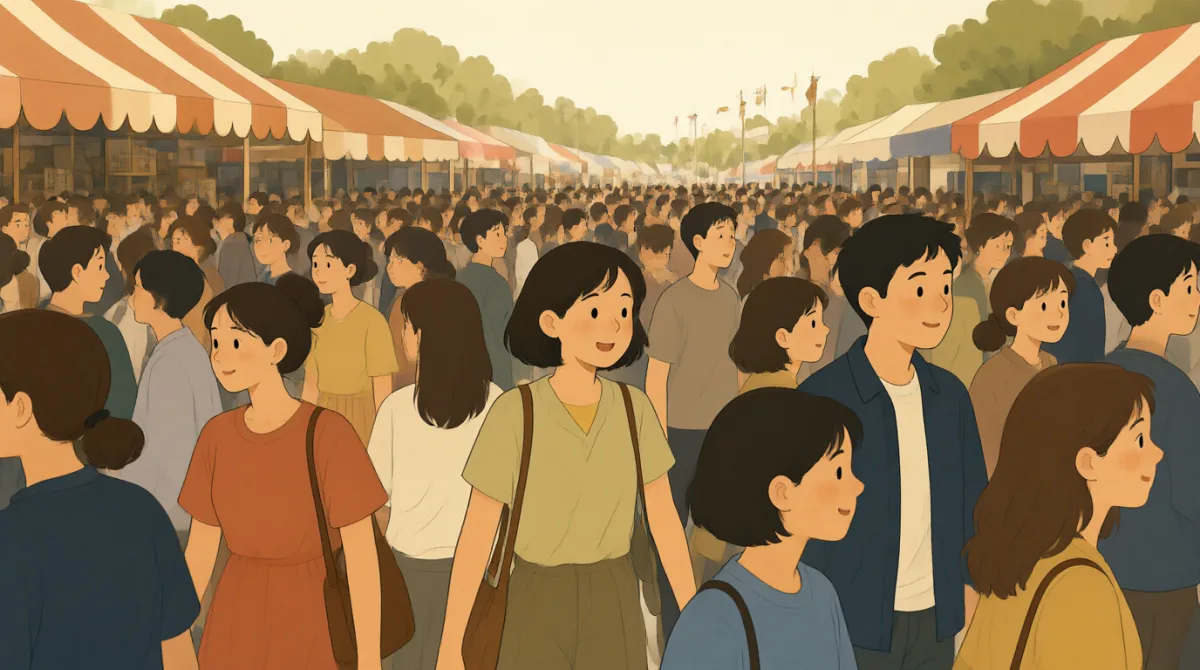
You are in a very crowded place (e.g., a concert, market, or festival) and need to move from one point to another, requiring you to navigate through a dense group of people.
आप किसी बहुत भीड़भाड़ वाली जगह (जैसे कॉन्सर्ट, बाज़ार या मेले) में हैं और आपको लोगों की घनी भीड़ के बीच से होकर एक जगह से दूसरी जगह जाना है।
संवाद5

Excuse me, I'm so sorry, but I need to get through.
माफ़ कीजिए, बहुत अफ़सोस है, लेकिन मुझे आगे निकलना है।

Oh, sure, no problem. Just a second.
ओह, ज़रूर, कोई बात नहीं। बस एक पल।
Thank you so much, I really appreciate it.
बहुत-बहुत धन्यवाद, मैं सचमुच आपका आभारी हूँ।
You're welcome! It's pretty packed in here, isn't it?
कोई बात नहीं! यहाँ काफ़ी भीड़ है, है न?
It really is. Hard to move anywhere.
हाँ, सचमुच। कहीं भी जाना मुश्किल है।
शब्दावली5
- excuseमाफ़ कीजिए
Used politely to get someone's attention or to apologize before asking for something, like in 'Excuse me' to interrupt someone.
किसी का ध्यान विनम्रता से खींचने या कुछ माँगने से पहले माफ़ी जताने के लिए इसका इस्तेमाल होता है, जैसे किसी को बीच में रोकते समय 'Excuse me' कहना।
- sorryमाफ़ी
An expression of apology when you feel bad about a situation, often used to be polite even if it's not your fault.
किसी स्थिति के लिए बुरा महसूस होने पर माफ़ी जताने का एक तरीका। विनम्रता दिखाने के लिए भी इसका इस्तेमाल किया जाता है, भले ही गलती आपकी न हो।
- throughआर-पार
Means passing from one side to the other, like moving through a crowd to get to the other side.
इसका मतलब है एक ओर से दूसरी ओर जाना, जैसे भीड़ में से होकर दूसरी तरफ़ पहुँचना।
- appreciateआभारी होना
To feel grateful for someone's help or kindness, showing thanks in a sincere way.
किसी की मदद या दयालुता के लिए दिल से कृतज्ञ महसूस करना और सच्चे मन से धन्यवाद देना।
- packedखचाखच भरा
Describes a place that is very full of people or things, like a crowded room where it's hard to move.
ऐसी जगह के लिए इस्तेमाल होता है जहाँ बहुत सारे लोग या चीज़ें हों, जैसे कोई भीड़भाड़ वाला कमरा जहाँ चलना मुश्किल हो।
मुख्य वाक्य5
- 1
Excuse me, I'm so sorry, but I need to get through.
माफ़ कीजिए, बहुत अफ़सोस है, लेकिन मुझे आगे निकलना है।
This is a polite way to ask someone to move aside in a crowd. 'Excuse me' gets attention, 'I'm so sorry' softens the request, and 'but I need to get through' explains the reason. Use it in busy places like markets to avoid seeming rude.
भीड़ में किसी से रास्ता देने के लिए कहने का यह एक विनम्र तरीका है। 'Excuse me' से आप उनका ध्यान खींचते हैं, 'I'm so sorry' कहकर अनुरोध को नरम बनाते हैं, और 'but I need to get through' कहकर वजह बताते हैं। बाज़ार जैसी भीड़भाड़ वाली जगहों पर इसका इस्तेमाल करें, ताकि आप रूखे न लगें।
- 2
Oh, sure, no problem. Just a second.
ओह, ज़रूर, कोई बात नहीं। बस एक पल।
A friendly response when agreeing to help. 'Sure' means yes easily, 'no problem' shows it's okay, and 'just a second' asks for a moment. It's useful for casual situations to show cooperation without hesitation.
मदद के लिए सहमति जताने का यह एक दोस्ताना जवाब है। 'Sure' का मतलब है आसानी से हाँ कहना, 'no problem' बताता है कि कोई परेशानी नहीं है, और 'just a second' एक पल रुकने के लिए कहता है। बिना हिचकिचाए सहयोग दिखाने के लिए अनौपचारिक स्थितियों में यह उपयोगी है।
- 3
Thank you so much, I really appreciate it.
बहुत-बहुत धन्यवाद, मैं सचमुच आपका आभारी हूँ।
Expresses strong gratitude after receiving help. 'Thank you so much' is emphatic thanks, and 'I really appreciate it' adds sincerity. Use this to make your thanks more heartfelt, especially in polite interactions.
मदद मिलने के बाद दिल से धन्यवाद जताने के लिए यह वाक्यांश है। 'Thank you so much' ज़ोर देकर धन्यवाद कहता है, और 'I really appreciate it' आपकी कृतज्ञता को और सच्चा बनाता है। खासकर विनम्र बातचीत में, धन्यवाद को और दिल से जताने के लिए इसका इस्तेमाल करें।
- 4
You're welcome! It's pretty packed in here, isn't it?
कोई बात नहीं! यहाँ काफ़ी भीड़ है, है न?
A standard reply to thanks, with 'You're welcome' meaning no need to thank. The tag question 'isn't it?' invites agreement about the crowd ('packed' means crowded). It's great for continuing small talk in shared situations like festivals.
'You're welcome' धन्यवाद के जवाब में कहा जाता है और इसका मतलब है कि धन्यवाद देने की ज़रूरत नहीं है। आखिर में आया सवाल 'isn't it?' भीड़ के बारे में दूसरे व्यक्ति की सहमति जानने के लिए है ('packed' का मतलब है भीड़भाड़ वाला)। मेले जैसी साझा स्थितियों में हल्की-फुल्की बातचीत आगे बढ़ाने के लिए यह बढ़िया है।
- 5
It really is. Hard to move anywhere.
हाँ, सचमुच। कहीं भी जाना मुश्किल है।
Agrees with a statement using 'It really is' to emphasize, followed by a short explanation. This pattern is useful for simple agreement and adding a comment, common in everyday conversations about situations like crowds.
'It really is' का इस्तेमाल किसी बात से सहमति जताने और उस पर ज़ोर देने के लिए होता है। इसके बाद छोटा-सा कारण या टिप्पणी दी जाती है। भीड़ जैसी रोज़मर्रा की स्थितियों के बारे में बातचीत में सहमति जताने और अपनी बात जोड़ने के लिए यह ढाँचा उपयोगी है।