Asking for Waiting Time
इंतज़ार का समय पूछना
You're unsure how long the person currently at the fountain will be. You politely make eye contact and ask, 'Are you going to be much longer?' or 'Having trouble with the spout?'
आपको नहीं पता कि फव्वारे पर मौजूद व्यक्ति को और कितना समय लगेगा। आप विनम्रता से नज़र मिलाकर पूछते हैं, 'Are you going to be much longer?' या 'Having trouble with the spout?' (क्या टोंटी में कोई दिक्कत है?)
संवाद6
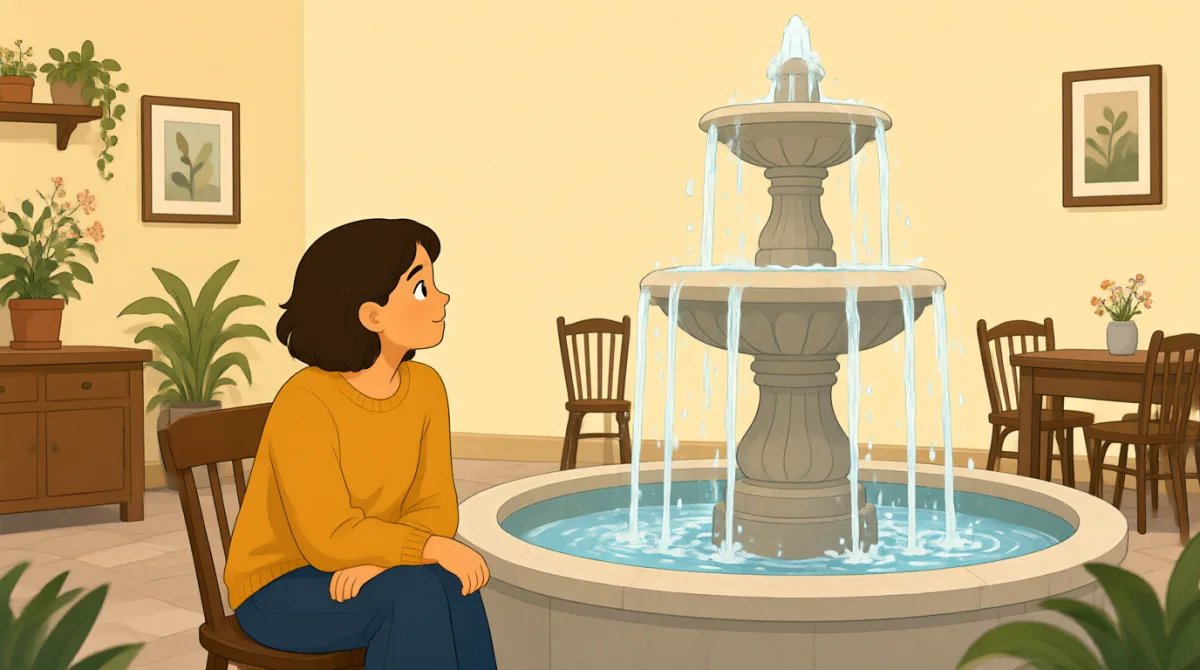

Excuse me, are you going to be much longer?
माफ़ कीजिए, आपको और कितना समय लगेगा?

Oh, sorry! Just filling my bottle. Almost done.
ओह, माफ़ कीजिए! बस अपनी बोतल भर रहा हूँ। बस हो गया।
No worries! Just wondering. Take your time.
कोई बात नहीं! बस पूछ रहा था। आराम से कीजिए।
Okay, just a sec... There we go! All yours.
ठीक है, बस एक सेकंड... हो गया! अब आपकी बारी।
Thanks a lot! Appreciate it.
बहुत-बहुत धन्यवाद! मैं आपका आभारी हूँ।
No problem! Have a good one.
कोई बात नहीं! आपका दिन अच्छा रहे।
शब्दावली10
- Excuse meमाफ़ कीजिए
A polite way to get someone's attention when you need to interrupt or ask a question in public places.
सार्वजनिक जगह पर किसी का ध्यान खींचने, बीच में बोलने या सवाल पूछने का यह एक विनम्र तरीका है।
- longerऔर ज़्यादा देर
Used to ask if something will take more time; here, it means 'will you need much more time?' in a waiting situation.
यह पूछने के लिए इस्तेमाल होता है कि किसी काम में और समय लगेगा या नहीं। यहाँ, इंतज़ार के संदर्भ में इसका मतलब है 'क्या आपको अभी और काफ़ी समय लगेगा?'।
- fillingभर रहा हूँ
The present continuous form of 'fill,' meaning putting liquid into a container like a water bottle.
'fill' का वर्तमान निरंतर रूप, जिसका अर्थ है किसी बर्तन, जैसे पानी की बोतल, में तरल डालना।
- bottleबोतल
A portable container for liquids, often used at gyms or parks to hold water.
तरल पदार्थ रखने का एक ऐसा बर्तन जिसे साथ ले जाना आसान हो। इसका इस्तेमाल अक्सर जिम या पार्क में पानी रखने के लिए किया जाता है।
- No worriesकोई बात नहीं
A casual way to say 'it's okay' or 'don't apologize,' showing reassurance in everyday conversations.
बोलचाल में 'कोई बात नहीं' या 'माफ़ी माँगने की ज़रूरत नहीं' कहने का सहज तरीका, जो सामने वाले को तसल्ली देता है।
- Take your timeआराम से कीजिए
Encourages someone to not rush; useful when responding politely to someone who is finishing a task.
किसी को जल्दबाज़ी न करने के लिए कहता है। जब कोई अपना काम पूरा कर रहा हो, तो विनम्रता से जवाब देने के लिए यह उपयोगी है।
- just a secबस एक सेकंड
Short for 'just a second,' meaning 'wait one moment' – a common informal phrase to ask for a brief delay.
'just a second' का छोटा रूप, जिसका अर्थ है 'एक पल रुकिए'। थोड़ी देर इंतज़ार करने के लिए कहने का यह आम अनौपचारिक वाक्यांश है।
- All yoursअब आपकी बारी
Means 'it's your turn now' or 'you can use it'; polite way to hand over something like a shared resource.
इसका मतलब है 'अब आपकी बारी है' या 'अब आप इसका इस्तेमाल कर सकते हैं'। साझा चीज़ किसी और को सौंपते समय यह विनम्रता से कहा जाता है।
- Appreciate itआभारी हूँ
Short for 'I appreciate it,' meaning 'thank you' to show gratitude for someone's help or courtesy.
'I appreciate it' का छोटा रूप, जिसका मतलब है 'धन्यवाद'। किसी की मदद या विनम्रता के लिए आभार जताने के लिए यह कहा जाता है।
- No problemकोई बात नहीं
A friendly response to 'thank you,' meaning 'you're welcome' or 'it was no trouble at all.'
'धन्यवाद' के जवाब में दोस्ताना ढंग से कहा जाता है। इसका मतलब है 'आपका स्वागत है' या 'इसमें कोई परेशानी नहीं हुई'।
मुख्य वाक्य6
- 1
Excuse me, are you going to be much longer?
माफ़ कीजिए, आपको और कितना समय लगेगा?
This is a polite question to ask if someone will finish soon when waiting in line; uses future tense 'going to be' for predictions, useful in public queues to avoid rudeness.
कतार में इंतज़ार करते समय यह विनम्रता से पूछने का तरीका है कि कोई व्यक्ति अपना काम कब तक पूरा करेगा। इसमें 'going to be' वाले भविष्य के रूप का इस्तेमाल अनुमान पूछने के लिए किया गया है। सार्वजनिक कतारों में रूखे लगे बिना पूछने के लिए यह उपयोगी है।
- 2
Oh, sorry! Just filling my bottle. Almost done.
ओह, माफ़ कीजिए! बस अपनी बोतल भर रहा हूँ। बस हो गया।
An apologetic response explaining a quick task; 'just' softens the action, and 'almost done' reassures the waiter – great for brief interruptions in shared spaces.
यह छोटा-सा काम बताते हुए माफ़ी माँगने वाला जवाब है। 'just' काम को छोटा बताता है, जबकि 'almost done' इंतज़ार कर रहे व्यक्ति को तसल्ली देता है। साझा जगहों पर बीच में पूछे जाने पर यह एक अच्छा जवाब है।
- 3
No worries! Just wondering. Take your time.
कोई बात नहीं! बस पूछ रहा था। आराम से कीजिए।
Reassures the other person and explains your question casually; 'just wondering' means 'only curious,' and imperative 'take your time' shows politeness – ideal for keeping interactions friendly.
इससे सामने वाले को तसल्ली मिलती है और सहज ढंग से सवाल पूछने की वजह बताई जाती है। 'just wondering' का मतलब है 'बस जानना चाहता था', और 'take your time' कहकर विनम्रता से जल्दबाज़ी न करने के लिए कहा जाता है। बातचीत को दोस्ताना बनाए रखने के लिए यह अच्छा है।
- 4
Okay, just a sec... There we go! All yours.
ठीक है, बस एक सेकंड... हो गया! अब आपकी बारी।
Signals a quick finish with informal 'just a sec'; 'there we go' expresses completion, and 'all yours' hands over the item – common in turn-taking scenarios like at a water fountain.
अनौपचारिक 'just a sec' बताता है कि काम जल्दी पूरा हो जाएगा। 'there we go' काम पूरा होने का संकेत देता है और 'all yours' चीज़ दूसरे व्यक्ति को सौंपता है। पानी के फव्वारे जैसी जगहों पर बारी-बारी से इस्तेमाल के दौरान ये आम वाक्यांश हैं।
- 5
Thanks a lot! Appreciate it.
बहुत-बहुत धन्यवाद! मैं आपका आभारी हूँ।
Expresses strong thanks; 'thanks a lot' is emphatic, and 'appreciate it' adds sincerity – use after someone yields to you to build positive social interactions.
यह दिल से धन्यवाद देने का तरीका है। 'thanks a lot' ज़ोर देकर धन्यवाद कहता है, और 'appreciate it' आभार को और सच्चा बनाता है। जब कोई आपको अपनी बारी दे, तब अच्छे संबंध बनाए रखने के लिए यह कहें।
- 6
No problem! Have a good one.
कोई बात नहीं! आपका दिन अच्छा रहे।
A casual 'you're welcome' followed by a friendly goodbye; 'have a good one' is an informal way to wish well, perfect for ending short public encounters.
यह 'आपका स्वागत है' कहने का सहज तरीका है, जिसके बाद दोस्ताना विदाई दी जाती है। 'have a good one' किसी की भलाई की कामना करने का अनौपचारिक तरीका है और छोटी-मोटी सार्वजनिक मुलाक़ातों को समाप्त करने के लिए उपयुक्त है।