Being Offered to Go First
पहले जाने का मौका देना
You are waiting, and the person in front of you (or someone else) politely gestures for you to go ahead, perhaps because you only need a quick sip.
आप कतार में इंतज़ार कर रहे हैं। आपके आगे खड़ा व्यक्ति या कोई और विनम्रता से आपको पहले जाने का इशारा करता है—शायद इसलिए कि आपको बस एक घूँट पानी पीना है।
संवाद6
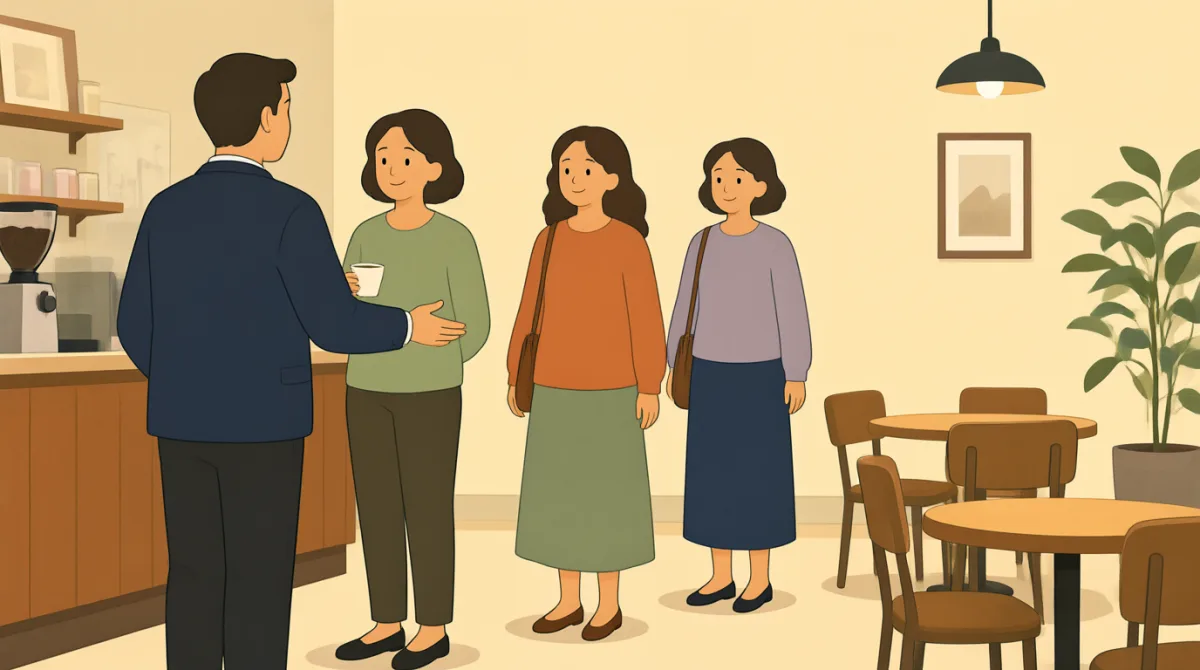

Oh, sorry. You can go ahead. I'm just filling my bottle.
ओह, माफ़ कीजिए। आप पहले पी लीजिए। मैं बस अपनी बोतल भर रही हूँ।

Oh, really? Thanks! I just need a quick sip.
ओह, सच में? शुक्रिया! मुझे बस एक घूँट पानी पीना है।
No problem at all. Go for it.
कोई बात नहीं। आप पी लीजिए।
(After taking a quick drink) Thanks again, I appreciate it.
(जल्दी से पानी पीने के बाद) फिर से शुक्रिया, मैं इसकी सचमुच सराहना करता हूँ।
You're welcome! Have a good one.
कोई बात नहीं! आपका दिन अच्छा रहे।
You too!
आपका भी!
शब्दावली7
- go aheadपहले जाना
This phrase means to proceed or take your turn first. It's polite to use when offering someone to do something before you, like in a line.
यह वाक्यांश पहले आगे बढ़ने या अपनी बारी लेने के लिए कहता है। कतार में किसी को अपने से पहले कुछ करने का मौका देते समय इसका विनम्रता से इस्तेमाल किया जाता है।
- fillingभरना
As a verb here, it means putting liquid into a container, like water into a bottle. Use it when describing refilling something.
यहाँ क्रिया के रूप में इसका मतलब किसी बर्तन में तरल डालना है, जैसे बोतल में पानी भरना। किसी चीज़ को दोबारा भरने की बात करते समय भी इसका इस्तेमाल करें।
- sipघूँट
A small amount of liquid you drink quickly. It's useful for situations where you only need a little drink, not a full one.
तरल की थोड़ी-सी मात्रा, जिसे आप जल्दी से पी लेते हैं। जब आपको पूरा गिलास नहीं, बस थोड़ा-सा पानी चाहिए, तब यह शब्द काम आता है।
- no problemकोई बात नहीं
A casual way to say it's okay or not a big deal, often in response to thanks. It's very common in everyday English.
यह कहने का अनौपचारिक तरीका है कि कोई परेशानी नहीं है या यह कोई बड़ी बात नहीं। अक्सर धन्यवाद के जवाब में कहा जाता है और रोज़मर्रा की अंग्रेज़ी में बहुत आम है।
- go for itकर लीजिए
An encouraging phrase meaning to go ahead and do it. Use it to motivate someone to take an action, like using the water fountain.
यह प्रोत्साहित करने वाला वाक्यांश है, जिसका मतलब है कि आगे बढ़कर वह काम कर लीजिए। किसी को कोई काम करने के लिए प्रेरित करते समय इसका इस्तेमाल करें, जैसे सार्वजनिक नल से पानी पीना।
- appreciateसराहना करना
To feel grateful for something. Say it to show thanks in a more formal or sincere way than just 'thanks'.
किसी चीज़ के लिए आभारी महसूस करना। सिर्फ़ 'धन्यवाद' कहने के बजाय ज़्यादा औपचारिक या सच्चे दिल से आभार जताने के लिए यह शब्द कहें।
- have a good oneआपका दिन अच्छा रहे
A friendly, informal goodbye meaning 'have a good day' or 'enjoy yourself'. Common in casual American English interactions.
यह दोस्ताना और अनौपचारिक विदाई है, जिसका मतलब है 'आपका दिन अच्छा बीते' या 'अच्छा समय बिताएँ'। अमेरिकी अंग्रेज़ी में अनौपचारिक बातचीत के दौरान यह आम है।
मुख्य वाक्य6
- 1
Oh, sorry. You can go ahead. I'm just filling my bottle.
ओह, माफ़ कीजिए। आप पहले पी लीजिए। मैं बस अपनी बोतल भर रही हूँ।
This is a polite way to let someone go first in line. 'Go ahead' is key for offering turns. Use it in public places like a gym when you're taking longer. The structure shows apology + offer + reason.
कतार में किसी को पहले जाने देने का यह एक विनम्र तरीका है। बारी पहले देने के लिए 'go ahead' कहना अहम है। जब आपको ज़्यादा समय लग रहा हो, तब जिम जैसी सार्वजनिक जगहों पर इसका इस्तेमाल करें। इस वाक्य की बनावट है: माफ़ी + पहले जाने का प्रस्ताव + वजह।
- 2
Oh, really? Thanks! I just need a quick sip.
ओह, सच में? शुक्रिया! मुझे बस एक घूँट पानी पीना है।
Expresses surprise and gratitude. 'Really?' shows confirmation, and 'quick sip' explains why it's fast. Useful for accepting help politely in short interactions; practice the exclamation for natural tone.
इससे हैरानी और आभार जताया जाता है। 'Really?' से आप पुष्टि करते हैं, और 'quick sip' बताता है कि आपको ज़्यादा समय नहीं लगेगा। छोटी बातचीत में मदद स्वीकार करने का यह एक विनम्र तरीका है। स्वाभाविक लहजे के लिए इसे उत्साह से बोलने का अभ्यास करें।
- 3
No problem at all. Go for it.
बिल्कुल कोई बात नहीं। आप पी लीजिए।
A reassuring response to thanks, meaning it's easy. 'Go for it' encourages action. This pattern is great for casual politeness; 'at all' adds emphasis to show it's no trouble.
यह धन्यवाद के जवाब में दिया जाने वाला आश्वस्त करने वाला उत्तर है, जिसका मतलब है कि कोई परेशानी नहीं है। 'Go for it' सामने वाले को काम करने के लिए प्रोत्साहित करता है। अनौपचारिक बातचीत में विनम्रता दिखाने के लिए यह वाक्य बहुत उपयोगी है। 'at all' पर ज़ोर देने से पता चलता है कि इसमें ज़रा भी परेशानी नहीं है।
- 4
Thanks again, I appreciate it.
फिर से शुक्रिया, मैं इसकी सचमुच सराहना करता हूँ।
Repeats thanks sincerely after an action. 'Appreciate it' is a common idiom for gratitude. Use after receiving help to sound appreciative; note the comma for natural pause.
किसी काम के बाद सच्चे दिल से फिर धन्यवाद देने के लिए यह कहा जाता है। 'Appreciate it' आभार जताने का एक आम मुहावरा है। मदद मिलने के बाद इसे कहें, ताकि आपका आभार साफ़ तौर पर ज़ाहिर हो। स्वाभाविक ठहराव के लिए अल्पविराम पर ध्यान दें।
- 5
You're welcome! Have a good one.
कोई बात नहीं! आपका दिन अच्छा रहे।
Standard reply to thanks, followed by a casual farewell. 'You're welcome' is essential politeness. This full sentence ends conversations nicely in quick public encounters.
यह धन्यवाद का आम जवाब है, जिसके बाद अनौपचारिक विदाई दी जाती है। शिष्टाचार के लिए 'You're welcome' कहना ज़रूरी है। सार्वजनिक जगहों पर छोटी मुलाक़ात में यह पूरा वाक्य बातचीत को अच्छे ढंग से समाप्त करता है।
- 6
You too!
आपका भी!
A simple way to return a wish, like 'have a good one'. It's reciprocal and very common. Use it to mirror the other person's goodbye for friendly balance; short and easy to remember.
किसी की शुभकामना का जवाब देने का यह आसान तरीका है, जैसे 'have a good one' के जवाब में। यह शुभकामना लौटाने का आम तरीका है। दोस्ताना अंदाज़ में सामने वाले की विदाई को दोहराने के लिए इसका इस्तेमाल करें—याद रखना आसान है और छोटा भी।