Waiting in Line Politely
कतार में शिष्टता से इंतज़ार करना
You approach the water fountain and see one person already using it and another person waiting. You position yourself in line behind them.
आप पानी के फव्वारे के पास जाते हैं और देखते हैं कि एक व्यक्ति उसका इस्तेमाल कर रहा है और दूसरा इंतज़ार कर रहा है। आप उनके पीछे कतार में खड़े हो जाते हैं।
संवाद5
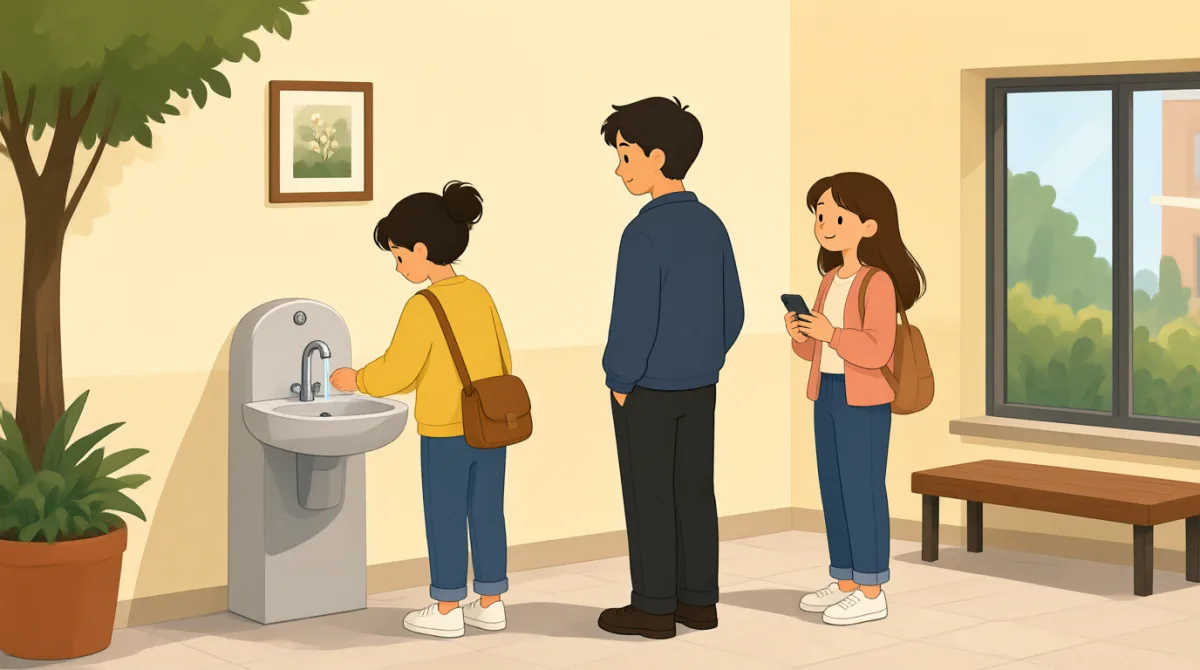

Excuse me, are you in line for the water fountain?
माफ़ कीजिए, क्या आप पानी के फव्वारे के लिए कतार में हैं?

Yes, I am. Just waiting my turn.
हाँ, मैं अपनी बारी का इंतज़ार कर रही हूँ।
Okay, thanks. Just wanted to make sure I wasn't cutting ahead.
ठीक है, धन्यवाद। बस यह पक्का करना चाहता था कि मैं कतार में आगे तो नहीं आ गया।
No worries at all! There's one person ahead of me, then you're next.
कोई बात नहीं! मेरे आगे एक व्यक्ति है, फिर आपकी बारी है।
Great, appreciate it!
बढ़िया, धन्यवाद!
शब्दावली6
- lineकतार
A line means a queue of people waiting for something, like at a water fountain. In American English, we say 'in line' to mean waiting politely in order.
'line' का मतलब है किसी चीज़ के इंतज़ार में खड़े लोगों की कतार, जैसे पानी के फव्वारे पर। अमेरिकी अंग्रेज़ी में, बारी से इंतज़ार करने के लिए 'in line' कहते हैं।
- water fountainपानी का फव्वारा
A water fountain is a public device that provides drinking water, often found in parks or gyms. It's also called a drinking fountain.
'water fountain' एक सार्वजनिक यंत्र होता है जिससे पीने का पानी मिलता है। यह अक्सर पार्कों या जिम में होता है। इसे 'drinking fountain' भी कहते हैं।
- turnबारी
Your turn means when it is your time to do something after others, like using the water fountain. It's a polite way to talk about order in a line.
'your turn' का मतलब है कि दूसरों के बाद अब कुछ करने की आपकी बारी है, जैसे पानी के फव्वारे का इस्तेमाल करना। कतार में क्रम की बात करने का यह एक विनम्र तरीका है।
- cutting aheadकतार में आगे घुसना
Cutting ahead means going in front of others in a line without permission, which is rude. It's short for 'cutting in line.'
'cutting ahead' का मतलब है बिना अनुमति कतार में दूसरों से आगे चले जाना, जो अशिष्ट माना जाता है। यह 'cutting in line' का छोटा रूप है।
- no worriesकोई बात नहीं
No worries is a casual way to say 'don't worry' or 'it's okay.' It's used to reassure someone that something is not a problem.
'No worries' अनौपचारिक ढंग से 'चिंता मत कीजिए' या 'कोई बात नहीं' कहने का तरीका है। इससे आप सामने वाले को भरोसा दिलाते हैं कि कोई समस्या नहीं है।
- appreciateआभार जताना
Appreciate means to thank someone for their help or kindness. It's a polite way to show gratitude in everyday situations.
'appreciate' का मतलब है किसी की मदद या दयालुता के लिए धन्यवाद देना। रोज़मर्रा की स्थितियों में आभार जताने का यह एक विनम्र तरीका है।
मुख्य वाक्य5
- 1
Excuse me, are you in line for the water fountain?
माफ़ कीजिए, क्या आप पानी के फव्वारे के लिए कतार में हैं?
This is a polite way to start a conversation and confirm if someone is waiting. Use it when you want to join a queue without being rude. The question uses 'are you in line for' to ask about purpose in a line.
बातचीत शुरू करने और यह जानने का यह एक विनम्र तरीका है कि कोई इंतज़ार कर रहा है या नहीं। कतार में शामिल होने से पहले बिना अशिष्ट लगे पूछने के लिए इसका इस्तेमाल करें। सवाल में 'are you in line for' पूछता है कि आप कतार में किस चीज़ के लिए खड़े हैं।
- 2
Yes, I am. Just waiting my turn.
हाँ, मैं अपनी बारी का इंतज़ार कर रही हूँ।
This confirms you are waiting and explains simply. 'Just waiting my turn' shows patience in a queue. It's useful for short, clear responses in public. Note the contraction 'I am' for natural speech.
इस जवाब से आप बताते हैं कि आप इंतज़ार कर रहे हैं। 'Just waiting my turn' कतार में धैर्य से इंतज़ार करने का भाव देता है। सार्वजनिक जगहों पर यह छोटा और स्पष्ट जवाब काम आता है। ध्यान दें कि स्वाभाविक बोलचाल में 'I am' का संक्षिप्त रूप इस्तेमाल होता है।
- 3
Okay, thanks. Just wanted to make sure I wasn't cutting ahead.
ठीक है, धन्यवाद। बस यह पक्का करना चाहता था कि मैं कतार में आगे तो नहीं आ गया।
This thanks the person and explains your reason politely. 'Just wanted to make sure' softens the statement, showing consideration. Use it to avoid seeming rude when joining a line.
इससे आप सामने वाले को धन्यवाद देते हैं और विनम्रता से बताते हैं कि आपने क्यों पूछा। 'Just wanted to make sure' बात को नरम बनाता है और आपकी दूसरों के प्रति परवाह दिखाता है। कतार में शामिल होते समय अशिष्ट न लगने के लिए इसका इस्तेमाल करें।
- 4
No worries at all! There's one person ahead of me, then you're next.
कोई बात नहीं! मेरे आगे एक व्यक्ति है, फिर आपकी बारी है।
This reassures and gives information about the line. 'No worries at all' is idiomatic for 'it's fine.' 'Ahead of me' means in front, and 'you're next' predicts order. Great for friendly queue talk.
इस वाक्य में आप सामने वाले को आश्वस्त करते हैं और कतार के क्रम की जानकारी देते हैं। 'No worries at all' मुहावरेदार ढंग से कहता है कि कोई बात नहीं। 'Ahead of me' का मतलब है मेरे आगे, और 'you're next' बताता है कि अगली बारी आपकी है। कतार में दोस्ताना बातचीत के लिए यह बहुत उपयोगी है।
- 5
Great, appreciate it!
बढ़िया, धन्यवाद!
This is a quick way to thank and end positively. 'Appreciate it' is informal for 'I appreciate that.' Use short thanks like this in casual interactions to show politeness without overdoing it.
यह धन्यवाद देने और बातचीत को अच्छे ढंग से खत्म करने का छोटा तरीका है। 'Appreciate it' अनौपचारिक रूप से 'I appreciate that' कहने का तरीका है। रोज़मर्रा की सहज बातचीत में ज़रूरत से ज़्यादा औपचारिक हुए बिना विनम्रता दिखाने के लिए ऐसे छोटे धन्यवाद का इस्तेमाल करें।