Asking for Waiting Time
詢問等待時間
You're unsure how long the person currently at the fountain will be. You politely make eye contact and ask, 'Are you going to be much longer?' or 'Having trouble with the spout?'
你不確定當前正在使用飲水機的人會用多久。你禮貌地進行眼神交流並詢問,'你還需要很久嗎?' 或者 '出水口有問題嗎?'
對話6
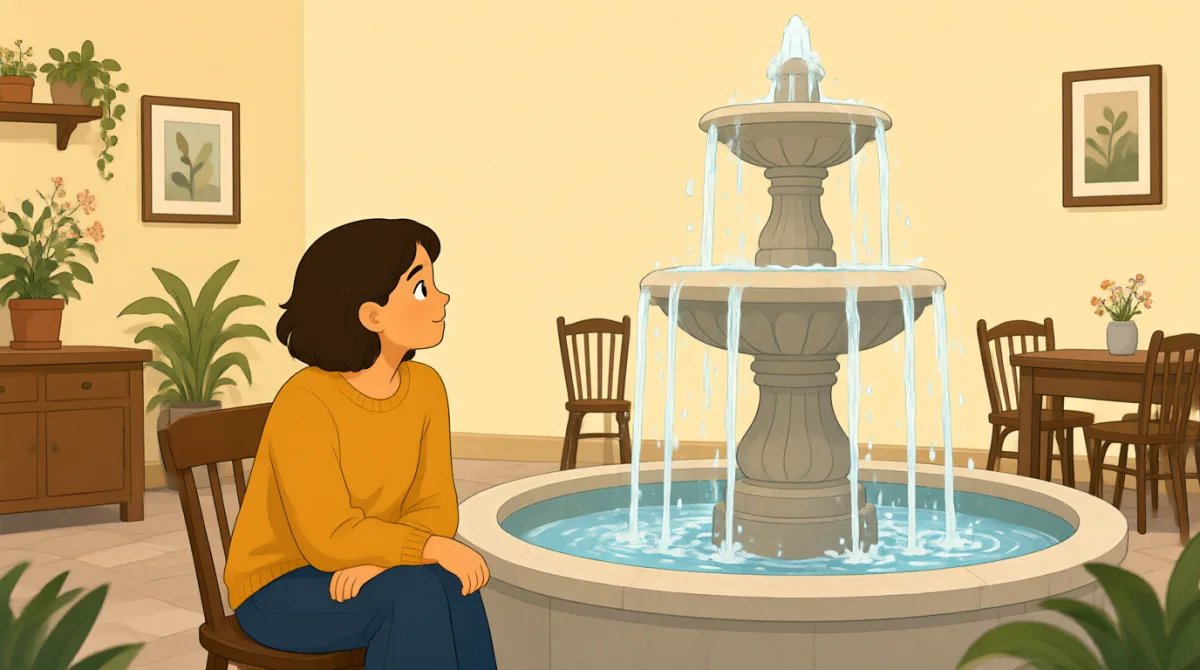

Excuse me, are you going to be much longer?
不好意思,你還要很久嗎?

Oh, sorry! Just filling my bottle. Almost done.
哦,抱歉!我只是在裝水。很快就好了。
No worries! Just wondering. Take your time.
沒關係!我只是問問。慢慢來。
Okay, just a sec... There we go! All yours.
好的,等一下... 好了!到你了。
Thanks a lot! Appreciate it.
多謝!很感謝。
No problem! Have a good one.
不客氣!祝你愉快。
詞彙10
- Excuse me不好意思
A polite way to get someone's attention when you need to interrupt or ask a question in public places.
在公共場合需要打斷別人或提問時,用來禮貌地引起對方注意。
- longer更久
Used to ask if something will take more time; here, it means 'will you need much more time?' in a waiting situation.
用來詢問某件事是否還要花更多時間;在這裡是問對方還需要多久。
- filling正在裝
The present continuous form of 'fill,' meaning putting liquid into a container like a water bottle.
'fill' 的現在進行時,表示把液體裝進容器裡,比如水瓶。
- bottle水瓶
A portable container for liquids, often used at gyms or parks to hold water.
一種方便攜帶的液體容器,常用於在健身房或公園裝水。
- No worries沒關係
A casual way to say 'it's okay' or 'don't apologize,' showing reassurance in everyday conversations.
一種隨意的說法,表示“沒事”或“別道歉”,在日常對話中用來安慰對方。
- Take your time慢慢來
Encourages someone to not rush; useful when responding politely to someone who is finishing a task.
表示讓對方不用著急;回應正在完成事情的人時,這樣說很禮貌。
- just a sec等一下
Short for 'just a second,' meaning 'wait one moment' – a common informal phrase to ask for a brief delay.
是 'just a second' 的簡略說法,意思是“等一會兒”,是請求對方稍等片刻的常見非正式表達。
- All yours到你了
Means 'it's your turn now' or 'you can use it'; polite way to hand over something like a shared resource.
意思是“現在輪到你了”或“你可以用了”,禮貌地把飲水機這類共享資源讓給對方時可以這樣說。
- Appreciate it很感謝
Short for 'I appreciate it,' meaning 'thank you' to show gratitude for someone's help or courtesy.
是 'I appreciate it' 的簡略說法,表示感謝,用來感謝別人的幫助或禮讓。
- No problem不客氣
A friendly response to 'thank you,' meaning 'you're welcome' or 'it was no trouble at all.'
回應“謝謝”的友好說法,表示“不客氣”或“舉手之勞”。
關鍵句6
- 1
Excuse me, are you going to be much longer?
不好意思,請問你還要用很久嗎?
This is a polite question to ask if someone will finish soon when waiting in line; uses future tense 'going to be' for predictions, useful in public queues to avoid rudeness.
排隊等候時,可以用這句禮貌地詢問對方是不是快用好了。句中用將來表達 'going to be' 來詢問對方接下來還需要多久,在公共場合這樣問能避免顯得失禮。
- 2
Oh, sorry! Just filling my bottle. Almost done.
哦,抱歉!我只是在裝水,馬上就好。
An apologetic response explaining a quick task; 'just' softens the action, and 'almost done' reassures the waiter – great for brief interruptions in shared spaces.
這句回應先表示歉意,再說明自己很快就會做完。'just'(只是)讓語氣更柔和,'almost done'(馬上就好)則讓等候的人放心。很適合在共享空間裡應對簡短的打擾。
- 3
No worries! Just wondering. Take your time.
沒關係!我只是問問。你慢慢來。
Reassures the other person and explains your question casually; 'just wondering' means 'only curious,' and imperative 'take your time' shows politeness – ideal for keeping interactions friendly.
這句話既安慰對方,也輕鬆地解釋自己為什麼發問。'just wondering' 意思是“只是想問問”,祈使句 'take your time' 表示“慢慢來”,能讓交流保持友好。
- 4
Okay, just a sec... There we go! All yours.
好的,等一下……好了!到你了。
Signals a quick finish with informal 'just a sec'; 'there we go' expresses completion, and 'all yours' hands over the item – common in turn-taking scenarios like at a water fountain.
'just a sec' 是非正式說法,表示“等一下”;'there we go' 表示事情已經辦妥;'all yours' 則表示“現在你可以用了”。這些表達常用於飲水機旁輪流使用的場景。
- 5
Thanks a lot! Appreciate it.
太感謝了!真是幫大忙了。
Expresses strong thanks; 'thanks a lot' is emphatic, and 'appreciate it' adds sincerity – use after someone yields to you to build positive social interactions.
這句話用來表達由衷的感謝。'thanks a lot' 語氣更強調,'appreciate it' 則增添了真誠的謝意。別人讓你先用時,可以這樣說,讓彼此的互動更友好。
- 6
No problem! Have a good one.
不客氣!祝你今天愉快。
A casual 'you're welcome' followed by a friendly goodbye; 'have a good one' is an informal way to wish well, perfect for ending short public encounters.
先用隨和的方式回應感謝,再友好地道別。'have a good one' 是非正式的祝福語,適合用來結束簡短的公共場合對話。