The Cat Is Hiding
گربه قایم شده است
Emma visits the house, but the cat is hiding. She calls Grace and asks where the cat likes to hide.
اِما به خانه میرود، اما گربه قایم شده است. او به گریس زنگ میزند و میپرسد گربه کجاها قایم شدن را دوست دارد.
گفتوگو7
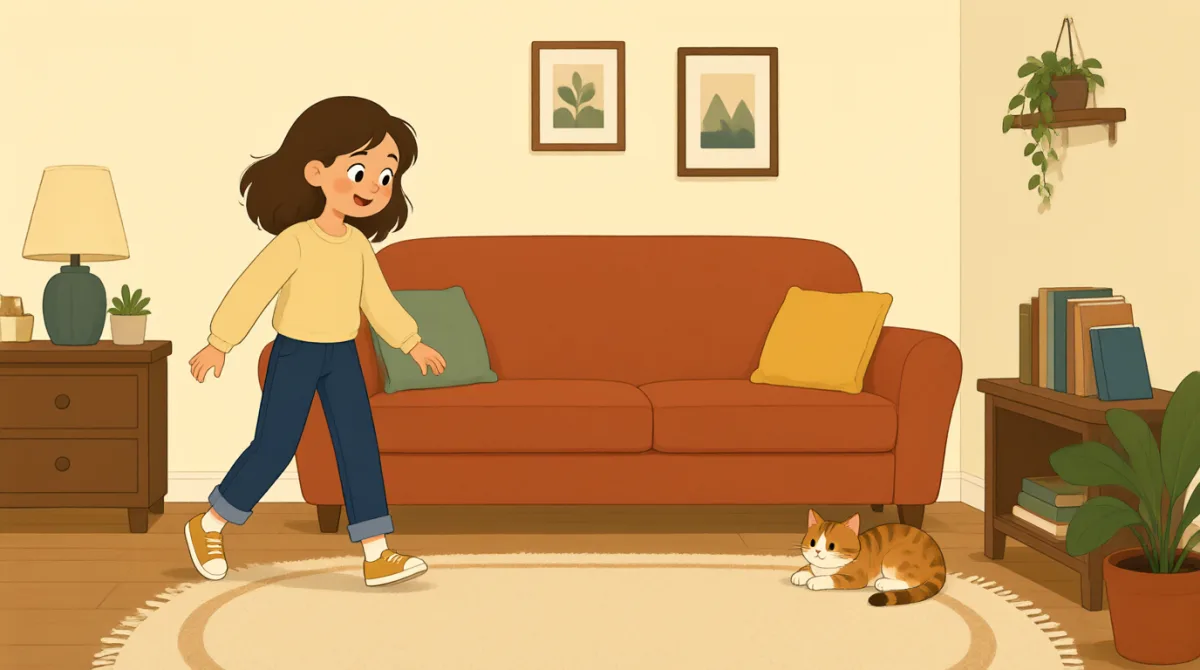

Hi, Grace. I’m at your house, but I can’t see the cat.
سلام گریس. من خونهات هستم، ولی گربه رو نمیبینم.

Oh, she may be hiding. Where are you now?
اوه، شاید قایم شده باشه. الان کجایی؟
I’m in the living room. Where does she like to hide?
توی اتاق نشیمنم. اون دوست داره کجا قایم بشه؟
Look under the bed or behind the sofa.
زیر تخت یا پشت مبل رو نگاه کن.
Okay. Does she come out if I call her?
باشه. اگه صداش کنم میاد بیرون؟
Yes. Say her name softly, and wait a little.
آره. آروم اسمش رو صدا کن و یه کم صبر کن.
I’ll look under the bed first. Thank you!
اول زیر تخت رو نگاه میکنم. ممنون!
واژگان8
- I can’t see the cat.گربه را نمیبینم.
Emma says she cannot find the cat. Use “I can’t see…” when something is not in view.
اِما میگوید نمیتواند گربه را پیدا کند. وقتی چیزی در میدان دیدتان نیست، از “I can’t see…” (نمیتوانم ببینم...) استفاده کنید.
- hidingقایمشده
The cat is hiding when she is in a place where people cannot see her. You can say, “The dog is hiding.”
گربه وقتی قایم شده که در جایی باشد که دیگران نتوانند او را ببینند. میتوانید بگویید: “The dog is hiding.” (سگ قایم شده است.)
- living roomاتاق نشیمن
A living room is a room in a home where people sit and relax. You can say, “I’m in the living room.”
اتاق نشیمن اتاقی در خانه است که مردم در آن مینشینند و استراحت میکنند. میتوانید بگویید: “I’m in the living room.” (من در اتاق نشیمن هستم.)
- under the bedزیر تخت
This means below the bed. Use “under” to say that one thing is below another.
یعنی پایینتر از تخت. از “under” برای گفتن اینکه چیزی پایینتر از چیز دیگری است استفاده کنید.
- behind the sofaپشت مبل
This means at the back of the sofa, where it may be hard to see. Use “behind” to talk about something at the back of another thing.
یعنی در قسمت پشتی مبل، جایی که ممکن است دیدنش سخت باشد. از “behind” برای اشاره به چیزی که پشت چیز دیگری است استفاده کنید.
- come outبیرون آمدن
Here, “come out” means to leave a hiding place. You can ask, “Will the cat come out?”
اینجا، “come out” یعنی از مخفیگاه بیرون آمدن. میتوانید بپرسید: “Will the cat come out?” (آیا گربه بیرون میآید؟)
- call herصدایش کردن
This means say her name to get her attention. You can say, “I call her, and she comes.”
یعنی اسمش را بگویید تا توجهش را جلب کنید. میتوانید بگویید: “I call her, and she comes.” (صدایش میکنم و میآید.)
- softlyآرام
“Softly” means in a quiet, gentle way. You can speak softly to a cat or a baby.
“Softly” یعنی با صدایی آرام و ملایم. میتوانید با گربه یا نوزاد آرام صحبت کنید.
جملات کلیدی8
- 1
I’m at your house, but I can’t see the cat.
من خونهات هستم، ولی گربه رو نمیبینم.
This sentence tells someone where you are and what the problem is. Use “I’m at…” to say where you are.
این جمله به کسی میگوید کجا هستید و مشکلتان چیست. برای گفتن اینکه کجا هستید، از “I’m at…” استفاده کنید.
- 2
Where are you now?
الان کجایی؟
This is a simple way to ask someone’s location. You can also ask, “Where are you now?” on the phone.
این راه سادهای برای پرسیدن مکان کسی است. میتوانید پشت تلفن هم بپرسید: “Where are you now?” (الان کجایی؟)
- 3
Where does she like to hide?
اون دوست داره کجا قایم بشه؟
Use this question to ask about a place someone or an animal often hides. Change “she” to “he” or “they” as needed.
از این پرسش برای پرسیدن دربارهٔ جایی استفاده کنید که کسی یا حیوانی معمولاً در آن قایم میشود. در صورت نیاز، “she” را با “he” یا “they” عوض کنید.
- 4
Look under the bed or behind the sofa.
زیر تخت یا پشت مبل رو نگاه کن.
This gives two simple places to search. Use “look under” and “look behind” to say where to check.
این جمله دو جای ساده برای گشتن را پیشنهاد میکند. برای گفتن اینکه کجا را بررسی کنید، از “look under” و “look behind” استفاده کنید.
- 5
Does she come out if I call her?
اگه صداش کنم میاد بیرون؟
This asks if something happens when you do something. You can reuse “Does [someone]… if I…?” in other situations.
این جمله میپرسد آیا با انجام کاری، اتفاقی میافتد یا نه. میتوانید در موقعیتهای دیگر هم از الگوی “Does [someone]… if I…?” استفاده کنید.
- 6
Say her name softly, and wait a little.
آروم اسمش رو صدا کن و یه کم صبر کن.
This gives two simple instructions. Use “say [something] softly” when you want someone to speak gently.
این جمله دو دستور ساده میدهد. وقتی میخواهید کسی چیزی را آرام و ملایم بگوید، از “say [something] softly” استفاده کنید.
- 7
I’ll look under the bed first.
اول زیر تخت رو نگاه میکنم.
This tells someone what you plan to do next. Use “I’ll…” to talk about a future action.
این جمله به کسی میگوید قصد دارید قدم بعدی چه کاری انجام دهید. برای صحبت دربارهٔ کاری در آینده، از “I’ll…” استفاده کنید.
- 8
Thank you!
ممنون!
This is a short, polite way to show you are grateful. Use it when someone helps you.
این راه کوتاه و مؤدبانهای برای نشان دادن قدردانی است. وقتی کسی به شما کمک میکند، از آن استفاده کنید.