The Cat Is Hiding
고양이가 숨어 있어요
Emma visits the house, but the cat is hiding. She calls Grace and asks where the cat likes to hide.
에마가 집에 왔는데 고양이가 숨어 있어요. 에마는 그레이스에게 전화해 고양이가 어디에 숨는 걸 좋아하는지 물어봐요.
대화7
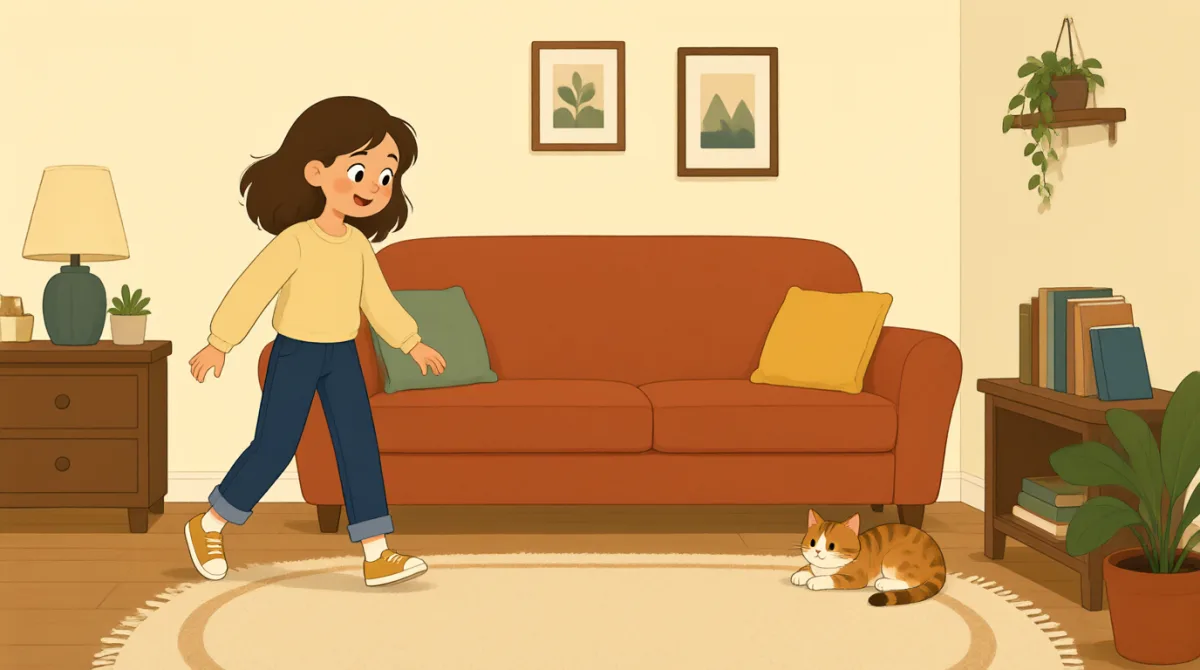

Hi, Grace. I’m at your house, but I can’t see the cat.
안녕, 그레이스. 나 네 집에 왔는데 고양이가 안 보여.

Oh, she may be hiding. Where are you now?
아, 숨어 있나 봐. 지금 어디야?
I’m in the living room. Where does she like to hide?
거실에 있어. 고양이는 어디에 숨는 걸 좋아해?
Look under the bed or behind the sofa.
침대 밑이나 소파 뒤를 봐.
Okay. Does she come out if I call her?
알았어. 이름을 부르면 나올까?
Yes. Say her name softly, and wait a little.
응. 이름을 부드럽게 부르고 조금 기다려 봐.
I’ll look under the bed first. Thank you!
일단 침대 밑부터 볼게. 고마워!
어휘8
- I can’t see the cat.고양이가 안 보여.
Emma says she cannot find the cat. Use “I can’t see…” when something is not in view.
에마는 고양이를 찾을 수 없다고 말해요. 눈에 보이지 않을 때는 “I can’t see…”(…이 안 보여)라고 해요.
- hiding숨고 있는
The cat is hiding when she is in a place where people cannot see her. You can say, “The dog is hiding.”
고양이가 사람들에게 보이지 않는 곳에 있으면 “hiding”이라고 해요. “The dog is hiding.”(개가 숨어 있어.)처럼 말할 수 있어요.
- living room거실
A living room is a room in a home where people sit and relax. You can say, “I’m in the living room.”
“living room”은 집에서 사람들이 앉아 쉬는 방이에요. “I’m in the living room.”(나 거실에 있어.)처럼 말할 수 있어요.
- under the bed침대 밑
This means below the bed. Use “under” to say that one thing is below another.
“under the bed”는 침대 아래를 뜻해요. 한 가지가 다른 것보다 아래에 있다고 말할 때 “under”를 써요.
- behind the sofa소파 뒤
This means at the back of the sofa, where it may be hard to see. Use “behind” to talk about something at the back of another thing.
“behind the sofa”는 잘 보이지 않을 수 있는 소파 뒤쪽을 뜻해요. 다른 것의 뒤쪽에 있는 것을 말할 때 “behind”를 써요.
- come out밖으로 나오다
Here, “come out” means to leave a hiding place. You can ask, “Will the cat come out?”
여기서 “come out”은 숨어 있던 곳에서 나오는 것을 뜻해요. “Will the cat come out?”(고양이가 나올까?)이라고 물어볼 수 있어요.
- call her이름을 부르다
This means say her name to get her attention. You can say, “I call her, and she comes.”
“call her”는 고양이의 관심을 끌려고 이름을 부르는 거예요. “I call her, and she comes.”(내가 이름을 부르면 고양이가 와.)처럼 말할 수 있어요.
- softly부드럽게
“Softly” means in a quiet, gentle way. You can speak softly to a cat or a baby.
“softly”는 조용하고 부드럽게라는 뜻이에요. 고양이나 아기에게 부드럽게 말할 때 쓸 수 있어요.
핵심 문장8
- 1
I’m at your house, but I can’t see the cat.
나 네 집에 왔는데 고양이가 안 보여.
This sentence tells someone where you are and what the problem is. Use “I’m at…” to say where you are.
이 문장은 지금 어디에 있는지와 어떤 문제가 있는지를 알려줘요. 어디에 있는지 말할 때 “I’m at…”을 써요.
- 2
Where are you now?
지금 어디야?
This is a simple way to ask someone’s location. You can also ask, “Where are you now?” on the phone.
상대가 어디 있는지 간단히 물어보는 표현이에요. 전화로도 “Where are you now?”라고 물어볼 수 있어요.
- 3
Where does she like to hide?
고양이는 어디에 숨는 걸 좋아해?
Use this question to ask about a place someone or an animal often hides. Change “she” to “he” or “they” as needed.
사람이나 동물이 자주 숨는 장소를 물을 때 쓰는 질문이에요. 상황에 따라 “she”를 “he”나 “they”로 바꿔 쓰면 돼요.
- 4
Look under the bed or behind the sofa.
침대 밑이나 소파 뒤를 봐.
This gives two simple places to search. Use “look under” and “look behind” to say where to check.
찾아볼 만한 장소 두 곳을 간단히 알려주는 말이에요. 어디를 확인할지 말할 때 “look under”와 “look behind”를 써요.
- 5
Does she come out if I call her?
이름을 부르면 나올까?
This asks if something happens when you do something. You can reuse “Does [someone]… if I…?” in other situations.
어떤 행동을 하면 특정한 일이 일어나는지 묻는 표현이에요. 다른 상황에서도 “Does [someone]… if I…?” 형식을 활용할 수 있어요.
- 6
Say her name softly, and wait a little.
이름을 부드럽게 부르고 조금 기다려 봐.
This gives two simple instructions. Use “say [something] softly” when you want someone to speak gently.
간단한 지시 두 가지를 알려주는 말이에요. 누군가에게 부드럽게 말해 달라고 할 때 “say [something] softly”를 써요.
- 7
I’ll look under the bed first.
일단 침대 밑부터 볼게.
This tells someone what you plan to do next. Use “I’ll…” to talk about a future action.
다음에 무엇을 할 계획인지 알려주는 말이에요. 앞으로 할 행동을 말할 때 “I’ll…”을 써요.
- 8
Thank you!
고마워!
This is a short, polite way to show you are grateful. Use it when someone helps you.
고마운 마음을 간단하고 공손하게 표현하는 말이에요. 누군가 도와줬을 때 써요.