The Cat Is Hiding
Kedi Saklanıyor
Emma visits the house, but the cat is hiding. She calls Grace and asks where the cat likes to hide.
Emma eve geliyor ama kedi saklanıyor. Grace’i arayıp kedinin nerelerde saklanmayı sevdiğini soruyor.
Diyalog7
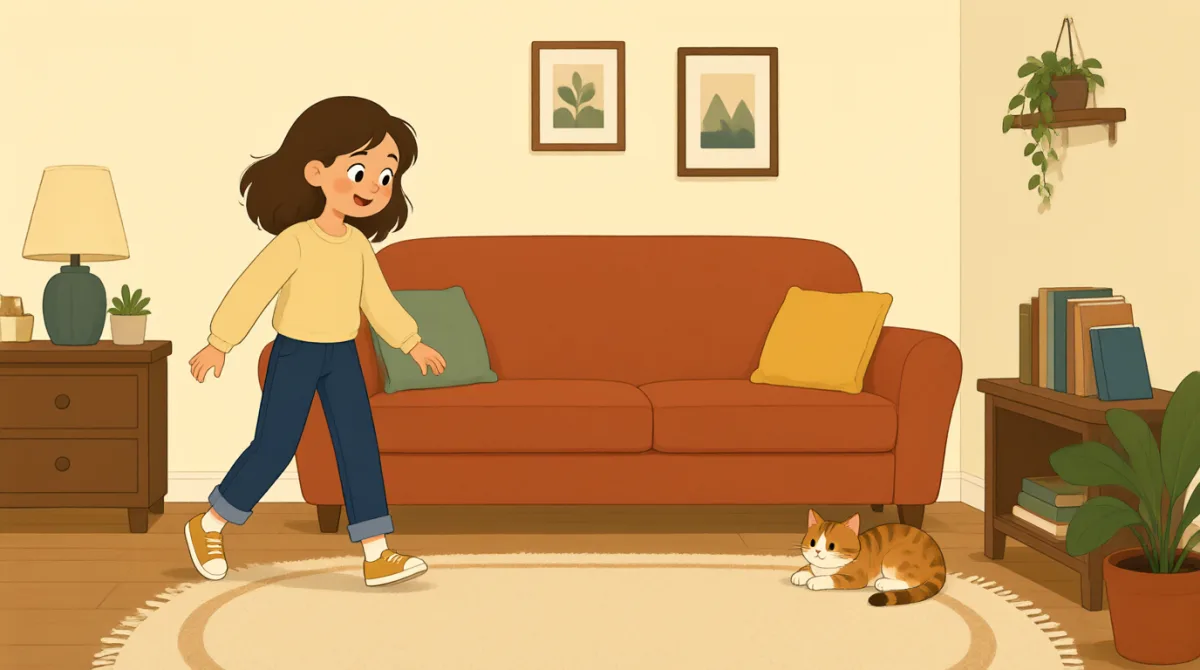

Hi, Grace. I’m at your house, but I can’t see the cat.
Selam Grace. Evindeyim ama kediyi göremiyorum.

Oh, she may be hiding. Where are you now?
Aa, saklanıyor olabilir. Şu an neredesin?
I’m in the living room. Where does she like to hide?
Oturma odasındayım. Nerelerde saklanmayı seviyor?
Look under the bed or behind the sofa.
Yatağın altına ya da kanepenin arkasına bak.
Okay. Does she come out if I call her?
Tamam. Ona seslenirsem çıkar mı?
Yes. Say her name softly, and wait a little.
Evet. Adını yumuşak bir sesle söyle ve biraz bekle.
I’ll look under the bed first. Thank you!
Önce yatağın altına bakacağım. Teşekkür ederim!
Kelime Bilgisi8
- I can’t see the cat.Kediyi göremiyorum.
Emma says she cannot find the cat. Use “I can’t see…” when something is not in view.
Emma kediyi bulamadığını söylüyor. Bir şey görüş alanında olmadığında “I can’t see…” (… göremiyorum) diyebilirsin.
- hidingsaklanıyor
The cat is hiding when she is in a place where people cannot see her. You can say, “The dog is hiding.”
Kedi, insanların onu göremeyeceği bir yerde olduğunda saklanıyor demektir. “The dog is hiding.” (Köpek saklanıyor.) diyebilirsin.
- living roomoturma odası
A living room is a room in a home where people sit and relax. You can say, “I’m in the living room.”
Oturma odası, insanların evde oturup dinlendiği odadır. “I’m in the living room.” (Oturma odasındayım.) diyebilirsin.
- under the bedyatağın altında
This means below the bed. Use “under” to say that one thing is below another.
Bu, yatağın aşağısında demektir. Bir şeyin başka bir şeyin altında olduğunu anlatmak için “under” kullanılır.
- behind the sofakanepenin arkasında
This means at the back of the sofa, where it may be hard to see. Use “behind” to talk about something at the back of another thing.
Bu, görülmesi zor olabilecek şekilde kanepenin arka tarafında demektir. Bir şeyin başka bir şeyin arkasında olduğunu anlatmak için “behind” kullanılır.
- come outdışarı çıkmak
Here, “come out” means to leave a hiding place. You can ask, “Will the cat come out?”
Burada “come out”, saklandığı yerden çıkmak demektir. “Will the cat come out?” (Kedi dışarı çıkar mı?) diye sorabilirsin.
- call herona seslenmek
This means say her name to get her attention. You can say, “I call her, and she comes.”
Bu, dikkatini çekmek için onun adını söylemek demektir. “I call her, and she comes.” (Ona sesleniyorum, o da geliyor.) diyebilirsin.
- softlyyumuşak bir sesle
“Softly” means in a quiet, gentle way. You can speak softly to a cat or a baby.
“Softly”, sessiz ve nazik bir şekilde demektir. Bir kediyle ya da bebekle yumuşak bir sesle konuşabilirsin.
Önemli Cümleler8
- 1
I’m at your house, but I can’t see the cat.
Evindeyim ama kediyi göremiyorum.
This sentence tells someone where you are and what the problem is. Use “I’m at…” to say where you are.
Bu cümle, karşındaki kişiye nerede olduğunu ve sorunun ne olduğunu söyler. Nerede olduğunu belirtmek için “I’m at…” kalıbını kullan.
- 2
Where are you now?
Şu an neredesin?
This is a simple way to ask someone’s location. You can also ask, “Where are you now?” on the phone.
Bu, birinin nerede olduğunu sormanın basit bir yolu. Telefonda da “Where are you now?” diye sorabilirsin.
- 3
Where does she like to hide?
Nerelerde saklanmayı seviyor?
Use this question to ask about a place someone or an animal often hides. Change “she” to “he” or “they” as needed.
Birinin ya da bir hayvanın sık sık saklandığı yeri sormak için bu soruyu kullan. Gerektiğinde “she” yerine “he” ya da “they” kullanabilirsin.
- 4
Look under the bed or behind the sofa.
Yatağın altına ya da kanepenin arkasına bak.
This gives two simple places to search. Use “look under” and “look behind” to say where to check.
Bu cümle, arama yapabileceğin iki basit yer söyler. Nereye bakman gerektiğini belirtmek için “look under” ve “look behind” kalıplarını kullan.
- 5
Does she come out if I call her?
Ona seslenirsem çıkar mı?
This asks if something happens when you do something. You can reuse “Does [someone]… if I…?” in other situations.
Bu soru, bir şey yaptığında başka bir şeyin olup olmadığını sorar. Başka durumlarda da “Does [someone]… if I…?” kalıbını kullanabilirsin.
- 6
Say her name softly, and wait a little.
Adını yumuşak bir sesle söyle ve biraz bekle.
This gives two simple instructions. Use “say [something] softly” when you want someone to speak gently.
Bu cümle iki basit talimat verir. Birinden nazikçe konuşmasını istediğinde “say [something] softly” kalıbını kullan.
- 7
I’ll look under the bed first.
Önce yatağın altına bakacağım.
This tells someone what you plan to do next. Use “I’ll…” to talk about a future action.
Bu cümle, sırada ne yapmayı planladığını anlatır. Gelecekte yapacağın bir şeyden söz etmek için “I’ll…” kullan.
- 8
Thank you!
Teşekkür ederim!
This is a short, polite way to show you are grateful. Use it when someone helps you.
Bu, minnettarlığını göstermenin kısa ve nazik bir yoludur. Biri sana yardım ettiğinde kullan.