The Cat Is Hiding
बिल्ली छिपी हुई है
Emma visits the house, but the cat is hiding. She calls Grace and asks where the cat likes to hide.
एमा घर आती है, लेकिन बिल्ली छिपी हुई है। वह ग्रेस को फ़ोन करके पूछती है कि बिल्ली कहाँ छिपना पसंद करती है।
संवाद7
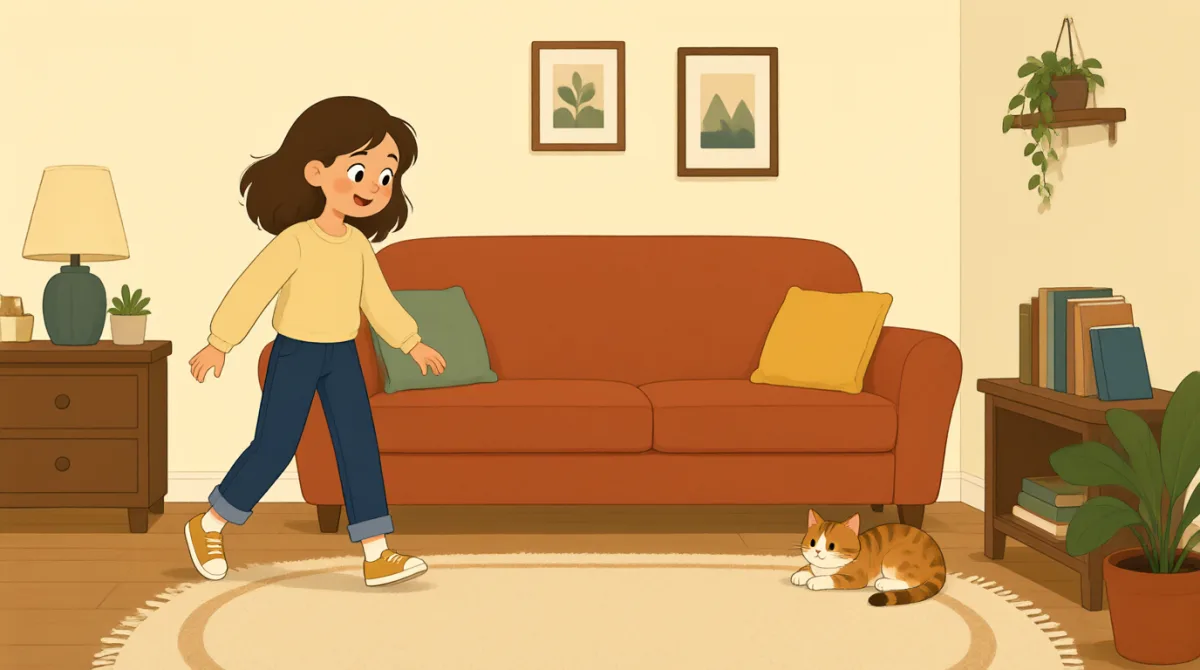

Hi, Grace. I’m at your house, but I can’t see the cat.
हाय, ग्रेस। मैं तुम्हारे घर पर हूँ, लेकिन मुझे बिल्ली दिखाई नहीं दे रही।

Oh, she may be hiding. Where are you now?
अरे, शायद वह छिपी हुई है। तुम अभी कहाँ हो?
I’m in the living room. Where does she like to hide?
मैं बैठक में हूँ। उसे कहाँ छिपना पसंद है?
Look under the bed or behind the sofa.
बिस्तर के नीचे या सोफ़े के पीछे देखो।
Okay. Does she come out if I call her?
ठीक है। अगर मैं उसे पुकारूँ, तो क्या वह बाहर आएगी?
Yes. Say her name softly, and wait a little.
हाँ। उसका नाम धीरे से पुकारना और थोड़ी देर इंतज़ार करना।
I’ll look under the bed first. Thank you!
मैं पहले बिस्तर के नीचे देखूँगी। शुक्रिया!
शब्दावली8
- I can’t see the cat.मुझे बिल्ली दिखाई नहीं दे रही।
Emma says she cannot find the cat. Use “I can’t see…” when something is not in view.
एमा कह रही है कि उसे बिल्ली नहीं मिल रही। जब कोई चीज़ नज़र न आ रही हो, तो “I can’t see…” कहो।
- hidingछिपना
The cat is hiding when she is in a place where people cannot see her. You can say, “The dog is hiding.”
बिल्ली छिपी हुई है, यानी वह ऐसी जगह पर है जहाँ लोग उसे देख नहीं सकते। तुम कह सकते हो, “The dog is hiding.”
- living roomबैठक
A living room is a room in a home where people sit and relax. You can say, “I’m in the living room.”
बैठक घर का वह कमरा होता है जहाँ लोग बैठते और आराम करते हैं। तुम कह सकते हो, “I’m in the living room.”
- under the bedबिस्तर के नीचे
This means below the bed. Use “under” to say that one thing is below another.
इसका मतलब है बिस्तर से नीचे। जब एक चीज़ दूसरी चीज़ के नीचे हो, तो “under” का इस्तेमाल करो।
- behind the sofaसोफ़े के पीछे
This means at the back of the sofa, where it may be hard to see. Use “behind” to talk about something at the back of another thing.
इसका मतलब है सोफ़े के पीछे की तरफ़, जहाँ उसे देखना मुश्किल हो सकता है। किसी चीज़ के दूसरी चीज़ के पीछे होने की बात करने के लिए “behind” का इस्तेमाल करो।
- come outबाहर आना
Here, “come out” means to leave a hiding place. You can ask, “Will the cat come out?”
यहाँ “come out” का मतलब है छिपने की जगह से बाहर निकलना। तुम पूछ सकते हो, “Will the cat come out?”
- call herउसे पुकारना
This means say her name to get her attention. You can say, “I call her, and she comes.”
इसका मतलब है उसका ध्यान खींचने के लिए उसका नाम लेना। तुम कह सकते हो, “I call her, and she comes.”
- softlyधीरे से
“Softly” means in a quiet, gentle way. You can speak softly to a cat or a baby.
“Softly” का मतलब है धीमी और कोमल आवाज़ में। तुम बिल्ली या बच्चे से धीरे से बात कर सकते हो।
मुख्य वाक्य8
- 1
I’m at your house, but I can’t see the cat.
मैं तुम्हारे घर पर हूँ, लेकिन मुझे बिल्ली दिखाई नहीं दे रही।
This sentence tells someone where you are and what the problem is. Use “I’m at…” to say where you are.
इस वाक्य में तुम किसी को बताते हो कि तुम कहाँ हो और क्या परेशानी है। अपनी जगह बताने के लिए “I’m at…” का इस्तेमाल करो।
- 2
Where are you now?
तुम अभी कहाँ हो?
This is a simple way to ask someone’s location. You can also ask, “Where are you now?” on the phone.
किसी से यह पूछने का यह एक आसान तरीका है कि वह कहाँ है। फ़ोन पर भी तुम पूछ सकते हो, “Where are you now?”
- 3
Where does she like to hide?
उसे कहाँ छिपना पसंद है?
Use this question to ask about a place someone or an animal often hides. Change “she” to “he” or “they” as needed.
किसी व्यक्ति या जानवर से यह पूछने के लिए इस सवाल का इस्तेमाल करो कि वह अक्सर कहाँ छिपता है। ज़रूरत के अनुसार “she” की जगह “he” या “they” कहो।
- 4
Look under the bed or behind the sofa.
बिस्तर के नीचे या सोफ़े के पीछे देखो।
This gives two simple places to search. Use “look under” and “look behind” to say where to check.
इसमें ढूँढ़ने की दो आसान जगहें बताई गई हैं। कहाँ देखना है, यह बताने के लिए “look under” और “look behind” का इस्तेमाल करो।
- 5
Does she come out if I call her?
अगर मैं उसे पुकारूँ, तो क्या वह बाहर आएगी?
This asks if something happens when you do something. You can reuse “Does [someone]… if I…?” in other situations.
इस सवाल में पूछा जाता है कि कुछ करने पर कोई बात होती है या नहीं। दूसरी स्थितियों में भी “Does [someone]… if I…?” का इस्तेमाल कर सकते हो।
- 6
Say her name softly, and wait a little.
उसका नाम धीरे से पुकारना और थोड़ी देर इंतज़ार करना।
This gives two simple instructions. Use “say [something] softly” when you want someone to speak gently.
इसमें दो आसान निर्देश दिए गए हैं। जब तुम चाहते हो कि कोई प्यार से या कोमलता से बोले, तो “say [something] softly” का इस्तेमाल करो।
- 7
I’ll look under the bed first.
मैं पहले बिस्तर के नीचे देखूँगी।
This tells someone what you plan to do next. Use “I’ll…” to talk about a future action.
इससे तुम किसी को बताते हो कि आगे क्या करने का इरादा है। भविष्य में होने वाले काम के बारे में बताने के लिए “I’ll…” का इस्तेमाल करो।
- 8
Thank you!
शुक्रिया!
This is a short, polite way to show you are grateful. Use it when someone helps you.
आभार जताने का यह एक छोटा और विनम्र तरीका है। जब कोई तुम्हारी मदद करे, तो इसका इस्तेमाल करो।