The Cat Is Hiding
A gata está escondida
Emma visits the house, but the cat is hiding. She calls Grace and asks where the cat likes to hide.
Emma vai até a casa, mas a gata está escondida. Ela liga para Grace e pergunta onde a gata gosta de se esconder.
Diálogo7
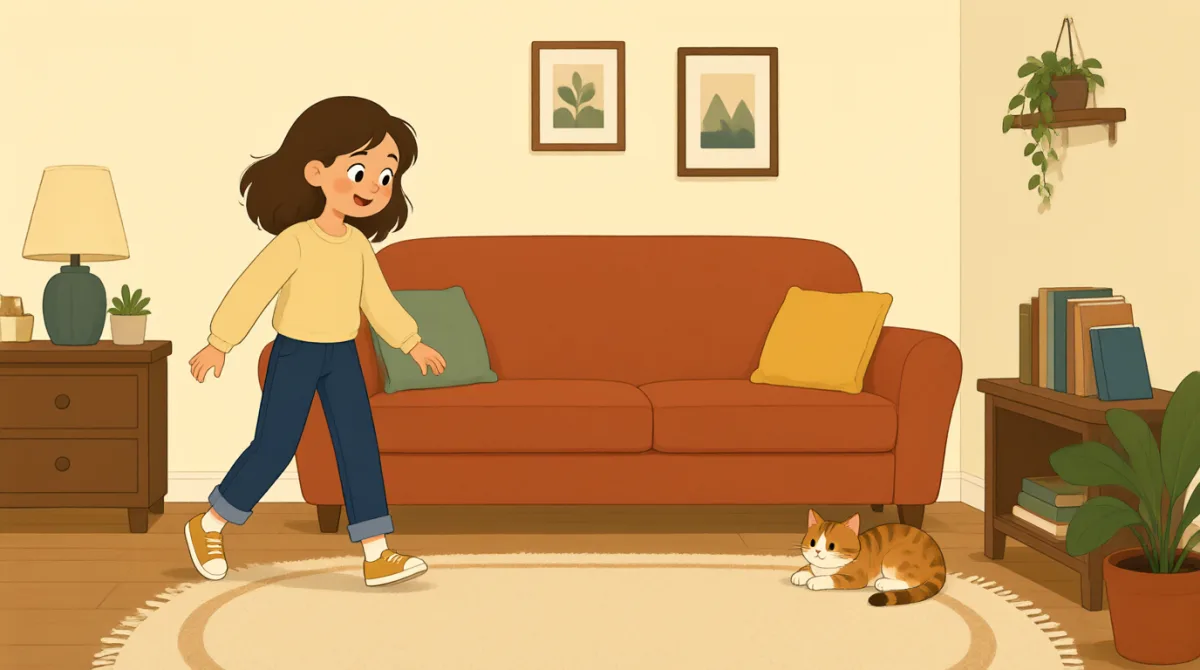

Hi, Grace. I’m at your house, but I can’t see the cat.
Oi, Grace. Estou na sua casa, mas não consigo ver a gata.

Oh, she may be hiding. Where are you now?
Ah, ela pode estar escondida. Onde você está agora?
I’m in the living room. Where does she like to hide?
Estou na sala. Onde ela gosta de se esconder?
Look under the bed or behind the sofa.
Olhe embaixo da cama ou atrás do sofá.
Okay. Does she come out if I call her?
Está bem. Ela sai se eu chamar por ela?
Yes. Say her name softly, and wait a little.
Sim. Diga o nome dela baixinho e espere um pouco.
I’ll look under the bed first. Thank you!
Vou olhar embaixo da cama primeiro. Obrigada!
Vocabulário8
- I can’t see the cat.Não consigo ver a gata.
Emma says she cannot find the cat. Use “I can’t see…” when something is not in view.
Emma diz que não consegue encontrar a gata. Use “I can’t see…” quando algo não estiver à vista.
- hidingescondida
The cat is hiding when she is in a place where people cannot see her. You can say, “The dog is hiding.”
A gata está escondida quando fica num lugar onde as pessoas não conseguem vê-la. Você pode dizer: “The dog is hiding.”
- living roomsala
A living room is a room in a home where people sit and relax. You can say, “I’m in the living room.”
A living room é um cômodo da casa onde as pessoas se sentam e descansam. Você pode dizer: “I’m in the living room.”
- under the bedembaixo da cama
This means below the bed. Use “under” to say that one thing is below another.
Isso significa que algo está abaixo da cama. Use “under” para dizer que uma coisa está abaixo de outra.
- behind the sofaatrás do sofá
This means at the back of the sofa, where it may be hard to see. Use “behind” to talk about something at the back of another thing.
Isso significa que algo está na parte de trás do sofá, onde pode ser difícil de ver. Use “behind” para falar de algo que está atrás de outra coisa.
- come outsair
Here, “come out” means to leave a hiding place. You can ask, “Will the cat come out?”
Aqui, “come out” significa sair de um esconderijo. Você pode perguntar: “Will the cat come out?”
- call herchamar por ela
This means say her name to get her attention. You can say, “I call her, and she comes.”
Isso significa dizer o nome dela para chamar sua atenção. Você pode dizer: “I call her, and she comes.”
- softlybaixinho
“Softly” means in a quiet, gentle way. You can speak softly to a cat or a baby.
“Softly” significa de um jeito baixo e delicado. Você pode falar baixinho com um gato ou um bebê.
Frases-chave8
- 1
I’m at your house, but I can’t see the cat.
Estou na sua casa, mas não consigo ver a gata.
This sentence tells someone where you are and what the problem is. Use “I’m at…” to say where you are.
Esta frase diz a alguém onde você está e qual é o problema. Use “I’m at…” para dizer onde você está.
- 2
Where are you now?
Onde você está agora?
This is a simple way to ask someone’s location. You can also ask, “Where are you now?” on the phone.
Esta é uma forma simples de perguntar onde alguém está. Você também pode perguntar “Where are you now?” ao telefone.
- 3
Where does she like to hide?
Onde ela gosta de se esconder?
Use this question to ask about a place someone or an animal often hides. Change “she” to “he” or “they” as needed.
Use esta pergunta para saber em que lugar alguém ou algum animal costuma se esconder. Troque “she” por “he” ou “they”, conforme necessário.
- 4
Look under the bed or behind the sofa.
Olhe embaixo da cama ou atrás do sofá.
This gives two simple places to search. Use “look under” and “look behind” to say where to check.
Esta frase indica dois lugares simples para procurar. Use “look under” e “look behind” para dizer onde verificar.
- 5
Does she come out if I call her?
Ela sai se eu chamar por ela?
This asks if something happens when you do something. You can reuse “Does [someone]… if I…?” in other situations.
Esta pergunta quer saber se algo acontece quando você faz alguma coisa. Você pode usar “Does [someone]… if I…?” em outras situações.
- 6
Say her name softly, and wait a little.
Diga o nome dela baixinho e espere um pouco.
This gives two simple instructions. Use “say [something] softly” when you want someone to speak gently.
Esta frase dá duas instruções simples. Use “say [something] softly” quando quiser que alguém fale com delicadeza.
- 7
I’ll look under the bed first.
Vou olhar embaixo da cama primeiro.
This tells someone what you plan to do next. Use “I’ll…” to talk about a future action.
Esta frase diz a alguém o que você pretende fazer em seguida. Use “I’ll…” para falar de uma ação futura.
- 8
Thank you!
Obrigada!
This is a short, polite way to show you are grateful. Use it when someone helps you.
Esta é uma forma curta e educada de demonstrar gratidão. Use-a quando alguém ajudar você.