The Cat Is Hiding
القطة تختبئ
Emma visits the house, but the cat is hiding. She calls Grace and asks where the cat likes to hide.
تزور إيما المنزل، لكن القطة مختبئة. تتصل بغريس وتسألها عن الأماكن التي تحب القطة أن تختبئ فيها.
حوار7
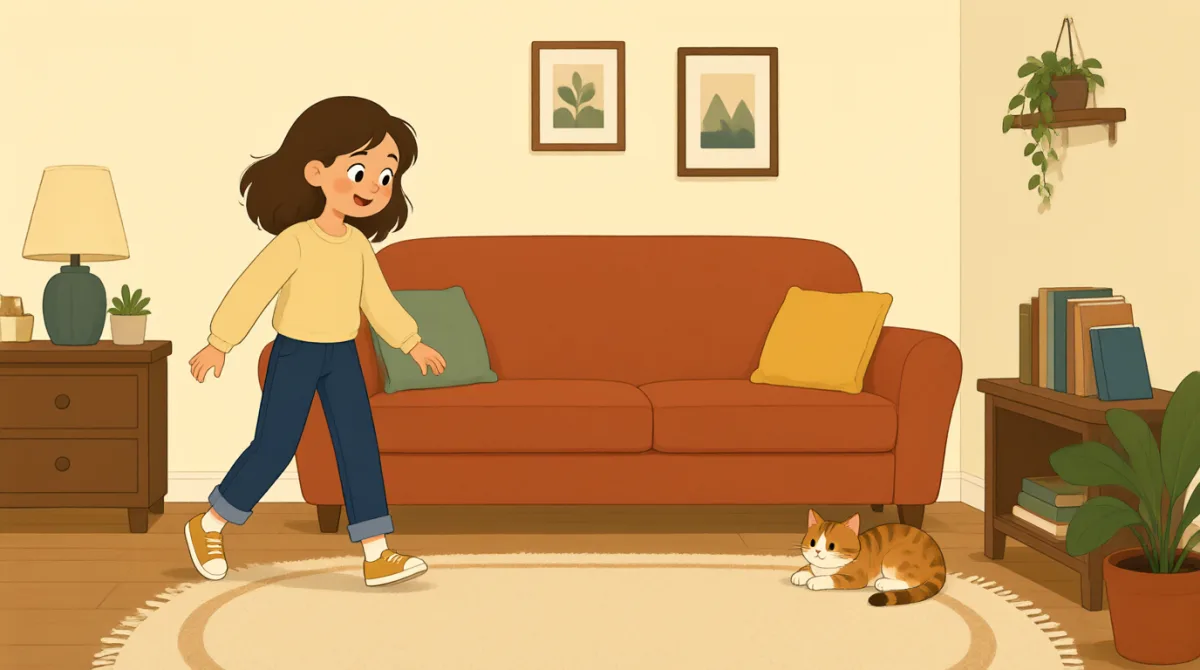

Hi, Grace. I’m at your house, but I can’t see the cat.
مرحبًا يا غريس. أنا في منزلك، لكنني لا أرى القطة.

Oh, she may be hiding. Where are you now?
أوه، ربما تكون مختبئة. أين أنت الآن؟
I’m in the living room. Where does she like to hide?
أنا في غرفة المعيشة. أين تحب أن تختبئ؟
Look under the bed or behind the sofa.
انظري تحت السرير أو خلف الأريكة.
Okay. Does she come out if I call her?
حسنًا. هل تخرج إذا ناديتها؟
Yes. Say her name softly, and wait a little.
نعم. قولي اسمها بصوت خافت وانتظري قليلًا.
I’ll look under the bed first. Thank you!
سأبحث تحت السرير أولًا. شكرًا لك!
المفردات8
- I can’t see the cat.لا أرى القطة.
Emma says she cannot find the cat. Use “I can’t see…” when something is not in view.
تقول إيما إنها لا تستطيع العثور على القطة. استخدمِي “I can’t see…” عندما لا يكون الشيء ظاهرًا أمامك.
- hidingمختبئة
The cat is hiding when she is in a place where people cannot see her. You can say, “The dog is hiding.”
تكون القطة مختبئة عندما تكون في مكان لا يستطيع الناس رؤيتها فيه. يمكنك أن تقولي: “The dog is hiding.”
- living roomغرفة المعيشة
A living room is a room in a home where people sit and relax. You can say, “I’m in the living room.”
غرفة المعيشة هي غرفة في المنزل يجلس فيها الناس ويسترخون. يمكنك أن تقولي: “I’m in the living room.”
- under the bedتحت السرير
This means below the bed. Use “under” to say that one thing is below another.
تعني هذه العبارة في مكان أسفل السرير. استخدمي “under” لتقولي إن شيئًا يقع أسفل شيء آخر.
- behind the sofaخلف الأريكة
This means at the back of the sofa, where it may be hard to see. Use “behind” to talk about something at the back of another thing.
تعني هذه العبارة في الجهة الخلفية من الأريكة، حيث قد يصعب على المرء أن يرى الشيء. استخدمي “behind” للتحدث عن شيء يقع خلف شيء آخر.
- come outيخرج
Here, “come out” means to leave a hiding place. You can ask, “Will the cat come out?”
هنا، تعني “come out” الخروج من مكان للاختباء. يمكنك أن تسألي: “Will the cat come out?”
- call herأناديها
This means say her name to get her attention. You can say, “I call her, and she comes.”
تعني هذه العبارة أن تقولي اسمها لتلفتي انتباهها. يمكنك أن تقولي: “I call her, and she comes.”
- softlyبصوت خافت
“Softly” means in a quiet, gentle way. You can speak softly to a cat or a baby.
تعني “Softly” بطريقة هادئة ولطيفة. يمكنك التحدث بصوت خافت إلى قطة أو طفل رضيع.
الجمل الأساسية8
- 1
I’m at your house, but I can’t see the cat.
أنا في منزلك، لكنني لا أرى القطة.
This sentence tells someone where you are and what the problem is. Use “I’m at…” to say where you are.
تخبر هذه الجملة شخصًا بمكانك وبالمشكلة. استخدمي “I’m at…” لتقولي أين أنت.
- 2
Where are you now?
أين أنت الآن؟
This is a simple way to ask someone’s location. You can also ask, “Where are you now?” on the phone.
هذه طريقة بسيطة للسؤال عن مكان شخص ما. يمكنك أيضًا أن تسألي “Where are you now?” عبر الهاتف.
- 3
Where does she like to hide?
أين تحب أن تختبئ؟
Use this question to ask about a place someone or an animal often hides. Change “she” to “he” or “they” as needed.
استخدمي هذا السؤال للاستفسار عن مكان يختبئ فيه شخص أو حيوان عادةً. غيّري “she” إلى “he” أو “they” حسب الحاجة.
- 4
Look under the bed or behind the sofa.
انظري تحت السرير أو خلف الأريكة.
This gives two simple places to search. Use “look under” and “look behind” to say where to check.
تقترح هذه الجملة مكانين بسيطين للبحث. استخدمي “look under” و“look behind” لتقولي أين ينبغي أن تبحثي.
- 5
Does she come out if I call her?
هل تخرج إذا ناديتها؟
This asks if something happens when you do something. You can reuse “Does [someone]… if I…?” in other situations.
يسأل هذا عمّا إذا كان شيء ما يحدث عندما تفعلين شيئًا. يمكنك استخدام “Does [someone]… if I…?” في مواقف أخرى.
- 6
Say her name softly, and wait a little.
قولي اسمها بصوت خافت وانتظري قليلًا.
This gives two simple instructions. Use “say [something] softly” when you want someone to speak gently.
تتضمن هذه الجملة توجيهين بسيطين. استخدمي “say [something] softly” عندما تريدين من شخص أن يتحدث بلطف.
- 7
I’ll look under the bed first.
سأبحث تحت السرير أولًا.
This tells someone what you plan to do next. Use “I’ll…” to talk about a future action.
تخبر هذه الجملة شخصًا بما تخططين لفعله بعد ذلك. استخدمي “I’ll…” للتحدث عن فعل مستقبلي.
- 8
Thank you!
شكرًا لك!
This is a short, polite way to show you are grateful. Use it when someone helps you.
هذه طريقة قصيرة ومهذبة للتعبير عن الامتنان. استخدميها عندما يساعدك شخص ما.