The Cat Is Hiding
猫咪躲起来了
Emma visits the house, but the cat is hiding. She calls Grace and asks where the cat likes to hide.
Emma 到了 Grace 家,却发现猫咪躲了起来。她打电话给 Grace,询问猫咪喜欢躲在哪里。
对话7
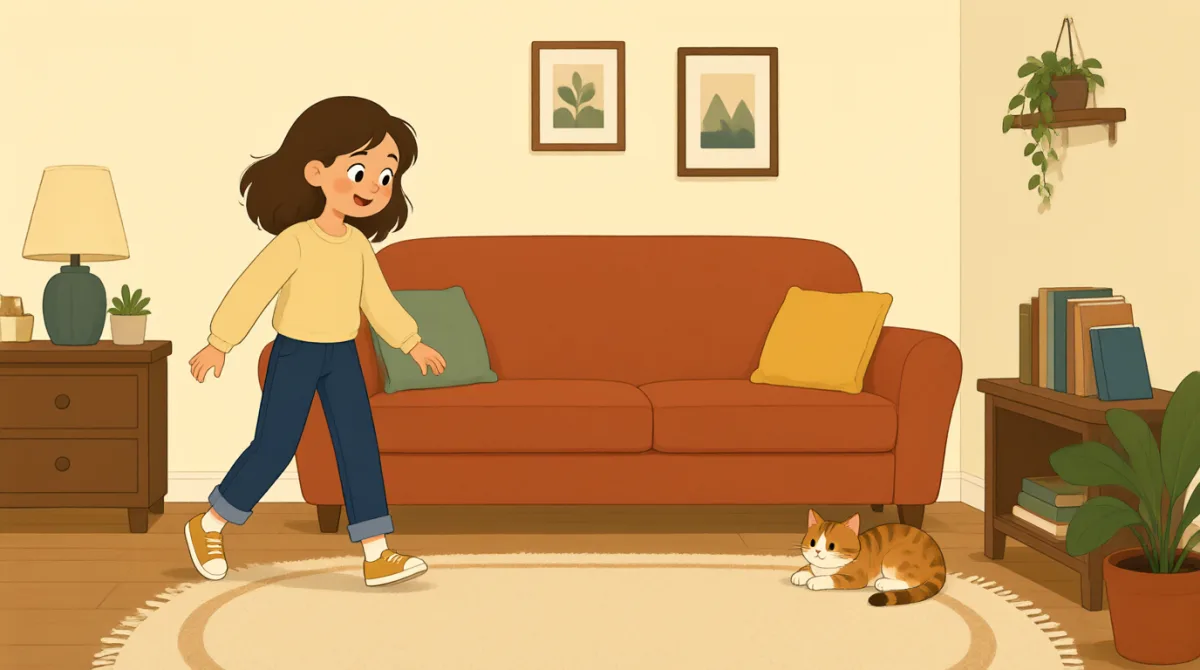

Hi, Grace. I’m at your house, but I can’t see the cat.
嗨,格蕾丝。我在你家,但我没看见猫。

Oh, she may be hiding. Where are you now?
哦,她可能躲起来了。你现在在哪儿?
I’m in the living room. Where does she like to hide?
我在客厅。她喜欢躲在哪里?
Look under the bed or behind the sofa.
看看床底下或者沙发后面。
Okay. Does she come out if I call her?
好的。我叫她,她会出来吗?
Yes. Say her name softly, and wait a little.
会的。轻轻叫她的名字,然后等一会儿。
I’ll look under the bed first. Thank you!
我先看看床底下。谢谢你!
词汇8
- I can’t see the cat.我看不见猫咪。
Emma says she cannot find the cat. Use “I can’t see…” when something is not in view.
艾玛说她找不到猫咪。看不见某样东西时,可以用“I can’t see…”来表达。
- hiding躲藏
The cat is hiding when she is in a place where people cannot see her. You can say, “The dog is hiding.”
猫咪躲在别人看不见的地方时,就可以说“The cat is hiding”。你也可以说“The dog is hiding.”
- living room客厅
A living room is a room in a home where people sit and relax. You can say, “I’m in the living room.”
客厅是家里供人坐着休息的房间。你可以说“I’m in the living room.”
- under the bed床底下
This means below the bed. Use “under” to say that one thing is below another.
意思是床的下面。用“under”表示一样东西在另一件东西的下方。
- behind the sofa沙发后面
This means at the back of the sofa, where it may be hard to see. Use “behind” to talk about something at the back of another thing.
意思是沙发后方,那里可能不太容易看见。用“behind”来表示某样东西在另一件东西的后面。
- come out出来
Here, “come out” means to leave a hiding place. You can ask, “Will the cat come out?”
这里的“come out”是指离开躲藏的地方。你可以问:“Will the cat come out?”
- call her叫她
This means say her name to get her attention. You can say, “I call her, and she comes.”
意思是说出她的名字来引起她的注意。你可以说:“I call her, and she comes.”
- softly轻声地
“Softly” means in a quiet, gentle way. You can speak softly to a cat or a baby.
“Softly”是指轻声、温柔地。你可以轻声对猫咪或宝宝说话。
重点句子8
- 1
I’m at your house, but I can’t see the cat.
我在你家,但我看不见猫咪。
This sentence tells someone where you are and what the problem is. Use “I’m at…” to say where you are.
这句话告诉别人你在哪里,以及遇到了什么问题。用“I’m at…”来说明你所在的位置。
- 2
Where are you now?
你现在在哪儿?
This is a simple way to ask someone’s location. You can also ask, “Where are you now?” on the phone.
这是询问别人位置的一种简单说法。打电话时也可以问:“Where are you now?”
- 3
Where does she like to hide?
她喜欢躲在哪里?
Use this question to ask about a place someone or an animal often hides. Change “she” to “he” or “they” as needed.
用这个问题询问某个人或动物常躲的地方。根据需要,可以把“she”换成“he”或“they”。
- 4
Look under the bed or behind the sofa.
看看床底下或者沙发后面。
This gives two simple places to search. Use “look under” and “look behind” to say where to check.
这句话给出了两个简单的寻找地点。用“look under”和“look behind”来说明要检查哪里。
- 5
Does she come out if I call her?
我叫她的话,她会出来吗?
This asks if something happens when you do something. You can reuse “Does [someone]… if I…?” in other situations.
这是在问你做某件事时,某个情况会不会发生。你可以在其他情境中套用“Does [someone]… if I…?”这个句型。
- 6
Say her name softly, and wait a little.
轻轻叫她的名字,然后等一会儿。
This gives two simple instructions. Use “say [something] softly” when you want someone to speak gently.
这句话给出了两个简单的指示。想让别人轻声、温柔地说话时,可以用“say [something] softly”。
- 7
I’ll look under the bed first.
我先看看床底下。
This tells someone what you plan to do next. Use “I’ll…” to talk about a future action.
这句话告诉别人你接下来打算做什么。用“I’ll…”来谈论将要做的事。
- 8
Thank you!
谢谢你!
This is a short, polite way to show you are grateful. Use it when someone helps you.
这是一种简短而礼貌的感谢方式。别人帮了你时可以这样说。