The Cat Is Hiding
猫が隠れてる
Emma visits the house, but the cat is hiding. She calls Grace and asks where the cat likes to hide.
エマが家に来ましたが、猫は隠れています。エマはグレースに電話して、猫がどこに隠れるのが好きか尋ねます。
会話7
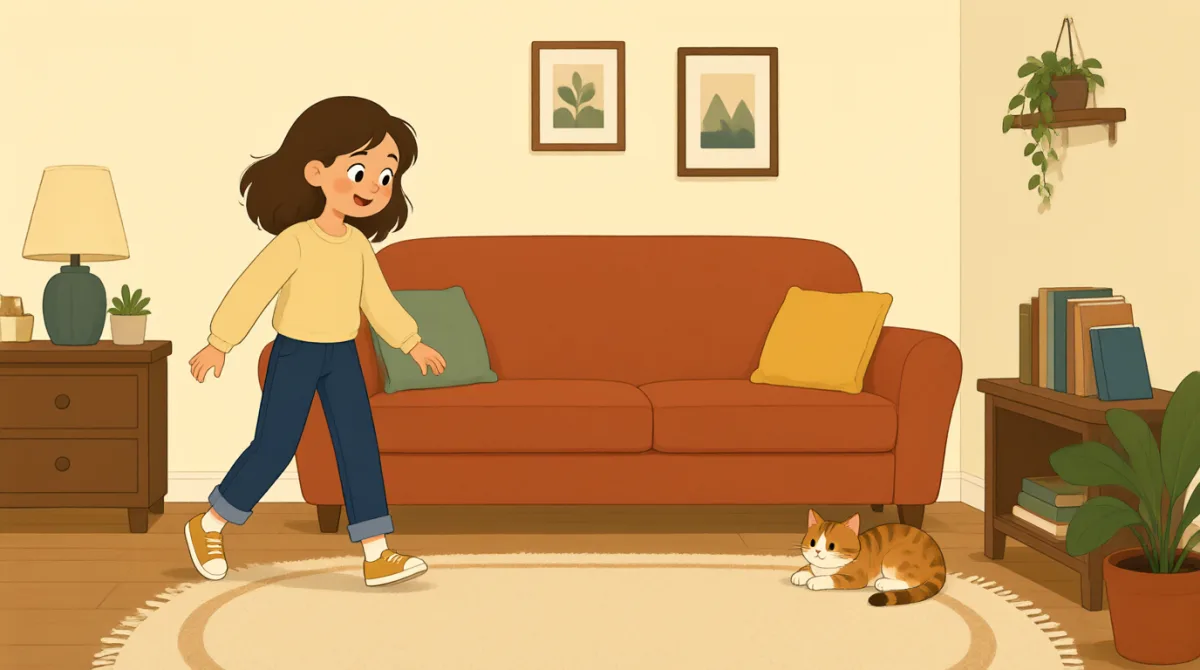

Hi, Grace. I’m at your house, but I can’t see the cat.
やあ、グレース。今、家にいるんだけど、猫が見つからないんだ。

Oh, she may be hiding. Where are you now?
ああ、隠れてるのかも。今どこにいるの?
I’m in the living room. Where does she like to hide?
リビングにいるよ。あの子はどこに隠れるのが好きなの?
Look under the bed or behind the sofa.
ベッドの下かソファの後ろを見てみて。
Okay. Does she come out if I call her?
わかった。呼んだら出てくるかな?
Yes. Say her name softly, and wait a little.
うん。名前を優しく呼んで、少し待ってみて。
I’ll look under the bed first. Thank you!
まずベッドの下を見てみるね。ありがとう!
語彙8
- I can’t see the cat.猫が見つからない
Emma says she cannot find the cat. Use “I can’t see…” when something is not in view.
エマは猫を見つけられないと言っています。何かが目に入らないときは “I can’t see…” と言えます。
- hiding隠れている
The cat is hiding when she is in a place where people cannot see her. You can say, “The dog is hiding.”
猫が人から見えない場所にいるとき、猫は隠れていると言います。“The dog is hiding.” のようにも言えます。
- living roomリビング
A living room is a room in a home where people sit and relax. You can say, “I’m in the living room.”
リビングは、家の中で人が座ってくつろぐ部屋です。“I’m in the living room.” と言えます。
- under the bedベッドの下
This means below the bed. Use “under” to say that one thing is below another.
ベッドより低いところ、つまりベッドの下という意味です。“under” は、あるものが別のものの下にあることを表します。
- behind the sofaソファの後ろ
This means at the back of the sofa, where it may be hard to see. Use “behind” to talk about something at the back of another thing.
ソファの背後にある、見つけにくい場所という意味です。“behind” は、あるものの後ろにあるものについて話すときに使います。
- come out出てくる
Here, “come out” means to leave a hiding place. You can ask, “Will the cat come out?”
ここでの “come out” は、隠れ場所から出てくるという意味です。“Will the cat come out?” と尋ねることができます。
- call her名前を呼ぶ
This means say her name to get her attention. You can say, “I call her, and she comes.”
相手の気を引くために、その人や動物の名前を言うことです。“I call her, and she comes.” と言えます。
- softly優しく、静かに
“Softly” means in a quiet, gentle way. You can speak softly to a cat or a baby.
“Softly” は、静かに、優しくという意味です。猫や赤ちゃんには、優しく話しかけることができます。
重要な文8
- 1
I’m at your house, but I can’t see the cat.
今、家にいるんだけど、猫が見つからないんだ。
This sentence tells someone where you are and what the problem is. Use “I’m at…” to say where you are.
自分がどこにいるかと、困っていることを伝える文です。“I’m at…” は、自分がいる場所を伝えるときに使います。
- 2
Where are you now?
今どこにいるの?
This is a simple way to ask someone’s location. You can also ask, “Where are you now?” on the phone.
相手がどこにいるかを尋ねるシンプルな表現です。電話でも “Where are you now?” と聞けます。
- 3
Where does she like to hide?
あの子はどこに隠れるのが好きなの?
Use this question to ask about a place someone or an animal often hides. Change “she” to “he” or “they” as needed.
人や動物がよく隠れる場所を尋ねるときの質問です。必要に応じて “she” を “he” や “they” に変えられます。
- 4
Look under the bed or behind the sofa.
ベッドの下かソファの後ろを見てみて。
This gives two simple places to search. Use “look under” and “look behind” to say where to check.
探す場所を2つ、簡潔に伝える表現です。“look under” と “look behind” を使うと、どこを確認すればよいか伝えられます。
- 5
Does she come out if I call her?
呼んだら出てくるかな?
This asks if something happens when you do something. You can reuse “Does [someone]… if I…?” in other situations.
何かをしたときに、あることが起こるかどうかを尋ねる文です。“Does [someone]… if I…?” は、ほかの場面でも使えます。
- 6
Say her name softly, and wait a little.
名前を優しく呼んで、少し待ってみて。
This gives two simple instructions. Use “say [something] softly” when you want someone to speak gently.
簡単な指示を2つ伝える表現です。優しく話してほしいときは、“say [something] softly” を使います。
- 7
I’ll look under the bed first.
まずベッドの下を見てみるね。
This tells someone what you plan to do next. Use “I’ll…” to talk about a future action.
次にする予定のことを相手に伝える文です。“I’ll…” は、これからすることを話すときに使います。
- 8
Thank you!
ありがとう!
This is a short, polite way to show you are grateful. Use it when someone helps you.
感謝の気持ちを伝える、短く丁寧な表現です。誰かが助けてくれたときに使いましょう。