The Cat Is Hiding
貓咪躲起來了
Emma visits the house, but the cat is hiding. She calls Grace and asks where the cat likes to hide.
Emma 到了 Grace 家,卻發現貓咪躲了起來。她打電話給 Grace,詢問貓咪喜歡躲在哪裡。
對話7
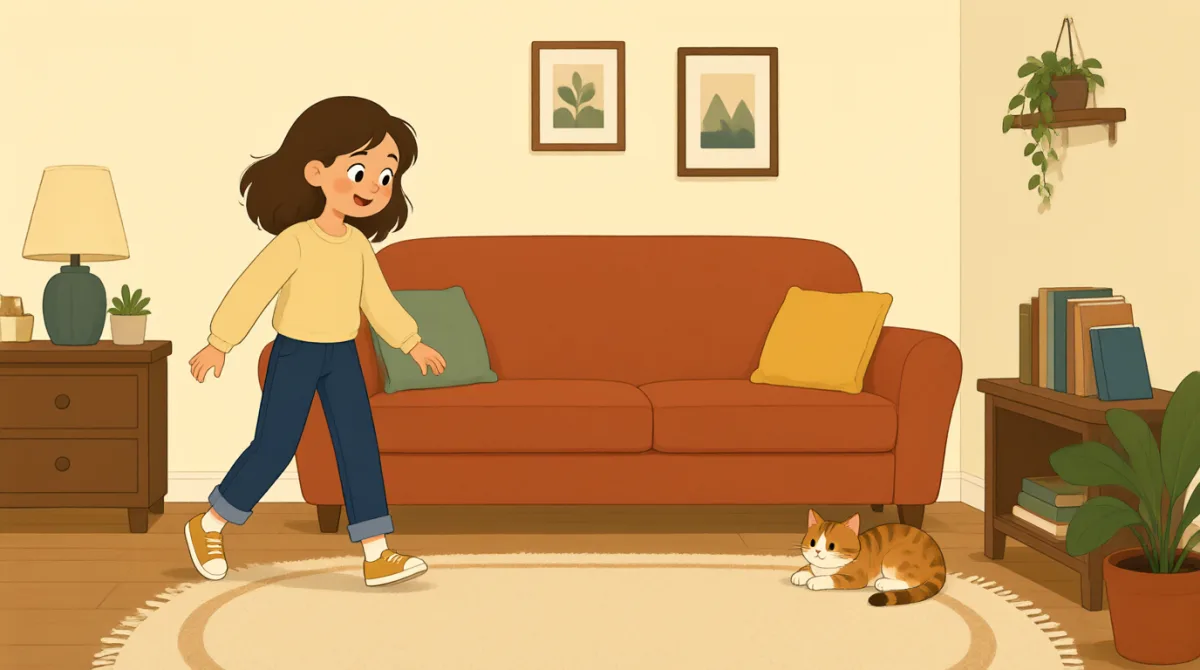

Hi, Grace. I’m at your house, but I can’t see the cat.
嗨,格蕾絲。我在你家,但我沒看見貓。

Oh, she may be hiding. Where are you now?
哦,她可能躲起來了。你現在在哪兒?
I’m in the living room. Where does she like to hide?
我在客廳。她喜歡躲在哪裡?
Look under the bed or behind the sofa.
看看床底下或者沙發後面。
Okay. Does she come out if I call her?
好的。我叫她,她會出來嗎?
Yes. Say her name softly, and wait a little.
會的。輕輕叫她的名字,然後等一會兒。
I’ll look under the bed first. Thank you!
我先看看床底下。謝謝你!
詞彙8
- I can’t see the cat.我看不見貓咪。
Emma says she cannot find the cat. Use “I can’t see…” when something is not in view.
艾瑪說她找不到貓咪。看不見某樣東西時,可以用“I can’t see…”來表達。
- hiding躲藏
The cat is hiding when she is in a place where people cannot see her. You can say, “The dog is hiding.”
貓咪躲在別人看不見的地方時,就可以說“The cat is hiding”。你也可以說“The dog is hiding.”
- living room客廳
A living room is a room in a home where people sit and relax. You can say, “I’m in the living room.”
客廳是家裡供人坐著休息的房間。你可以說“I’m in the living room.”
- under the bed床底下
This means below the bed. Use “under” to say that one thing is below another.
意思是床的下面。用“under”表示一樣東西在另一件東西的下方。
- behind the sofa沙發後面
This means at the back of the sofa, where it may be hard to see. Use “behind” to talk about something at the back of another thing.
意思是沙發後方,那裡可能不太容易看見。用“behind”來表示某樣東西在另一件東西的後面。
- come out出來
Here, “come out” means to leave a hiding place. You can ask, “Will the cat come out?”
這裡的“come out”是指離開躲藏的地方。你可以問:“Will the cat come out?”
- call her叫她
This means say her name to get her attention. You can say, “I call her, and she comes.”
意思是說出她的名字來引起她的注意。你可以說:“I call her, and she comes.”
- softly輕聲地
“Softly” means in a quiet, gentle way. You can speak softly to a cat or a baby.
“Softly”是指輕聲、溫柔地。你可以輕聲對貓咪或寶寶說話。
關鍵句8
- 1
I’m at your house, but I can’t see the cat.
我在你家,但我看不見貓咪。
This sentence tells someone where you are and what the problem is. Use “I’m at…” to say where you are.
這句話告訴別人你在哪裡,以及遇到了什麼問題。用“I’m at…”來說明你所在的位置。
- 2
Where are you now?
你現在在哪兒?
This is a simple way to ask someone’s location. You can also ask, “Where are you now?” on the phone.
這是詢問別人位置的一種簡單說法。打電話時也可以問:“Where are you now?”
- 3
Where does she like to hide?
她喜歡躲在哪裡?
Use this question to ask about a place someone or an animal often hides. Change “she” to “he” or “they” as needed.
用這個問題詢問某個人或動物常躲的地方。根據需要,可以把“she”換成“he”或“they”。
- 4
Look under the bed or behind the sofa.
看看床底下或者沙發後面。
This gives two simple places to search. Use “look under” and “look behind” to say where to check.
這句話給出了兩個簡單的尋找地點。用“look under”和“look behind”來說明要檢查哪裡。
- 5
Does she come out if I call her?
我叫她的話,她會出來嗎?
This asks if something happens when you do something. You can reuse “Does [someone]… if I…?” in other situations.
這是在問你做某件事時,某個情況會不會發生。你可以在其他情境中套用“Does [someone]… if I…?”這個句型。
- 6
Say her name softly, and wait a little.
輕輕叫她的名字,然後等一會兒。
This gives two simple instructions. Use “say [something] softly” when you want someone to speak gently.
這句話給出了兩個簡單的指示。想讓別人輕聲、溫柔地說話時,可以用“say [something] softly”。
- 7
I’ll look under the bed first.
我先看看床底下。
This tells someone what you plan to do next. Use “I’ll…” to talk about a future action.
這句話告訴別人你接下來打算做什麼。用“I’ll…”來談論將要做的事。
- 8
Thank you!
謝謝你!
This is a short, polite way to show you are grateful. Use it when someone helps you.
這是一種簡短而禮貌的感謝方式。別人幫了你時可以這樣說。