The Cat Is Hiding
Kotka się chowa
Emma visits the house, but the cat is hiding. She calls Grace and asks where the cat likes to hide.
Emma przychodzi do domu, ale kotka się chowa. Dzwoni do Grace i pyta, gdzie kotka lubi się chować.
Dialog7
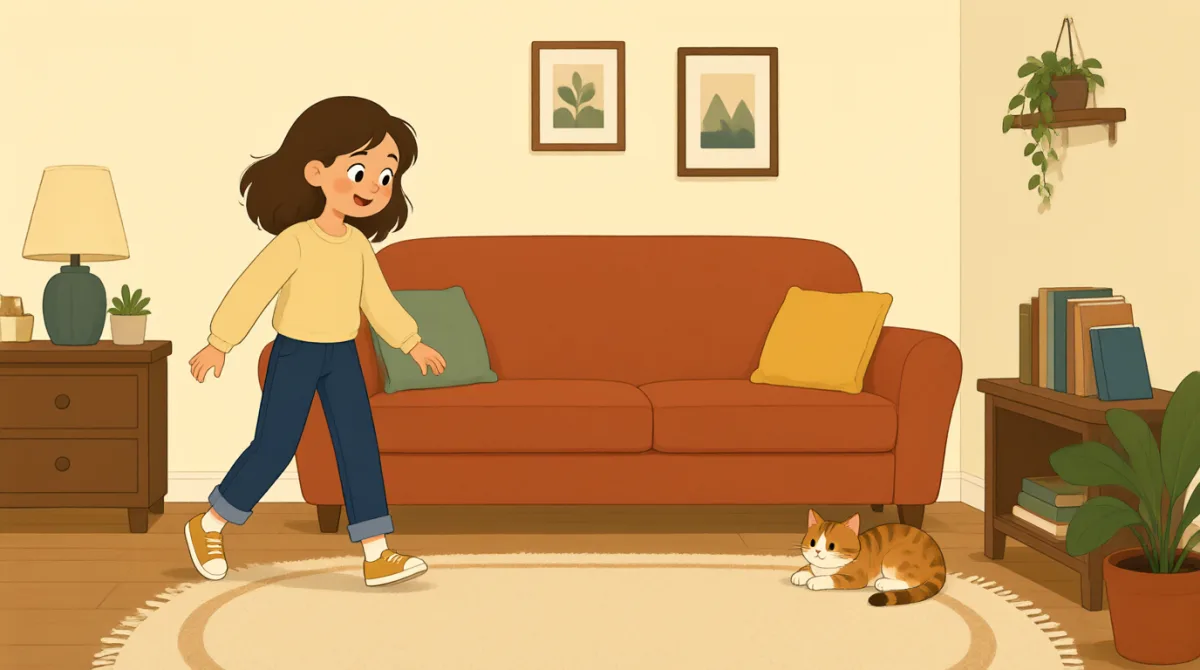

Hi, Grace. I’m at your house, but I can’t see the cat.
Cześć, Grace. Jestem u ciebie w domu, ale nie widzę kotki.

Oh, she may be hiding. Where are you now?
Och, może się chowa. Gdzie teraz jesteś?
I’m in the living room. Where does she like to hide?
Jestem w salonie. Gdzie ona lubi się chować?
Look under the bed or behind the sofa.
Zajrzyj pod łóżko albo za kanapę.
Okay. Does she come out if I call her?
Dobrze. Wyjdzie, jeśli ją zawołam?
Yes. Say her name softly, and wait a little.
Tak. Powiedz cicho jej imię i chwilę poczekaj.
I’ll look under the bed first. Thank you!
Najpierw zajrzę pod łóżko. Dzięki!
Słownictwo8
- I can’t see the cat.Nie widzę kotki.
Emma says she cannot find the cat. Use “I can’t see…” when something is not in view.
Emma mówi, że nie może znaleźć kotki. Użyj “I can’t see…” (nie widzę…), kiedy czegoś nie widać.
- hidingchować się
The cat is hiding when she is in a place where people cannot see her. You can say, “The dog is hiding.”
Kotka się chowa, gdy jest w miejscu, w którym ludzie jej nie widzą. Możesz powiedzieć: “The dog is hiding.” (Pies się chowa.)
- living roomsalon
A living room is a room in a home where people sit and relax. You can say, “I’m in the living room.”
Salon to pokój w domu, w którym ludzie siadają i odpoczywają. Możesz powiedzieć: “I’m in the living room.” (Jestem w salonie.)
- under the bedpod łóżkiem
This means below the bed. Use “under” to say that one thing is below another.
To znaczy: niżej niż łóżko. Użyj “under”, gdy chcesz powiedzieć, że coś znajduje się pod czymś innym.
- behind the sofaza kanapą
This means at the back of the sofa, where it may be hard to see. Use “behind” to talk about something at the back of another thing.
To znaczy: z tyłu kanapy, w miejscu, gdzie trudno coś zobaczyć. Użyj “behind”, mówiąc o czymś, co znajduje się za inną rzeczą.
- come outwyjść
Here, “come out” means to leave a hiding place. You can ask, “Will the cat come out?”
Tutaj “come out” znaczy wyjść z kryjówki. Możesz zapytać: “Will the cat come out?” (Czy kotka wyjdzie?)
- call herzawołać ją
This means say her name to get her attention. You can say, “I call her, and she comes.”
To znaczy powiedzieć jej imię, żeby zwrócić jej uwagę. Możesz powiedzieć: “I call her, and she comes.” (Wołam ją, a ona przychodzi.)
- softlycicho
“Softly” means in a quiet, gentle way. You can speak softly to a cat or a baby.
“Softly” znaczy cicho i łagodnie. Możesz mówić cicho do kota albo dziecka.
Kluczowe zdania8
- 1
I’m at your house, but I can’t see the cat.
Jestem u ciebie w domu, ale nie widzę kotki.
This sentence tells someone where you are and what the problem is. Use “I’m at…” to say where you are.
To zdanie mówi komuś, gdzie jesteś i na czym polega problem. Użyj “I’m at…”, aby powiedzieć, gdzie jesteś.
- 2
Where are you now?
Gdzie teraz jesteś?
This is a simple way to ask someone’s location. You can also ask, “Where are you now?” on the phone.
To prosty sposób, by zapytać kogoś, gdzie się znajduje. Możesz też zapytać “Where are you now?” przez telefon.
- 3
Where does she like to hide?
Gdzie ona lubi się chować?
Use this question to ask about a place someone or an animal often hides. Change “she” to “he” or “they” as needed.
Użyj tego pytania, by zapytać o miejsce, w którym ktoś lub jakieś zwierzę często się chowa. W razie potrzeby zamień “she” na “he” albo “they”.
- 4
Look under the bed or behind the sofa.
Zajrzyj pod łóżko albo za kanapę.
This gives two simple places to search. Use “look under” and “look behind” to say where to check.
To wskazuje dwa proste miejsca, w których można szukać. Użyj “look under” i “look behind”, aby powiedzieć, gdzie zajrzeć.
- 5
Does she come out if I call her?
Wyjdzie, jeśli ją zawołam?
This asks if something happens when you do something. You can reuse “Does [someone]… if I…?” in other situations.
To pytanie o to, czy coś się stanie, gdy coś zrobisz. W innych sytuacjach możesz użyć wzoru “Does [someone]… if I…?”.
- 6
Say her name softly, and wait a little.
Powiedz cicho jej imię i chwilę poczekaj.
This gives two simple instructions. Use “say [something] softly” when you want someone to speak gently.
To dwie proste instrukcje. Użyj “say [something] softly”, gdy chcesz poprosić kogoś, by mówił łagodnie.
- 7
I’ll look under the bed first.
Najpierw zajrzę pod łóżko.
This tells someone what you plan to do next. Use “I’ll…” to talk about a future action.
To mówi komuś, co planujesz zrobić jako następne. Użyj “I’ll…”, aby mówić o przyszłym działaniu.
- 8
Thank you!
Dziękuję!
This is a short, polite way to show you are grateful. Use it when someone helps you.
To krótki i uprzejmy sposób, by okazać wdzięczność. Użyj go, gdy ktoś ci pomaga.