Paying at the Pump with Card
پرداخت با کارت در جایگاه سوخت
The driver uses a credit or debit card directly at the gas pump's payment terminal, following on-screen instructions to select fuel grade and complete the transaction.
راننده کارت اعتباری یا نقدی خود را مستقیماً در دستگاه پرداخت جایگاه سوخت وارد میکند و با دنبالکردن دستورهای روی صفحه، نوع بنزین را انتخاب میکند و پرداخت را انجام میدهد.
گفتوگو8
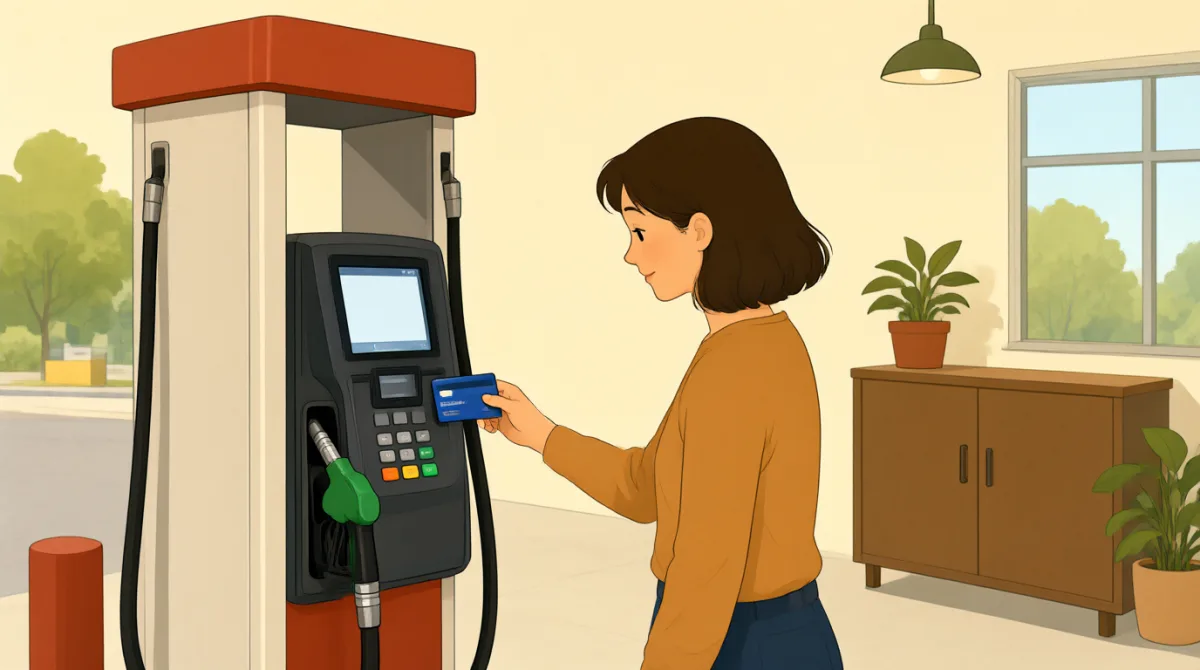

Alright, filling up the tank today. Card ready.
خب، امروز باک رو پر میکنم. کارت هم آمادهست.
Okay, the screen says 'Insert card'. Got it.
خب، روی صفحه نوشته «Insert card». فهمیدم.
Now it's asking for my ZIP code. Let's punch that in.
حالا کد پستیام رو میخواد. بزنم واردش کنم.
Next up, 'Select grade'. I'll go with regular unleaded.
مرحلهی بعد: «Select grade». بنزین معمولیِ بدون سرب رو انتخاب میکنم.
Alright, 'Lift nozzle and begin fueling'. Here we go.
خب، «Lift nozzle and begin fueling». بزن بریم.
And it stopped. Tank's full. Do I want a receipt?
خب، قطع شد. باک پره. رسید میخوام؟
Yes, print receipt. Always good to have one.
آره، رسید چاپ کن. همیشه خوبه آدم یکی داشته باشه.
Got the receipt. Perfect. Done and done.
رسید رو گرفتم. عالیه. کار تموم شد.
واژگان8
- filling upپر کردن (باک)
This phrase means adding fuel to a vehicle's tank until it is full. It's commonly used at gas stations when you want to buy enough gas to completely fill your tank.
این عبارت یعنی سوخت زدن به خودرو تا باکش پر شود. در جایگاههای سوخت معمولاً وقتی میخواهید باک را کاملاً پر کنید از آن استفاده میکنند.
- tankباک
The tank is the large container in a car or truck that holds gasoline or other fuel. You often hear 'fill up the tank' when getting gas.
باک مخزن بزرگی در خودرو است که بنزین یا سوخت دیگری را در خود نگه میدارد. وقتی سوختگیری میکنید، زیاد میشنوید که میگویند “fill up the tank” (باک را پر کردن).
- insertوارد کردن
To insert means to push something into a slot or opening, like sliding a card into a machine. At gas pumps, you insert your credit card to pay.
“insert” یعنی چیزی را به داخل شکاف یا دهانهای فروکردن؛ مثلاً کارت را در دستگاه گذاشتن. برای پرداخت در جایگاه سوخت، کارت اعتباریتان را وارد دستگاه میکنید.
- ZIP codeکد پستی
A ZIP code is a short code used in the US for mail delivery, like a postal code. Gas pumps often ask for it to verify your card for security.
کد پستی، کدی کوتاه است که در آمریکا برای رساندن نامهها استفاده میشود و شبیه کد پستی در کشورهای دیگر است. دستگاههای جایگاه سوخت گاهی برای تأیید امنیتی کارت از شما این کد را میخواهند.
- gradeنوع بنزین
In this context, grade refers to the type or quality of gasoline, based on octane levels. Different grades cost different prices and are for different engines.
در اینجا “grade” به نوع یا کیفیت بنزین بر اساس عدد اکتان اشاره دارد. انواع مختلف بنزین قیمتهای متفاوتی دارند و برای موتورهای مختلف مناسباند.
- regular unleadedبنزین معمولیِ بدون سرب
This is the most common and cheapest type of gasoline without lead. Most cars use it, and you select it at the pump for everyday driving.
این رایجترین و ارزانترین نوع بنزینِ بدون سرب است. بیشتر خودروها از آن استفاده میکنند و برای رانندگی روزمره آن را از دستگاه جایگاه سوخت انتخاب میکنید.
- nozzleنازل
The nozzle is the handle on the gas pump hose that you hold to dispense fuel into your car's tank. It's the part that clicks when the tank is full.
نازل همان دستهی متصل به شلنگ جایگاه سوخت است که آن را در دست میگیرید تا بنزین وارد باک خودرو شود. وقتی باک پر شود، این بخش معمولاً با صدای کلیک متوقف میشود.
- receiptرسید
A receipt is a printed slip of paper that shows what you bought and how much you paid. It's useful for records or returns, and pumps can print one after payment.
رسید برگهای چاپی است که نشان میدهد چه چیزی خریدهاید و چقدر پرداخت کردهاید. برای ثبت هزینهها یا پسدادن کالا به کار میآید و دستگاه جایگاه سوخت هم میتواند پس از پرداخت آن را چاپ کند.
جملات کلیدی7
- 1
Alright, filling up the tank today. Card ready.
خب، امروز باک رو پر میکنم. کارت هم آمادهست.
This sentence shows casual preparation for a task. 'Filling up the tank' is a common phrase for getting a full tank of gas. Use it when starting to refuel. 'Alright' is an informal way to say 'okay' to begin something.
این جمله نشان میدهد کسی خودمانی برای انجام کاری آماده میشود. “Filling up the tank” یعنی باک را پر کردن و عبارت رایجی برای سوختگیری است. هنگام شروع سوختگیری میتوانید از آن استفاده کنید. “Alright” هم راهی غیررسمی برای گفتن «خب» یا «باشه» هنگام شروع کاری است.
- 2
Okay, the screen says 'Insert card'. Got it.
خب، روی صفحه نوشته «Insert card». فهمیدم.
Here, the speaker follows instructions from a machine screen. 'The screen says' describes what a display shows. 'Got it' means 'I understand' or 'done.' This pattern is useful for describing steps in self-service situations like ATMs or pumps.
اینجا گوینده دستورهای روی صفحهی دستگاه را دنبال میکند. “The screen says” یعنی چیزی روی نمایشگر نوشته شده است. “Got it” یعنی «فهمیدم» یا «انجام شد». این الگو برای توضیح مراحل استفاده از دستگاههای سلفسرویس، مثل خودپرداز یا پمپ بنزین، به کار میآید.
- 3
Now it's asking for my ZIP code. Let's punch that in.
حالا کد پستیام رو میخواد. بزنم واردش کنم.
This uses present continuous 'it's asking' to describe what a machine is requesting. 'Punch that in' is slang for entering information on a keypad quickly. It's practical for tech interactions; use when inputting codes or PINs.
در اینجا از زمان حال استمراریِ “it's asking” استفاده شده تا بگوییم دستگاه همین حالا چه چیزی درخواست میکند. “Punch that in” اصطلاحی خودمانی برای واردکردن سریع اطلاعات با صفحهکلید است. هنگام واردکردن کد یا رمز میتوانید از این عبارت کاربردی استفاده کنید.
- 4
Next up, 'Select grade'. I'll go with regular unleaded.
مرحلهی بعد: «Select grade». بنزین معمولیِ بدون سرب رو انتخاب میکنم.
'Next up' means the following step in a process. 'I'll go with' expresses a choice. This sentence demonstrates selecting options at a machine. Useful for making decisions in stores or pumps; grammar shows future intention with 'will.'
“Next up” یعنی مرحلهی بعدی در یک فرایند. “I'll go with” برای بیان انتخاب به کار میرود. این جمله انتخاب گزینهای را در دستگاه نشان میدهد؛ برای تصمیمگیری در فروشگاه یا جایگاه سوخت هم مفید است. در “I'll go with”، از “will” برای بیان قصد آینده استفاده شده است.
- 5
Alright, 'Lift nozzle and begin fueling'. Here we go.
خب، «Lift nozzle and begin fueling». بزن بریم.
Quoting instructions with single quotes is common for machine prompts. 'Here we go' signals starting an action. This is great for narrating steps; use it to encourage yourself or others when beginning a task like pumping gas.
برای نقل دستورهای روی دستگاه، معمولاً آنها را داخل گیومه میآوریم. “Here we go” نشان میدهد که کاری را شروع میکنیم. وقتی کاری را آغاز میکنید، مثلاً سوختگیری، میتوانید برای تشویق خودتان یا دیگران از این عبارت استفاده کنید.
- 6
Yes, print receipt. Always good to have one.
آره، رسید چاپ کن. همیشه خوبه آدم یکی داشته باشه.
Short commands like 'print receipt' are used at machines. 'Always good to have one' explains a general benefit. This teaches imperative form for selections and why it's useful: receipts prove payment. Say it when choosing options on screens.
دستورهای کوتاهی مثل “print receipt” در دستگاهها به کار میروند. “Always good to have one” فایدهای کلی را بیان میکند. این جمله شکل امری را برای انتخاب گزینهها نشان میدهد و میگوید چرا رسید مفید است: رسید مدرکی برای پرداخت است. هنگام انتخاب گزینهای روی صفحه میتوانید این را بگویید.
- 7
Got the receipt. Perfect. Done and done.
رسید رو گرفتم. عالیه. کار تموم شد.
'Got the receipt' means received it. 'Perfect' shows satisfaction. 'Done and done' is an idiomatic way to say the task is completely finished. Use this casual expression at the end of transactions to confirm everything is complete.
“Got the receipt” یعنی رسید را گرفتم. “Perfect” نشان میدهد که گوینده راضی است. “Done and done” اصطلاحی است برای گفتن اینکه کار کاملاً تمام شده است. در پایان یک خرید یا پرداخت میتوانید از این عبارت خودمانی استفاده کنید تا تأیید کنید همهچیز انجام شده است.