Paying at the Pump with Card
कार्ड से पंप पर भुगतान
The driver uses a credit or debit card directly at the gas pump's payment terminal, following on-screen instructions to select fuel grade and complete the transaction.
चालक गैस पंप के भुगतान टर्मिनल पर सीधे क्रेडिट या डेबिट कार्ड का इस्तेमाल करता है। वह स्क्रीन पर दिए निर्देशों का पालन करके ईंधन का प्रकार चुनता है और भुगतान पूरा करता है।
संवाद8
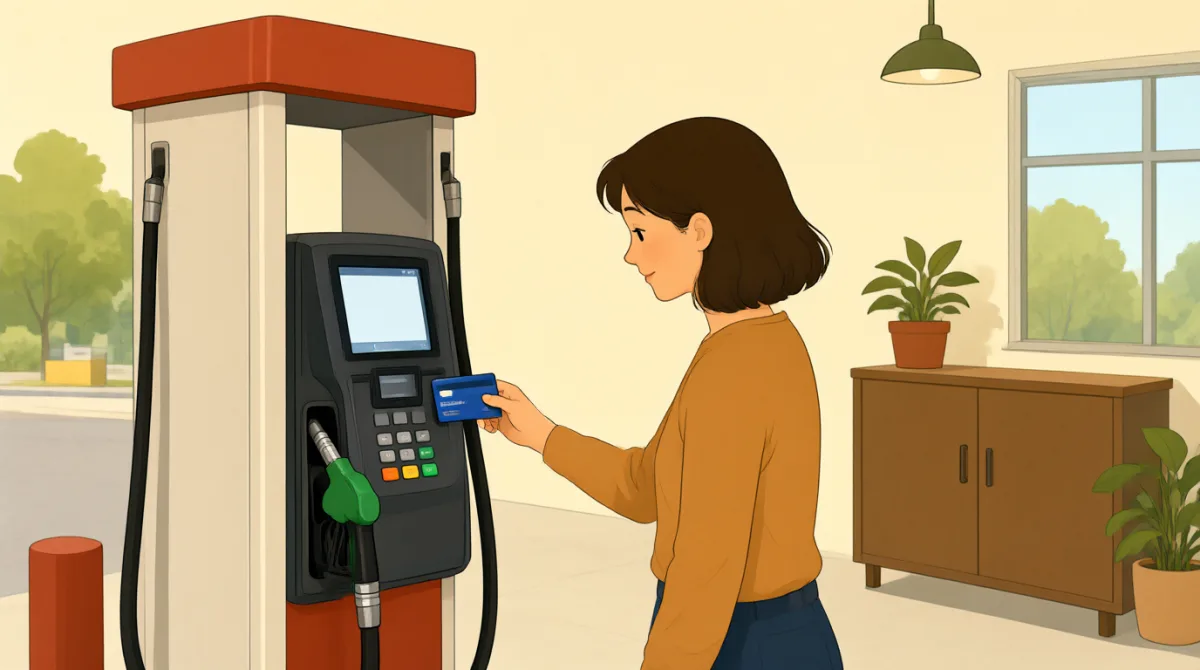

Alright, filling up the tank today. Card ready.
ठीक है, आज टंकी भरवाते हैं। कार्ड तैयार है।
Okay, the screen says 'Insert card'. Got it.
अच्छा, स्क्रीन पर लिखा है 'Insert card'। समझ गया।
Now it's asking for my ZIP code. Let's punch that in.
अब यह मेरा ZIP कोड पूछ रहा है। चलो, इसे डाल देता हूँ।
Next up, 'Select grade'. I'll go with regular unleaded.
अगला है, 'Select grade'। मैं रेगुलर अनलेडेड लूँगा।
Alright, 'Lift nozzle and begin fueling'. Here we go.
ठीक है, 'Lift nozzle and begin fueling'। चलो शुरू करते हैं।
And it stopped. Tank's full. Do I want a receipt?
और यह रुक गया। टंकी भर गई। क्या मुझे रसीद चाहिए?
Yes, print receipt. Always good to have one.
हाँ, रसीद प्रिंट करो। रसीद रखना हमेशा अच्छा होता है।
Got the receipt. Perfect. Done and done.
रसीद मिल गई। बढ़िया। काम पूरा हुआ।
शब्दावली8
- filling upभरवाना
This phrase means adding fuel to a vehicle's tank until it is full. It's commonly used at gas stations when you want to buy enough gas to completely fill your tank.
इसका मतलब है गाड़ी की टंकी पूरी भरने तक उसमें ईंधन डालना। पेट्रोल पंप पर यह आम तौर पर तब कहा जाता है जब आप टंकी पूरा भरवाना चाहते हैं।
- tankटंकी
The tank is the large container in a car or truck that holds gasoline or other fuel. You often hear 'fill up the tank' when getting gas.
टंकी कार या ट्रक का वह बड़ा कंटेनर होता है जिसमें पेट्रोल या कोई और ईंधन रखा जाता है। पेट्रोल भरवाते समय अक्सर 'fill up the tank' सुनने को मिलता है।
- insertडालना
To insert means to push something into a slot or opening, like sliding a card into a machine. At gas pumps, you insert your credit card to pay.
'Insert' का मतलब है किसी चीज़ को धकेलकर किसी स्लॉट या खुली जगह में डालना, जैसे कार्ड को मशीन में डालना। गैस पंप पर भुगतान करने के लिए आप अपना क्रेडिट कार्ड डालते हैं।
- ZIP codeZIP कोड
A ZIP code is a short code used in the US for mail delivery, like a postal code. Gas pumps often ask for it to verify your card for security.
ZIP कोड अमेरिका में डाक पहुँचाने के लिए इस्तेमाल होने वाला छोटा कोड है, जैसे भारत में पिन कोड। सुरक्षा के लिए गैस पंप अक्सर कार्ड की पुष्टि करने हेतु यह कोड पूछते हैं।
- gradeग्रेड
In this context, grade refers to the type or quality of gasoline, based on octane levels. Different grades cost different prices and are for different engines.
इस संदर्भ में 'grade' का मतलब ऑक्टेन स्तर के आधार पर पेट्रोल का प्रकार या गुणवत्ता है। अलग-अलग ग्रेड की कीमतें अलग होती हैं और वे अलग-अलग इंजनों के लिए होते हैं।
- regular unleadedरेगुलर अनलेडेड पेट्रोल
This is the most common and cheapest type of gasoline without lead. Most cars use it, and you select it at the pump for everyday driving.
यह बिना सीसे वाला सबसे आम और सस्ता पेट्रोल है। ज़्यादातर कारें इसका इस्तेमाल करती हैं। रोज़मर्रा की ड्राइविंग के लिए आप पंप पर इसे चुन सकते हैं।
- nozzleनोज़ल
The nozzle is the handle on the gas pump hose that you hold to dispense fuel into your car's tank. It's the part that clicks when the tank is full.
नोज़ल गैस पंप की पाइप से जुड़ा वह हैंडल होता है जिसे पकड़कर आप गाड़ी की टंकी में ईंधन भरते हैं। टंकी भर जाने पर इसी हिस्से से क्लिक की आवाज़ आती है।
- receiptरसीद
A receipt is a printed slip of paper that shows what you bought and how much you paid. It's useful for records or returns, and pumps can print one after payment.
रसीद कागज़ की वह पर्ची है जिस पर खरीदी गई चीज़ और चुकाई गई रकम लिखी होती है। हिसाब रखने या सामान लौटाने के लिए यह काम आती है। भुगतान के बाद पंप से रसीद प्रिंट की जा सकती है।
मुख्य वाक्य7
- 1
Alright, filling up the tank today. Card ready.
ठीक है, आज टंकी भरवाते हैं। कार्ड तैयार है।
This sentence shows casual preparation for a task. 'Filling up the tank' is a common phrase for getting a full tank of gas. Use it when starting to refuel. 'Alright' is an informal way to say 'okay' to begin something.
यह वाक्य किसी काम की अनौपचारिक तैयारी दिखाता है। 'Filling up the tank' टंकी पूरी भरवाने के लिए आम तौर पर इस्तेमाल होने वाला वाक्यांश है। ईंधन भरवाना शुरू करते समय इसका इस्तेमाल करें। 'Alright' किसी काम की शुरुआत के लिए अनौपचारिक ढंग से 'ठीक है' कहने का तरीका है।
- 2
Okay, the screen says 'Insert card'. Got it.
अच्छा, स्क्रीन पर लिखा है 'Insert card'। समझ गया।
Here, the speaker follows instructions from a machine screen. 'The screen says' describes what a display shows. 'Got it' means 'I understand' or 'done.' This pattern is useful for describing steps in self-service situations like ATMs or pumps.
यहाँ बोलने वाला मशीन की स्क्रीन पर दिए निर्देश का पालन कर रहा है। 'The screen says' बताता है कि डिस्प्ले पर क्या लिखा है। 'Got it' का मतलब है 'मैं समझ गया' या 'हो गया'। एटीएम या पंप जैसी खुद-सेवा वाली जगहों पर कदमों का वर्णन करने के लिए यह तरीका काम आता है।
- 3
Now it's asking for my ZIP code. Let's punch that in.
अब यह मेरा ZIP कोड पूछ रहा है। चलो, इसे डाल देता हूँ।
This uses present continuous 'it's asking' to describe what a machine is requesting. 'Punch that in' is slang for entering information on a keypad quickly. It's practical for tech interactions; use when inputting codes or PINs.
यहाँ वर्तमान जारी काम बताने के लिए 'it's asking' का इस्तेमाल हुआ है—मशीन कुछ माँग रही है। 'Punch that in' कीपैड पर जानकारी जल्दी से दर्ज करने का अनौपचारिक तरीका है। तकनीक से जुड़ी बातचीत में यह काम आता है, जैसे कोड या PIN डालते समय।
- 4
Next up, 'Select grade'. I'll go with regular unleaded.
अगला है, 'Select grade'। मैं रेगुलर अनलेडेड लूँगा।
'Next up' means the following step in a process. 'I'll go with' expresses a choice. This sentence demonstrates selecting options at a machine. Useful for making decisions in stores or pumps; grammar shows future intention with 'will.'
'Next up' का मतलब है प्रक्रिया का अगला कदम। 'I'll go with' किसी विकल्प को चुनने का तरीका है। यह वाक्य मशीन पर विकल्प चुनना दिखाता है। दुकानों या पंप पर फ़ैसला करते समय यह उपयोगी है। यहाँ 'will' से भविष्य का इरादा जताया गया है।
- 5
Alright, 'Lift nozzle and begin fueling'. Here we go.
ठीक है, 'Lift nozzle and begin fueling'। चलो शुरू करते हैं।
Quoting instructions with single quotes is common for machine prompts. 'Here we go' signals starting an action. This is great for narrating steps; use it to encourage yourself or others when beginning a task like pumping gas.
मशीन के निर्देशों को एक उद्धरण में दोहराना आम बात है। 'Here we go' किसी काम को शुरू करने का संकेत देता है। किसी काम के कदम बताते समय इसका इस्तेमाल करें। पेट्रोल भरने जैसा काम शुरू करते वक्त यह खुद को या दूसरों को प्रोत्साहित करने के लिए भी कहा जा सकता है।
- 6
Yes, print receipt. Always good to have one.
हाँ, रसीद प्रिंट करो। रसीद रखना हमेशा अच्छा होता है।
Short commands like 'print receipt' are used at machines. 'Always good to have one' explains a general benefit. This teaches imperative form for selections and why it's useful: receipts prove payment. Say it when choosing options on screens.
'print receipt' जैसे छोटे आदेश मशीनों पर इस्तेमाल होते हैं। 'Always good to have one' बताता है कि रसीद रखना आम तौर पर क्यों फ़ायदेमंद है। इससे आदेश देने वाले रूप का इस्तेमाल और उसकी उपयोगिता समझ आती है: रसीद भुगतान का सबूत होती है। स्क्रीन पर विकल्प चुनते समय यह कहें।
- 7
Got the receipt. Perfect. Done and done.
रसीद मिल गई। बढ़िया। काम पूरा हुआ।
'Got the receipt' means received it. 'Perfect' shows satisfaction. 'Done and done' is an idiomatic way to say the task is completely finished. Use this casual expression at the end of transactions to confirm everything is complete.
'Got the receipt' का मतलब है रसीद मिल गई। 'Perfect' संतुष्टि जताता है। 'Done and done' कहने का मुहावरेदार तरीका है कि काम पूरी तरह हो गया। लेन-देन के आखिर में सब कुछ पूरा होने की पुष्टि के लिए इस अनौपचारिक अभिव्यक्ति का इस्तेमाल करें।