Paying at the Pump with Card
จ่ายเงินที่หัวจ่ายด้วยบัตร
The driver uses a credit or debit card directly at the gas pump's payment terminal, following on-screen instructions to select fuel grade and complete the transaction.
คนขับใช้บัตรเครดิตหรือบัตรเดบิตที่เครื่องชำระเงินตรงหัวจ่ายน้ำมัน แล้วทำตามคำแนะนำบนหน้าจอเพื่อเลือกชนิดน้ำมันและชำระเงินให้เสร็จ
บทสนทนา8
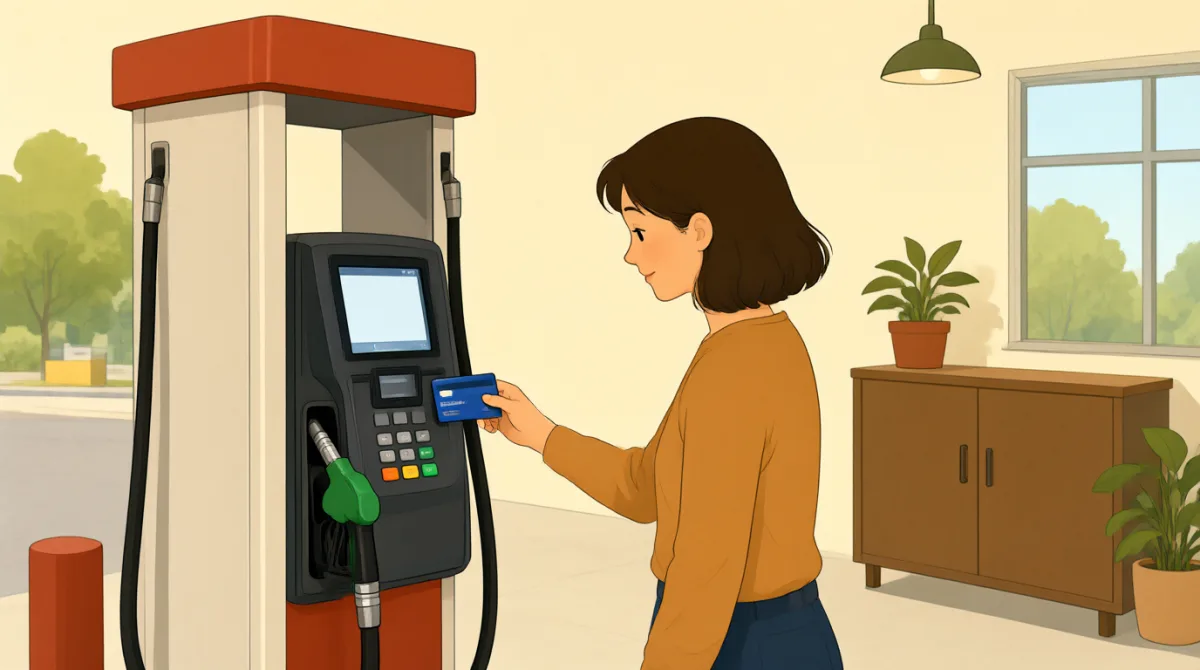

Alright, filling up the tank today. Card ready.
เอาล่ะ วันนี้เติมน้ำมันให้เต็มถัง เตรียมบัตรพร้อมแล้ว
Okay, the screen says 'Insert card'. Got it.
โอเค หน้าจอขึ้นว่า 'Insert card' เข้าใจแล้ว
Now it's asking for my ZIP code. Let's punch that in.
ตอนนี้ให้ใส่รหัสไปรษณีย์ของเรา งั้นกดใส่เลย
Next up, 'Select grade'. I'll go with regular unleaded.
ขั้นต่อไป 'Select grade' เลือกน้ำมันไร้สารตะกั่วเกรดธรรมดาแล้วกัน
Alright, 'Lift nozzle and begin fueling'. Here we go.
เอาล่ะ 'Lift nozzle and begin fueling' เริ่มเลย
And it stopped. Tank's full. Do I want a receipt?
แล้วก็หยุดแล้ว ถังเต็มแล้ว จะเอาใบเสร็จไหมนะ
Yes, print receipt. Always good to have one.
เอาสิ พิมพ์ใบเสร็จไว้ดีกว่า มีติดไว้ก็อุ่นใจ
Got the receipt. Perfect. Done and done.
ได้ใบเสร็จแล้ว เยี่ยม เสร็จเรียบร้อย
คำศัพท์8
- filling upเติมน้ำมันให้เต็มถัง
This phrase means adding fuel to a vehicle's tank until it is full. It's commonly used at gas stations when you want to buy enough gas to completely fill your tank.
วลีนี้หมายถึงเติมน้ำมันลงในถังรถจนเต็ม มักใช้ที่ปั๊มน้ำมันเมื่อต้องการเติมน้ำมันให้เต็มถัง
- tankถังน้ำมัน
The tank is the large container in a car or truck that holds gasoline or other fuel. You often hear 'fill up the tank' when getting gas.
ถังน้ำมันคือภาชนะขนาดใหญ่ในรถยนต์หรือรถบรรทุกที่ใช้เก็บน้ำมันเบนซินหรือเชื้อเพลิงชนิดอื่น เวลาไปเติมน้ำมัน มักได้ยินวลี 'fill up the tank' ซึ่งหมายถึงเติมน้ำมันให้เต็มถัง
- insertใส่
To insert means to push something into a slot or opening, like sliding a card into a machine. At gas pumps, you insert your credit card to pay.
insert หมายถึงสอดหรือใส่สิ่งของเข้าไปในช่องหรือรู เช่น สอดบัตรเข้าเครื่อง ที่หัวจ่ายน้ำมัน เราใส่บัตรเครดิตเพื่อชำระเงิน
- ZIP codeรหัสไปรษณีย์สหรัฐฯ
A ZIP code is a short code used in the US for mail delivery, like a postal code. Gas pumps often ask for it to verify your card for security.
ZIP code คือรหัสสั้น ๆ ที่ใช้ส่งไปรษณีย์ในสหรัฐฯ คล้ายกับรหัสไปรษณีย์ของไทย หัวจ่ายน้ำมันมักขอรหัสนี้เพื่อตรวจสอบบัตรและเพิ่มความปลอดภัย
- gradeเกรดน้ำมัน
In this context, grade refers to the type or quality of gasoline, based on octane levels. Different grades cost different prices and are for different engines.
ในบริบทนี้ grade หมายถึงชนิดหรือคุณภาพของน้ำมันเบนซิน ซึ่งแบ่งตามระดับออกเทน น้ำมันแต่ละเกรดมีราคาแตกต่างกันและเหมาะกับเครื่องยนต์ต่างกัน
- regular unleadedน้ำมันไร้สารตะกั่วเกรดธรรมดา
This is the most common and cheapest type of gasoline without lead. Most cars use it, and you select it at the pump for everyday driving.
นี่คือน้ำมันเบนซินไร้สารตะกั่วชนิดที่ใช้กันทั่วไปและมีราคาถูกที่สุด รถยนต์ส่วนใหญ่ใช้น้ำมันชนิดนี้ และเลือกได้ที่หัวจ่ายเมื่อต้องการเติมน้ำมันสำหรับการขับขี่ทั่วไป
- nozzleหัวจ่ายน้ำมัน
The nozzle is the handle on the gas pump hose that you hold to dispense fuel into your car's tank. It's the part that clicks when the tank is full.
nozzle คือด้ามหัวจ่ายที่ติดกับสายยางของปั๊มน้ำมัน ใช้ถือเพื่อเติมน้ำมันลงถังรถ เป็นส่วนที่มักตัดการจ่ายเมื่อถังเต็ม
- receiptใบเสร็จ
A receipt is a printed slip of paper that shows what you bought and how much you paid. It's useful for records or returns, and pumps can print one after payment.
ใบเสร็จคือกระดาษที่พิมพ์แสดงรายการที่ซื้อและจำนวนเงินที่จ่าย มีประโยชน์สำหรับเก็บเป็นหลักฐานหรือใช้คืนสินค้า และหัวจ่ายน้ำมันก็พิมพ์ใบเสร็จให้ได้หลังชำระเงิน
ประโยคสำคัญ7
- 1
Alright, filling up the tank today. Card ready.
เอาล่ะ วันนี้เติมน้ำมันให้เต็มถัง เตรียมบัตรพร้อมแล้ว
This sentence shows casual preparation for a task. 'Filling up the tank' is a common phrase for getting a full tank of gas. Use it when starting to refuel. 'Alright' is an informal way to say 'okay' to begin something.
ประโยคนี้แสดงการเตรียมตัวทำอะไรสักอย่างแบบเป็นกันเอง 'Filling up the tank' เป็นวลีที่ใช้บ่อยเมื่อต้องการเติมน้ำมันให้เต็มถัง ใช้ได้เมื่อเริ่มเติมน้ำมัน ส่วน 'Alright' เป็นวิธีพูดแบบไม่เป็นทางการเพื่อบอกว่า “โอเค” ก่อนเริ่มทำอะไรสักอย่าง
- 2
Okay, the screen says 'Insert card'. Got it.
โอเค หน้าจอขึ้นว่า 'Insert card' เข้าใจแล้ว
Here, the speaker follows instructions from a machine screen. 'The screen says' describes what a display shows. 'Got it' means 'I understand' or 'done.' This pattern is useful for describing steps in self-service situations like ATMs or pumps.
ผู้พูดกำลังทำตามคำแนะนำบนหน้าจอเครื่อง 'The screen says' ใช้บอกสิ่งที่แสดงอยู่บนหน้าจอ ส่วน 'Got it' หมายถึง “เข้าใจแล้ว” หรือ “เรียบร้อยแล้ว” รูปแบบนี้ใช้บรรยายขั้นตอนในสถานการณ์บริการตัวเอง เช่น ใช้ตู้เอทีเอ็มหรือหัวจ่ายน้ำมันได้
- 3
Now it's asking for my ZIP code. Let's punch that in.
ตอนนี้ให้ใส่รหัสไปรษณีย์ของเรา งั้นกดใส่เลย
This uses present continuous 'it's asking' to describe what a machine is requesting. 'Punch that in' is slang for entering information on a keypad quickly. It's practical for tech interactions; use when inputting codes or PINs.
ประโยคนี้ใช้รูป present continuous ใน 'it's asking' เพื่อบอกว่าเครื่องกำลังขอข้อมูลอยู่ 'Punch that in' เป็นคำพูดไม่เป็นทางการ หมายถึงกดข้อมูลลงบนแป้นตัวเลขอย่างรวดเร็ว ใช้ได้เมื่อต้องกรอกรหัสหรือ PIN ในการใช้อุปกรณ์ต่าง ๆ
- 4
Next up, 'Select grade'. I'll go with regular unleaded.
ขั้นต่อไป 'Select grade' เลือกน้ำมันไร้สารตะกั่วเกรดธรรมดาแล้วกัน
'Next up' means the following step in a process. 'I'll go with' expresses a choice. This sentence demonstrates selecting options at a machine. Useful for making decisions in stores or pumps; grammar shows future intention with 'will.'
'Next up' หมายถึงขั้นตอนถัดไปในกระบวนการ ส่วน 'I'll go with' ใช้บอกว่าเลือกสิ่งนั้น ประโยคนี้แสดงวิธีเลือกตัวเลือกบนเครื่อง และยังใช้พูดถึงการตัดสินใจในร้านค้าหรือที่ปั๊มน้ำมันได้ โดย 'will' แสดงความตั้งใจที่จะทำในอนาคต
- 5
Alright, 'Lift nozzle and begin fueling'. Here we go.
เอาล่ะ 'Lift nozzle and begin fueling' เริ่มเลย
Quoting instructions with single quotes is common for machine prompts. 'Here we go' signals starting an action. This is great for narrating steps; use it to encourage yourself or others when beginning a task like pumping gas.
การยกคำสั่งบนเครื่องมาอ้างโดยใส่เครื่องหมายอัญประกาศเป็นเรื่องปกติ 'Here we go' ใช้ส่งสัญญาณว่ากำลังจะเริ่มทำอะไรสักอย่าง เหมาะสำหรับบรรยายขั้นตอนหรือให้กำลังใจตัวเองและคนอื่นตอนเริ่มงาน เช่น เติมน้ำมัน
- 6
Yes, print receipt. Always good to have one.
เอาสิ พิมพ์ใบเสร็จไว้ดีกว่า มีติดไว้ก็อุ่นใจ
Short commands like 'print receipt' are used at machines. 'Always good to have one' explains a general benefit. This teaches imperative form for selections and why it's useful: receipts prove payment. Say it when choosing options on screens.
คำสั่งสั้น ๆ อย่าง 'print receipt' ใช้เลือกตัวเลือกบนเครื่องได้ ส่วน 'Always good to have one' อธิบายข้อดีโดยทั่วไป ประโยคนี้สอนรูปประโยคคำสั่งที่ใช้เลือกตัวเลือก และบอกเหตุผลว่าทำไมจึงควรมีใบเสร็จ เพราะใช้เป็นหลักฐานการชำระเงินได้ ใช้พูดตอนเลือกตัวเลือกบนหน้าจอได้เลย
- 7
Got the receipt. Perfect. Done and done.
ได้ใบเสร็จแล้ว เยี่ยม เสร็จเรียบร้อย
'Got the receipt' means received it. 'Perfect' shows satisfaction. 'Done and done' is an idiomatic way to say the task is completely finished. Use this casual expression at the end of transactions to confirm everything is complete.
'Got the receipt' หมายถึงได้รับใบเสร็จแล้ว 'Perfect' แสดงความพอใจ ส่วน 'Done and done' เป็นสำนวนที่ใช้บอกว่างานเสร็จสมบูรณ์แล้ว ใช้พูดแบบเป็นกันเองตอนจบธุรกรรมเพื่อยืนยันว่าทุกอย่างเรียบร้อย