Paying at the Pump with Card
在油槍處刷卡支付
The driver uses a credit or debit card directly at the gas pump's payment terminal, following on-screen instructions to select fuel grade and complete the transaction.
司機直接在油槍的支付終端上使用信用卡或簽帳金融卡,根據螢幕提示選擇汽油等級並完成交易。
對話8
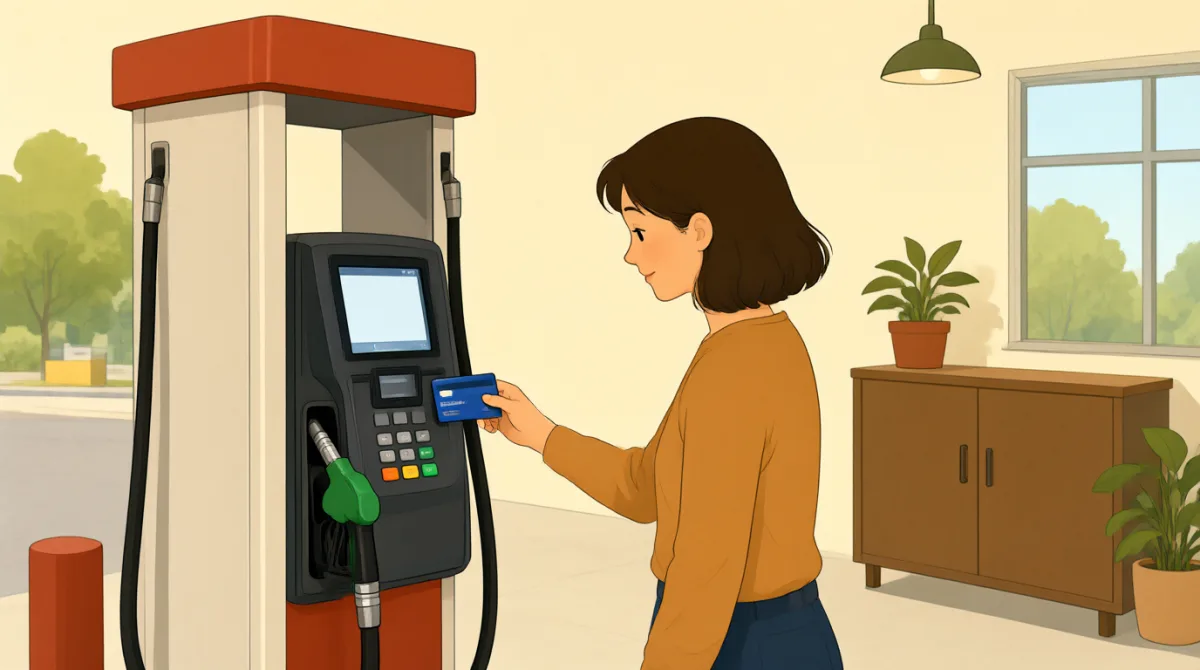

Alright, filling up the tank today. Card ready.
好的,今天要把油箱加滿。卡準備好了。
Okay, the screen says 'Insert card'. Got it.
好的,螢幕顯示“插入卡”。明白了。
Now it's asking for my ZIP code. Let's punch that in.
現在它要我的郵政編碼。輸入一下。
Next up, 'Select grade'. I'll go with regular unleaded.
下一步,“選擇油號”。我就選普通無鉛汽油。
Alright, 'Lift nozzle and begin fueling'. Here we go.
好的,“提起油槍並開始加油”。開始吧。
And it stopped. Tank's full. Do I want a receipt?
停了。油箱滿了。要收據嗎?
Yes, print receipt. Always good to have one.
是的,列印收據。有個收據總是好的。
Got the receipt. Perfect. Done and done.
拿到收據了。完美。搞定了。
詞彙8
- filling up加滿油
This phrase means adding fuel to a vehicle's tank until it is full. It's commonly used at gas stations when you want to buy enough gas to completely fill your tank.
這個短語指給車輛加油,直到油箱加滿。在加油站想把油箱加滿時,人們常用這個說法。
- tank油箱
The tank is the large container in a car or truck that holds gasoline or other fuel. You often hear 'fill up the tank' when getting gas.
油箱是汽車或卡車裡用來裝汽油或其他燃料的大容器。加油時,你經常會聽到“fill up the tank”(把油箱加滿)這個說法。
- insert插入
To insert means to push something into a slot or opening, like sliding a card into a machine. At gas pumps, you insert your credit card to pay.
insert 的意思是把東西放進一個槽口或開口裡,比如把卡滑進機器。在加油機上,你需要插入信用卡來付款。
- ZIP code郵政編碼
A ZIP code is a short code used in the US for mail delivery, like a postal code. Gas pumps often ask for it to verify your card for security.
ZIP code 是美國用於郵件投遞的簡短編碼,類似於郵政編碼。加油機經常會要求輸入它,以驗證銀行卡,確保交易安全。
- grade汽油等級
In this context, grade refers to the type or quality of gasoline, based on octane levels. Different grades cost different prices and are for different engines.
在這裡,grade 指根據辛烷值劃分的汽油種類或等級。不同等級的汽油價格不同,也適用於不同的發動機。
- regular unleaded普通無鉛汽油
This is the most common and cheapest type of gasoline without lead. Most cars use it, and you select it at the pump for everyday driving.
這是最常見、價格也最便宜的不含鉛汽油。大多數汽車都能使用,日常開車加油時可以在油槍上選擇它。
- nozzle油槍
The nozzle is the handle on the gas pump hose that you hold to dispense fuel into your car's tank. It's the part that clicks when the tank is full.
nozzle 指加油機軟管末端的手柄,握住它就能把燃油加進汽車油箱。油箱加滿時,油槍會發出咔嗒聲並自動停止加油。
- receipt收據
A receipt is a printed slip of paper that shows what you bought and how much you paid. It's useful for records or returns, and pumps can print one after payment.
收據是列印出來的紙條,上面寫著你買了什麼以及付了多少錢。它可以用於留存記錄或退換貨,加油機也能在付款後列印收據。
關鍵句7
- 1
Alright, filling up the tank today. Card ready.
好,今天把油箱加滿。卡準備好了。
This sentence shows casual preparation for a task. 'Filling up the tank' is a common phrase for getting a full tank of gas. Use it when starting to refuel. 'Alright' is an informal way to say 'okay' to begin something.
這句話表現了說話者隨口準備開始做一件事。“Filling up the tank”是表示把油箱加滿的常用說法,可以在開始加油時使用。“Alright”是比較隨意的說法,意思是“好”,用來表示要開始做某事。
- 2
Okay, the screen says 'Insert card'. Got it.
好,螢幕上寫著“Insert card”。知道了。
Here, the speaker follows instructions from a machine screen. 'The screen says' describes what a display shows. 'Got it' means 'I understand' or 'done.' This pattern is useful for describing steps in self-service situations like ATMs or pumps.
這裡,說話者在按照機器螢幕上的提示操作。“The screen says”用來描述顯示屏上顯示的內容。“Got it”表示“我明白了”或“弄好了”。這個表達方式適合描述在自動取款機或加油機等自助裝置上操作的步驟。
- 3
Now it's asking for my ZIP code. Let's punch that in.
現在它要我輸入郵政編碼。把它輸進去。
This uses present continuous 'it's asking' to describe what a machine is requesting. 'Punch that in' is slang for entering information on a keypad quickly. It's practical for tech interactions; use when inputting codes or PINs.
這裡用現在進行時“it's asking”來描述機器正在要求輸入什麼。“Punch that in”是比較隨意的說法,指快速在鍵盤上輸入資訊。和裝置互動時很實用,比如輸入密碼或個人識別碼。
- 4
Next up, 'Select grade'. I'll go with regular unleaded.
接下來是“Select grade”。我選普通無鉛汽油。
'Next up' means the following step in a process. 'I'll go with' expresses a choice. This sentence demonstrates selecting options at a machine. Useful for making decisions in stores or pumps; grammar shows future intention with 'will.'
“Next up”表示流程中的下一步。“I'll go with”用來表達自己的選擇。這句話展示瞭如何在機器上選擇選項。購物或在加油機上操作時都能用;這裡的“will”表示將要做出的選擇。
- 5
Alright, 'Lift nozzle and begin fueling'. Here we go.
好,“Lift nozzle and begin fueling”。開始吧。
Quoting instructions with single quotes is common for machine prompts. 'Here we go' signals starting an action. This is great for narrating steps; use it to encourage yourself or others when beginning a task like pumping gas.
引用機器提示時,常會用引號標出。“Here we go”表示現在開始做某件事。你可以用它來描述操作步驟,也可以在開始加油等任務時用來給自己或別人打氣。
- 6
Yes, print receipt. Always good to have one.
是的,列印收據。有一張總是好的。
Short commands like 'print receipt' are used at machines. 'Always good to have one' explains a general benefit. This teaches imperative form for selections and why it's useful: receipts prove payment. Say it when choosing options on screens.
在機器上操作時,常會看到“print receipt”這樣的簡短指令。“Always good to have one”說明了通常留一張收據有什麼好處。這句話展示了祈使句如何用於選擇操作,以及收據為什麼有用:它可以作為付款憑證。在螢幕上選擇選項時可以這樣說。
- 7
Got the receipt. Perfect. Done and done.
拿到收據了。完美。搞定了。
'Got the receipt' means received it. 'Perfect' shows satisfaction. 'Done and done' is an idiomatic way to say the task is completely finished. Use this casual expression at the end of transactions to confirm everything is complete.
“Got the receipt”表示已經拿到了收據。“Perfect”表達滿意。“Done and done”是一個習語,表示事情已經徹底辦妥。交易結束、確認一切都完成時,可以用這個隨意的表達。